

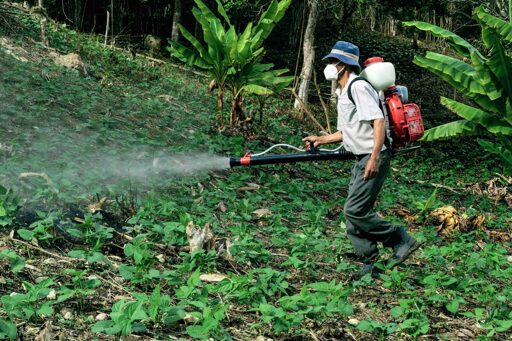
The world’s nations committed to halving overall threats to biodiversity from pesticides and other highly hazardous chemicals by 2030 at the 15th United Nations Biodiversity Conference in 2022. But new research finds most countries are trending in the wrong direction when it comes to ecological risks from pesticides, with the U.N.’s global risk reduction target unlikely to be met without substantial changes to agricultural systems. In fact, only one country, Chile, is currently on track to meet the U.N. target of reducing pesticide risk by 50% by 2030, according to recent findings by a team of environmental scientists from German university RPTU Kaiserslautern-Landau, and published in the journal Science. Pesticide risk in this context is defined as the probability of chemical compounds — including insecticides, herbicides, and fungicides — used to control agricultural pests having adverse effects on species not directly targeted by the pesticides and, thus, on ecosystems more broadly — and ultimately on humans. The new study found that the applied toxicity of insecticides has increased for pollinating insects such as honey bees. Image by Louise Docker via Wikimedia Commons (CC BY 2.0). To determine global pesticide risk, the study researchers looked at data on pesticide use from 2013 to 2019 in 65 nations that collectively represent nearly 80% of global crop acreage. They then combined these statistics with data on the toxicity of 625 pesticides for eight different species groups, including aquatic invertebrates and plants, fish, pollinating insects, soil organisms, and terrestrial arthropods, plants and vertebrates. This…This article was originally published on Mongabay
From Conservation news via This RSS Feed.