

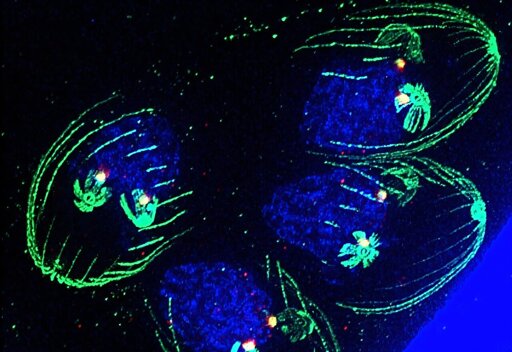
It infects nearly one-third of the global population, yet its microscopic size makes the parasite difficult for scientists to study. That parasite is Toxoplasma gondii, a widespread organism that infects humans and animals. To better understand how it functions, infectious disease researchers at the USF Health Morsani College of Medicine adapted a fluorescent imaging system typically used to study human cells to observe the parasite’s growth in real time—paving the way for future treatments.
From Biology News - Evolution, Cell theory, Gene theory, Microbiology, Biotechnology via This RSS Feed.
You must log in or # to comment.