

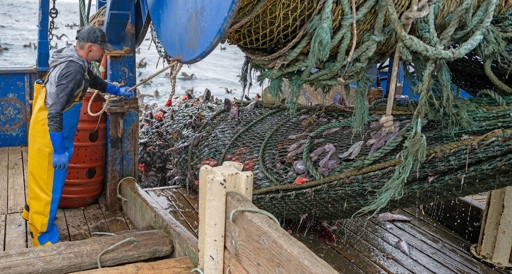
PORT ORFORD, Oregon, U.S. — Aaron Longton reached down into the rinsing sink in his garage-turned-fish-processing facility on the Oregon coast and hoisted a redbanded rockfish by its fat bottom lip. The homely fish was next in line for the dressing table, where Brian Morrissey, Longton’s “cutter-in-chief,” would deftly slice it into neat fillets, setting aside its guts and bones for crabbing chum. Morrisey had about 250 kilograms (550 pounds) of the rockfish (Sebastes babcocki) to get through that day, and 90 kg (200 lbs) of lingcod (Ophiodon elongatus), he said, his knife unzipping yet another fish. An unthinkable abundance only 20 years ago. “These fish were really severely limited to us,” said Longton, founder of Port Orford Sustainable Seafood, a company that sells fish via a subscription program. “Now, we have huge quotas.” Redbanded rockfish (Sebastes babcocki), one of the groundfish species whose stock has been rebuilt on the U.S. West Coast, being processed at Port Orford Sustainable Seafood. Image by Jules Struck for Mongabay. The groundfish Longton hauls to his processing room from the pier down the street are the spoils of a painstakingly rebuilt industry. Twenty-six years ago, the West Coast groundfish industry, which encompasses more than 90 species of bottom-dwelling fish off Washington, Oregon and California, had overfished itself to near devastation. In response, fisheries authorities closed vast tracts of the ocean to trawling and slashed fishing quotas, throwing many fishers into painful retirement. But in the aftermath, an unlikely corps materialized of fishers, scientists, conservationists…This article was originally published on Mongabay
From Conservation news via This RSS Feed.