

The Science of Unlearning And Why Organizers Need It
0:00
/3793.81545
1×
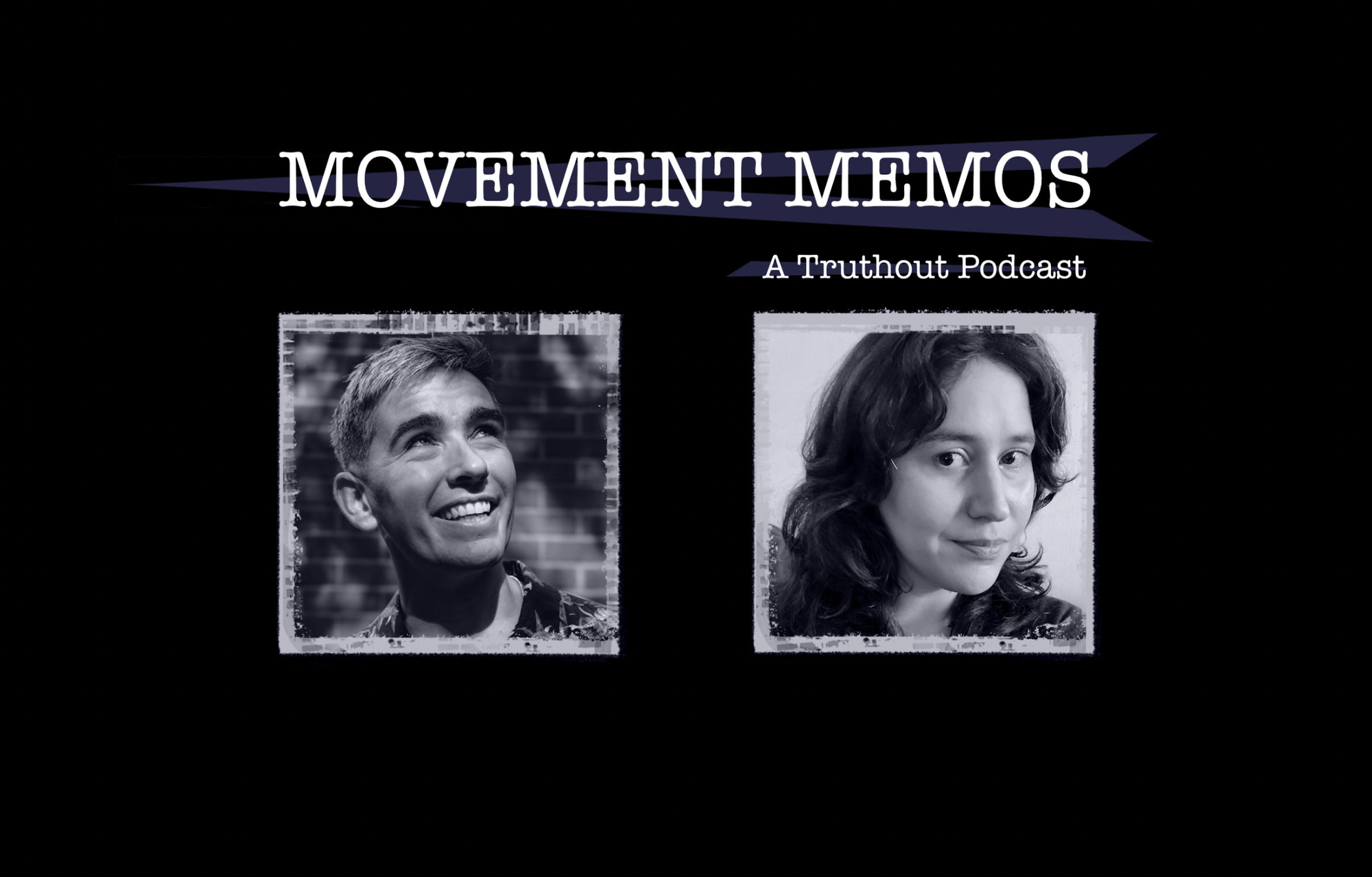
Why do some people change, while others double down? In this episode of Movement Memos, I talk with journalist and author Lewis Raven Wallace about the deeper mechanics of political transformation. Drawing on neuroscience, trauma research, and stories of people who have broken with deeply held ideologies, Lewis argues that real change rarely happens through debate or persuasion. Instead, transformation grows out of relationships, shared struggle, cognitive dissonance, and practice. Together, we explore what organizers can learn from the science of neuroplasticity, the role of rupture and confrontation, and why movements need to focus less on “changing minds” and more on creating conditions where people can unlearn harmful beliefs and step into collective action.
Music: Son Monarcas, David Celeste, and Daniel Fridell
TRANSCRIPT:
Note: This a rush transcript was originally published in Truthout. It is shared here with permission.
**Kelly Hayes:**Welcome to “Movement Memos,” a Truthout podcast about organizing, solidarity, and the work of making change. I’m your host, writer and organizer Kelly Hayes. We are living in a moment when people are being pulled toward cruelty, conspiracy theories, and resignation. If organizers want to move beyond just preaching to the converted and actually shift the terrain, we have to understand how real change happens: how someone moves from defensiveness to reflection, from agreement to action, from isolation to shared risk. So how can we transform ourselves, and what conditions can help facilitate transformation in others?
Today we’ll dig into these questions with Lewis Raven Wallace, an award-winning independent journalist and the author of The View from Somewhere: Undoing the Myth of Journalistic Objectivity and Radical Unlearning: The Art and Science of Creating Change from Within. In Radical Unlearning, Lewis blends interviews and insights from scientific research to explore how people break with deeply held beliefs — not just at the level of opinion, but at the level of identity, habit, and relationships.
If you appreciate this podcast, and you would like to support “Movement Memos,” you can subscribe to Truthout’s newsletter or make a donation at truthout.org. You can also support the show by subscribing to “Movement Memos” on Apple or Spotify, or wherever you get your podcasts, or by leaving a positive review on those platforms. Sharing episodes on social media is also a huge help.
Truthout is an independent news organization, publishing stories that the craven corporate press won’t touch. We are a union shop with the best family and sick leave policies in the industry, and we could not do this work without the support of readers and listeners like you. So thank you for believing in us and for all that you do. And with that, I hope you enjoy the show.
[musical interlude]
**KH:**Lewis Raven Wallace, welcome to “Movement Memos.”
Lewis Raven Wallace: Hi Kelly, thanks for having me.
**KH:**How are you doing, friend?
**LRV:**I am okay. Yeah, we’ve had some exciting winter weather here in the South and a lot of unexpected developments because of that. And I’m just chilling with my puppy dog and my pig outside working hard.
KH: That sounds delightful. It is about 34 degrees outside, here in Chicago, so I am indoors, with nary a pig in sight, but I am so happy to be in conversation with you today.
**LRV:**Thank you, me too.
**KH:**So, for our listeners who may be unfamiliar with your work, can you say a bit about who you are and what you do?
LRV: Sure. So I work as a journalist and a writer. I’ve been an activist since the late 1990s. I currently work as the Abolition Journalism Fellow for Interrupting Criminalization, which is the organization founded by Mariame Kaba and Andrea Ritchie. I support journalists, media makers, activists on the ground to build information infrastructure for the movement against policing and criminalization. And I’m also an author, I have a couple of books. One of them is about the myth of objectivity in journalism, it’s called The View from Somewhere. And my newer book is called Radical Unlearning: The Art and Science of Creating Change From Within.
KH: It’s such a timely book, on a topic that leftist activists and organizers really need to explore more deeply. Now, having read the book, I know I’m about to ask a question that doesn’t exactly have a fixed answer. But to help frame this conversation for our audience, can you talk about what the phrase “radical unlearning” means to you?
LRV: So first of all, thank you for understanding and appreciating my dislike for fixed definitions. It’s a tough one, but I landed on the framework of radical unlearning because I got interested in deep change in ideas. And that was actually spurred by when I was touring with my first book, The View from Somewhere, there was almost always someone in the audience who would ask, “Okay, but if we don’t have objective journalism, if we don’t have facts that everyone agrees are credible, then how do we change people’s minds?”
And there were a couple of assumptions wrapped up in that question that I thought were interesting. One was sort of the “us and them” assumption. There’s those people over there who have the wrong idea and then there’s us over here who have the right idea, and the thing we need to do is change their mind. But then the other thing was the assumption that facts change people’s minds. And there’s a lot of research and also just anecdotal evidence that learning new facts doesn’t lead to deep change.
So I got interested in radical change within people. What does it take to uproot deeply held beliefs and ideologies? And that question developed into the book project, Radical Unlearning. Unlearning eventually became my frame because I wasn’t really satisfied with changing minds as a framework, I guess. It felt a little too superficial because I wasn’t just talking about changing your opinion on a discrete particular thing. I was interested in when you have a deeply held belief or have internalized a whole worldview or ideological system, what does it take to disrupt that, to replace it with new ideas? And also importantly with new behaviors.
So not just thoughts and opinions and everything at the level of the head and the brain, but our practices, our ways of being in the world, our assumptions. These are the material[s] of unlearning. And so for me, Radical Unlearning is kind of getting to the root of our fundamental beliefs and disrupting them and replacing them with new ways of thinking, being and acting.
KH: Thank you for that. You’re describing something much deeper than opinion — something that reaches into worldview and behavior. That’s where it starts to feel like identity. Why do some narratives fuse so tightly with our sense of self that they feel indistinguishable from identity itself?
LRV: So some of that actually has to do with this really interesting neuroscience of how we learn and how we become who we are. I learned about this distinction in my research between implicit memory and explicit memory.
So, explicit memory is something that you kind of know that you know. I don’t know, Valentine’s Day takes place on February 14th. That’s like an explicit factoid that I can access from a certain place in my memory. Implicit memory is the kind of information that play out in our reactions, our reflexes, our ways of relating to people, our assumptions, our language systems. So I think implicit memory is a better way of getting at ideology and assumptions about the world. You can change what you think about a discrete fact, like the world is round, the world is flat. But a more sort of comprehensive understanding of what is my body in the world, or how do I relate to gravity? That’s more what implicit memory holds.
And so that’s where we learn how to love, we learn how to communicate, we learn how to behave a lot through memories that we don’t experience as something that you could go and retrieve from your brain. So it’s very somatic, it’s very full body. And the way that those ideas get implanted in us is through repetitive experiences that turn these ideas into habits, norms, ways of being, you might call it belief systems. But I think it’s more … To me it’s closer to ideology or worldview.
**KH:**So if ideology is carried in implicit memory — in our reflexes and patterns of relating — then it makes sense that deep change would require more than exposure to new information. As you mapped these stories, what did you find was structurally necessary for unlearning? Were there elements that showed up again and again?
LRV: The first thing and the kind of central thing that I came across as I began to look into stories of unlearning was love and relationships. So nobody had a story about unlearning that didn’t include a connection with other people. Some form of loving connection, of connection where it is not necessarily romantic love, it could be parental or familial love, it could be community. But the kind of embodied and affective experience of connection with others is really, really key and central to, I think both learning and unlearning. We become who we are, form our identities through relationship. And when we un-form or reform them, it’s pretty much always through relationship. So if I had to say one thing that the book is about, I would say it’s that.
The story in the book moves chapter by chapter through different kinds of conditions. And so the first one of those is a chapter that’s about love and kind of the neuroscience of love. Like what’s happening in our brains, in our nervous systems when we experience love that actually physiologically makes us more mentally flexible and capable of change. Which I just thought was really cool that there is this sort of growing body of neurological scientific evidence for that.
But then I also looked at other kinds of interventions that have to do with experiences of cognitive dissonance, of confusion, of confrontation, somatic experiences. And the book explores and unfolds through all of those looking both at this science of unlearning and neuroscience and this concept of neuroplasticity, the idea that our minds can and do change. But then unpacking the ways that just people, we, can create conditions for neuroplasticity.
KH: What you’re saying really challenges a kind of default political posture — the idea that change comes from proving someone wrong. In my experience, transformation tends to happen in relationship, in shared work, in moments where people are emotionally and materially invested in one another.
So how does the science of neuroplasticity help us understand that process? And how might that reorient our approach to political transformation?
**LRW:**So a lot of the study of this that I found to be really applicable to political transformation and activism is actually about trauma. Looking at people who experience PTSD or especially complex PTSD. So the kind of PTSD that you get if you experience prolonged abuse or neglect in childhood. So again, these are deeply held habits, beliefs, ideologies that sort of manifest as this is how I know how to be in relationship, this is how I know how to react, this is what my body does when I’m triggered.
And psychologists as well as practitioners, therapists and people doing all manner of different kinds of healing work with trauma survivors have learned that there are all these different ways that people can heal. But many of those ways are not only through the mind, right? They’re accessed through changing our habits and behaviors, through shifting our relationships with people and through different types of therapies that also some of them have an element of mystery to them, right? Hypnosis, meditation, therapeutic treatments that involve light and sound, and all these kind of engage the full bodiness of our neurological systems that we actually … The nervous system is not just in the brain, it extends throughout our entire bodies.
But it’s not a one-way street, the nervous system sends messages out through our entire bodies. But the body can also send messages back to the nervous system and cause automatic reactions. That’s often what is happening when we talk about somebody being triggered or somebody being activated. A PTSD trigger is not the same thing as a defensive reaction in a political context. But it has a really close physiological relationship. And so I ended up sort of transferring some of that research onto the question of like, how do we approach defensiveness or mental, emotional, spiritual blocks when we’re trying to unlearn or when we’re trying to have transformative conversations? Or get to a place of political transformation collectively. That there’s just a lot that we can learn from trauma practitioners, trauma therapy and trauma science about that. Because trauma is sort of the most extreme version of the casual day-to-day defensiveness, polarization, expressions of I’m not open to this. It’s like a pretty similar physiological reaction in the body just at a smaller scale.
KH: What you’re describing makes it sound like the patterns we encounter in political life — defensiveness, shutdown, rigidity — aren’t just about ideas. They’re embodied responses. They live in the nervous system.
And that makes the somatic dimension in your book feel really central. You write about your own experience after trauma — learning to stay with those embodied reactions rather than be governed by them, almost re-patterning your responses over time. And then you also explore this idea that we can deliberately create new neural pathways through repetition and rigor — even through something as simple as writing with your non-dominant hand.
So how do those pieces connect for you? If defensiveness and ideology are partly somatic, what does it actually mean to practice unlearning at the level of the nervous system?
**LRW:**I was definitely one of those people that was like, I don’t want to do touchy-feely stuff as part of my activism. I don’t want to come to a meeting and then people are making me do meditation and centering. I wasn’t a believer, I’ll just say that. And what I perceived as somatic practices. And this speaks a little bit to my upbringing and my assumptions, I needed to be sort of convinced by reading all these books that were like, the science is real. And that I’m not proud of it, but it’s true about me.
That then once I did, I was like, oh, I’m open to this. I’m going to give it a try. And I went to some of these trainings in somatic practices. But then I did have an experience where me and a group of people were assaulted by police officers during a protest in late 2023 in D.C. And this incident was in the news and it was very scary and traumatizing. And kind of an instance of acute trauma that happened with a group of people that I was with, that I had traveled with to the protest.
And the group of us got to be facilitated through a somatic healing session. I don’t know that they exactly framed it as healing, they might’ve just said processing or something like that. Which I was absolutely dreading. And then when we did it, I actually felt the ways that sort of re-embodied that encounter and then embodying … And it was almost like acting, we were kind of acting out different outcomes. We were acting out what it would’ve felt like to be able to express our true bodily reactions in the moment. We were encountering that with each other.
And there was a kind of… in somatics they call it completion. But I really had this experience of somatic completion of like, oh, if I’d, I’d had sort of the physical power, the access or the wherewithal, here’s how I would’ve expressed myself, here’s how I would’ve supported the people I was with. And we all got to embody that together. And then I saw us, as a group, move from this place of tenuousness and chaos in response to this trauma to coming back together, regrouping, bonding, developing deeper bonds of trust. And being able to really go back out in the streets and keep moving in action together, which is the goal.
And Eliana Rubin and Yashna Padamsee, who are the two somatic practitioners that I individually interviewed for the book, they’re both politicized somatics practitioners who are explicitly doing the work in order to enable and expand leadership in movement. And to keep people moving in formation, going back on the streets, taking risks. So the idea is not that we all feel calm all the time, or that we’re all preserving ourselves in complete safety and comfort all the time. It’s actually not touchy-feely, it’s very hardcore. It’s about how can we expand our capacities to actually do complicated and courageous things together by tapping into our full body experiences, understanding how they work, and then doing the somatic processing that we need to do in order to continue.
So after that happened, I was like, I was wrong, somatics is amazing, I believe in it. I don’t think anyone should do it if they don’t want to. But in the hands of such experienced politicized practitioners who were doing these practices with such intention, it made a lot of sense to me. And I actually experienced the things that I read about in books, which was pretty cool. And I think really created an environment in which those of us who had experienced this particular trauma, this group of people were able to kind of, dare I say it, fully move on. And not be sort of caught up in what if, what if, what if. What if that happens again? What if it’s worse next time? Et cetera. Which is a rare gift to be given, to be honest. I don’t think that most of the time it happens that way.
KH: I really identify with the journey you’re describing — particularly the part about having been skeptical. I wasn’t just skeptical about somatics. I was skeptical about deep breathing. I hated being told to breathe. Honestly, I still hate being told to breathe.
**LRW:**Right. Or how does it feel in your body? I’m like, I don’t want to talk about my body.
**KH:**Right. And as someone who experiences chronic pain, I often don’t want to focus on what’s going on in my body. A lot of the time, it feels terrible in here. So tuning in didn’t necessarily feel grounding.
What I always thought helped me was feeling competent. Having a plan. Having a strategy. Knowing what to do next. That’s what made me feel emotionally equipped.
But at some point, someone pushed me to look at the science — what fight or flight actually does to the nervous system. How we can lose access to critical thinking. Even lose access to our values. And I realized the thing I’d dismissed as too crunchy was directly tied to the effectiveness I care about.
So for me, understanding what works and what doesn’t — whether it’s breath work, somatics, or something else — became about capacity building. If we want to function under pressure, we have to think about how we’re interacting with our nervous systems.
I’ve had moments in organizing where something traumatic happened and I could barely speak. And I’ve also had moments where something as simple as singing together shifted my state completely — like my nervous system reset enough for me to show up again.
So I’m a big believer now in finding the practices that help us stay in our bodies in ways that support our effectiveness.
[musical interlude]
KH: Several of the stories you explore involve rupture. Moments where someone’s worldview no longer coheres with their lived reality. Is rupture necessary for unlearning?
**LRW:**I think at some level, rupture is usually a part of unlearning. Especially the kind that kind of threatens identity. One of the people I interviewed, Denise Perry, who’s a longtime movement leader and directs the organization Black Organizing for Leadership and Dignity, BOLD, she’s a co-director. So she trains Black movement leaders and they do a lot of somatic work. And they’re always telling people, repetition, repetition, practice, practice, practice. Practice the thing, practice the way you want to be or the thing you want to change, you have to do it. And so her practice that she described in our interview, one of them was brushing her teeth with her left hand even though she’s right-handed. And seeing how many times it took to turn that from something that was uncomfortable into a habit.
I share that because first of all, it worked after quite a lot of repetition, quite a lot of hundreds of days of repetition. But second of all, that was an unlearning that she was like, I’m just going to try this, kind of retract my neural pathways. And it wasn’t particularly disruptive. That’s sort of at one end of the scale from some of the kinds of stories that I share in the book. One of them was about somebody who was raised Israeli, was fighting in the IDF [Israel Defense Forces], was confronted with the reality that the IDF, or we could call it the IOF [Israeli Occupation Forces], the Israeli military was not doing any of the things that he had been told they were going to do throughout his life. And in fact, were essentially terrorizing a civilian population in [Al-]Khalil, also known as Hebron, where he was deployed. And the cognitive dissonance of that stuck with him in such a way that he couldn’t let go of it. And eventually over many years, he renounced his connection. Not just to the Israeli military, but to Israel, to Zionism, to his family.
That was a very long process. But it began in the moment of cognitive dissonance where what he’d been told and what he was experiencing somatically and with his eyes and observation were not the same. And of course, a lot of people resolve those kinds of contradictions by digging even further into the original belief. Like cognitive dissonance doesn’t inherently lead to unlearning, but it can be a really important catalyst.
And so this is one of the many reasons why I don’t want the takeaway from all this research to be like unlearning is all about softness or all about feeling comfortable. Because often, especially when it’s something big that you’re unlearning, there’s a lot of discomfort and disruption that is required in order to catalyze the unlearning or to put pressure on the places where it might otherwise, especially for people coming at the unlearning from a place of privilege, it might otherwise feel and be very easy to continue to hold the same beliefs and worldview. And so the role of sort of protest, of witness, of confrontation in creating those disruptive moments is really, really important. Not everybody needs that in order to enter into unlearning. And for a lot of people, different kinds of unlearning is really, really liberating. But when it’s going to really require something of you, require you to give something up, there has to be some pressure created.
**KH:**As you mentioned, cognitive dissonance can be metabolized in a constructive way or it can be defended against. What do you think allows someone to inhabit dissonance long enough for it to reorganize their thinking?
LRW: In a lot of the stories that I observed, it was like a fluctuation between the kind of tension and discomfort, and then going to a place where they felt safe enough. Maybe not entirely safe, but safe enough to explore the dissonance. So another one of the stories that I told in the book is about a former white nationalist who was an activist in the white nationalist movement as a teenager. And then when she went to college, she was confronted by all these people who were like, “This is really messed up. You’re scary and we don’t want you here.”
And that was painful. White nationalism was … She knew there was something off about it. But for the most part it was her whole community, it was all she’d ever known. And the people who confronted her and said, “We don’t feel safe, we don’t want you here.” People protested her presence at the college all the way through her graduation. And at the same time, there were people on that same college campus, which is the New College of Florida, there was a small group of people on the campus who were interested in actually sitting with her, actually getting to know her, and kind of piece by piece, talking through her white nationalist ideology with her.
A group of Jewish students had a Shabbat dinner that they invited her to every Friday for years, and they became her friend. And eventually after she graduated, she publicly renounced white nationalism and lost her whole family. But the reality was she was giving up sort of an entire life, a family. And of course it was worth it, right? But we need to be real about the fact that there’s no way for somebody to go through something like that without having support and love and people who are saying, we see that you’ve been raised with this toxic ideology. But we also think that you are wonderful and that you can be and do other things, and we will support you as you make that choice.
**KH:**Something this brings up for me is the tension, in left spaces, around so-called redemption arcs. There’s often real resistance to welcoming someone who previously supported or caused harm — and that resistance comes from real wounds and very legitimate grievances. There’s also the question of labor: not everyone wants, or should be expected, to invest themselves in reshaping someone else’s ideology.
At the same time, if we actually want people to leave harmful movements, someone has to be there when they do. My own orientation is strategic: I want us to win. And winning means fewer people adhering to violent ideologies and more people aligned with liberation.
That doesn’t mean everyone has to be the one sitting across from the person who dehumanized them. But it does mean we have to grapple with what it takes for people to change.
So how do you think about that? Do people deserve the opportunity to change — and to be welcomed when they do?
**LRW:**Right. I mean, I feel like the first thing for me is that I want us to collectively unlearn and undermine the very deeply Christian hegemonic idea of sin and redemption that underlies the whole framework, right? It’s like either you’re sinner or you’re redeemed. And either you’ve signed on to this one ideology and belief system, or you’re going to hell. It’s very binaristic, it’s much grounded in actually a harmful belief system.
So that’s sort of piece number one for me that I think is really, really important. And that of course, we constantly learn and relearn and learn again in trying to actually practice abolition and transformative justice is that all of us are capable of doing harm. And that a lot of the harm that we’re talking about unlearning here is not personal, it is structural.
The story about Adrianne Black, the white nationalist, is in some ways quite a unique one because she was a white nationalist activist. She wasn’t a passive participant in racism, white supremacy. I would describe myself as having been raised as a passive participant in racism and white supremacy. In fact benefiting from it and constantly absorbing its tenets. And so I don’t think it’s useful to presume that either Adrianne or me is sort of more or less of a sinner. We’re both born into a system that rewards participation in these particular ways.
And so to me, the kind of strategy questions which are actually about strategy and not about personal redemption, come down to, what can we do to create conditions in which people want to change and people want to transform? And there are a lot of pathways in, but I think almost all of them involve, at some point, relationship and connection. And so to me, the matter of whether a given person deserves redemption is almost besides the point. Because none of us can give that to another person. Nobody … I can be an anti-racist activist for my whole life, and I’m never going to redeem the racist acts of my ancestors and myself in my life.
But I can see, as a white person, all these reasons why it’s still worth it to try to transform my action and to try to end white supremacy both in myself and in the world. And so then the question for this bigger project of unlearning becomes, how do we make that feeling more widespread? And there’s a lot of ways to do that that don’t involve handholding a Nazi. And there’s some remarkable stories about people handholding Nazis and white supremacists and helping them change, and that’s awesome.
But first of all, I don’t know that it’s super strategic to start with the most extreme sort of ideologues in that work. I think a lot about working with my own family who are all liberals, but still participating to varying degrees in racist systems and reinforcing racist ideas and benefiting from racism. And so I’m not thinking about pummeling them with new information. I’m thinking about all the different ways to invite them into the work. And that’s like something that I feel responsible to as a white person. I don’t want Black and brown, Indigenous and racialized people to have to do that work. And I was very much trained up in a framework of “organize your own” as a part of solidarity action.
But I think it does really cut down to some of these more foundational spiritual questions about what do we believe is possible within people? And what kind of world are we trying to build? And I do … I don’t want to live in a world where everything is black and white and everyone is good or bad. And so that does mean, I think, cultivating some difficult kinds of spaces and difficult kinds of conversations. And certainly I see that as a part of my work. And it’s just amazing what you can do by deciding to extend love to somebody.
Again, as you said, Kelly, that’s not something that I think everyone needs to do, right? I am a terrible interlocutor for people who are dealing with their transphobia about their trans children. I’ll just say that. If you have a parent and they’re grappling about their trans kid and what are they going to do about it, I will just totally alienate that person. And I won’t necessarily make them feel comfortable and loved. But still, the interaction that they might have with me could have an influence because it could create other questions or tensions within them.
And so I’m not proposing that we all become softies in our relationship with each other. It’s more that I think it is legitimately strategic towards movement building to continually believe that people can change and to pursue all avenues through which that might happen. Liberals are convinced that it’s all about civil conversation and discussion across difference. I think that’s one tiny sliver of where that work can really take place. And most of it doesn’t happen in that kind of context. So that’s another thing that I want to be clear, that is not what I’m suggesting. That we sit with people who disagree with each other and have a talk. There’s no evidence to me that that’s a big source of actual deep unlearning for anyone.
KH: That’s a really important distinction. And what we’re talking about makes me think about something I’ve wrestled with in movement spaces. I know a lot of people whose politics are theoretically transformative — they’re abolitionists, they believe in ending cages, they say they want to build a world built on transformation rather than punishment. And yet some of those same people are deeply unwilling to make room for transformation in the people around them.
At that point, I start to worry that we’re drifting toward what you named earlier — turning our politics into a kind of church, where what matters is piety and ideological purity rather than actually building the power we need and the world we want.
If we believe someone who has caused profound harm deserves the opportunity to transform, then we have to take seriously the idea that people who’ve held harmful beliefs — or cast harmful votes, or attached themselves to ugly ideologies — might also change. That doesn’t mean anyone is required to sit across from someone who harmed them. It doesn’t mean everyone has to do that work.
But it does mean we have to ask ourselves: Where are we positioned to be part of someone’s transformation? Because most of us have some sphere of influence. There are people we are not well positioned to think alongside — I know there are people I would absolutely alienate. But there are also people I am uniquely positioned to challenge, to accompany, to sit with, while they hash through dissonance.
So instead of focusing on who doesn’t deserve a redemption arc, and making long lists of people we won’t fuck with — I wonder if the more strategic question is: Whose transformation are we actually in a position to support? And what does it mean to treat that as part of living our politics?
**LRW:**Right. And we’re not going to build a movement of people that we all like each other.
**KH:**Right. That’s never going to happen.
**LRW:**It’s just not going to happen.
KH: I feel like that’s easy for me to accept because I don’t walk around liking everyone. I’ve never had the expectation that I would. Maybe that’s the small, recovering-misanthrope part of me that’s still useful.
LRW: Yeah, that’s great. I mean, one of my tough ones in terms of my own unlearning is that I like to be liked. I like people, but I also want people to like me. And so I constantly have to balance my political interests and my political commitments against that. And I end up [with] people not liking me because I’m going to make them uncomfortable because of my political commitments.
And so I think that’s another piece of it too, is the goal is not to avoid creating tension. Sometimes the way that we can facilitate unlearning is exactly by creating tension and by saying the thing that people don’t want to hear. And so the last thing I would want is for people to take away from this that either of us is saying, “Oh, our job is to make people comfortable.” It’s like sometimes I have to really push myself to be willing to make people uncomfortable. Because first of all, it’s the honest and authentic thing to do that aligns with my own political commitments. And second of all, it’s actually the thing that ends up jostling the situation enough to maybe down the road support someone else’s unlearning.
This is another thing that I’ve had to let go of is this whole idea of persuasion and changing people’s minds. That to me is another very kind of liberal idea that’s like, oh, if we just all have a conversation and it’s a civil conversation and blah, blah, blah, then things will change. Movement building inherently is about confronting power where it exists in attempts to actually change those power … To build power and community, but also to change those power dynamics. And that is not going to happen without a fight.
And so, one of the things that I’ve realized during the process of working on this book that I want to unlearn more and more and that I want other people to work on our own unlearning about is apathy.
We don’t necessarily need to persuade a lot of people that we are right. We need to persuade a lot of people to do things, to take risks and do things, and to feel that what we do matters. And so unlearning apathy, unlearning a sense of nothing I do matters. That might actually be the thing that gets people into the streets.
And we’re up against a really big problem there with how much messaging people receive that political action doesn’t matter, nothing you do matters. Your connections to other people don’t matter. Unlearning that can be just as important as unlearning explicitly harmful or transphobic or racist beliefs. Because movement doesn’t happen in the brain or just on the internet or just through saying words. We need people in motion and in action. And so some of these kinds of unlearning just literally have nothing to do with persuasion at all, they have to do with accessing other parts of ourselves that are willing to believe that what we do with our bodies matters – that how we express ourselves, that we take to the streets, that we oppose, that we show up alongside our neighbors in confronting ICE.
There might be a lot of people kind of sitting there thinking, like, “ICE bad.” But the difference between that person and someone who’s out there taking action is maybe a different layer of unlearning. And I think it’s just really easy to get caught up in the very intellectual academic kind of, what do you think? What do I think? What do we each think? As the main thing that matters when that’s not really how the bigger picture movement gets built. And that’s also not how we actually relate to each other and ourselves most of the time. I don’t go to a protest because I … Exclusively because I just think that it’s the right thing to do. I go because I know people, I go because I feel the consequences of it in my body, I go because I want to be inspired or I want to share anger. There’s desire there, there’s connection.
KH: I really agree with that. And I don’t think this point is felt nearly deeply enough — that the kinds of transformations we’re talking about often happen through the waging of struggle, not through persuasion.
People show up because of something they agree on, or have in common, even if it’s just one thing. In my father’s case, that was showing up to AA and agreeing with everyone there that they needed to stay sober. In my life, lately, it’s people showing up for community defense because, whatever else they believe, they know ICE attacking their neighbors is wrong.
And in those collective efforts toward safety and survival, something can happen. A potential exists. We can become invested in each other, and take each other’s lives seriously. We might hear each other differently than we would in abstract debate. And our ideas get tested against reality — against what the state actually does, against what people are actually carrying in their lives.
In my father’s case, being in relationship with other people struggling with addiction changed how he understood what drove people to drink, and that reshaped his politics in really meaningful ways. It wasn’t an argument that did that. It was proximity and shared effort.
So I think your book really captures that — the way investment and shared risk create openings for dissonance to be metabolized rather than defended against.
But as you said, challenge is part of this. So I’m curious: Under what conditions do conflict and confrontation actually catalyze unlearning, rather than just hardening someone in place?
LRW: That’s an interesting one because I’m not sure that it’s answerable. I think it’s a bit of a mystery. Like why confrontation in one instance will lead somebody to actually question something versus why in another instance, it will create even more defensiveness and re-inscribing the same beliefs. There are some sort of known interventions. One of them is people being in … offering loving safe spaces in which to process the confrontation or process the challenge. I certainly think that’s one thing that can sort of hedge against just creating endless defensiveness.
But it’s not a guarantee that any one interaction, confrontation, et cetera, will lead to something in terms of fundamental change. As you know from the other side of it, that’s so much about the point that you’re at … If I’m the one changing, it’s so much about the point that I’m at in my life and what am I open to and who am I talking to? And so I think having spaces, certainly where people can kind of process that cognitive dissonance really, really helps. But you can’t make someone enter into that space. They still need to have their own reasons why they might want to be there.
KH: I think that’s really true. There isn’t a checklist where you line up the right conditions and someone suddenly becomes ready to unlearn instead of doubling down. There are too many variables — timing, identity, what they’re attached to, where they are in their lives.
One thing I do think we underestimate is how much plain old embarrassment shapes people’s reactions. Our friend Mariame Kaba talks about this a lot — about how adults will usually dig in rather than publicly admit they were wrong. Sometimes it’s not always about some grand ideological commitment. It’s just that people don’t want to look foolish.
Which is one of the reasons I think intimacy, or how a thing is being witnessed by others, can also be important. When there’s a big audience — when someone feels exposed, judged, or put on trial — the chances that they’ll reflect instead of entrench really drop. That doesn’t mean public confrontation doesn’t have a role. It absolutely does. Sometimes, it’s about supporting the people being harmed or reinforcing the values and culture of a space, or just interrupting something that shouldn’t happen. But when the goal is unlearning, I think it’s harder for that part to happen in a moment when someone feels humiliated.
The other thing I’m thinking about is relational credibility. The people who’ve taken me seriously over the years when I’ve challenged them are people who know, from my actions, that I’m invested in their wellbeing and survival. Even if they think I’m completely wrong about prisons or policing or whatever else, they know I want them safe. I want them alive. I want them to be okay.
If what’s established between us is only that I’m the person telling you you’re wrong, that’s a thin foundation. But if there’s some trust there — if I’ve demonstrated care — then there’s more room for someone to sit with discomfort instead of immediately defending against it.
And I’ve gotten more mindful over time about how I’m positioned in those conversations. Have I given this person a reason to trust me? Am I actually in relationship with them in a way that allows for some vulnerability? Because not everyone is. And not every confrontation is mine to initiate or see through.
I know we’re getting low on time, and there are a couple other threads I wanted to touch on. One of them is surrealism. You invoke surrealism in the book — is surrealism a strategy for perception? A way of loosening the grip of what feels natural or inevitable?
**LRW:**So my mind was absolutely blown when I started studying the history of surrealism because I had only known the kind of superficial high school or college class like surrealism is this weird art kind of interpretation.
The politics were about really kind of undermining European Western constructs of reality. And that originated and was inspired by liberation movements in North Africa, Algeria specifically. But then really expanded among both these kind of anti-colonial artists activists in France and England and the United States and in many ways globally. And there’ve been all these surrealist groups around the world over the years that have been really explicitly political about the uses of art to undermine sort of normative assumptions about reality that are white coded, colonial-coded assumptions. Often coupled with direct acts of protest.
So that to me was like, why didn’t I learn about this before? Robin D.G. Kelley wrote about it in Freedom Dreams about Black surrealism, and probably has the best, just summary of specifically the Black history of surrealism that was so inspiring to me. But then I quickly came to understand it as actually this key strategy for shifting the terms on which we even talk about reality. Which I think is when it comes to sort of deeper kinds of unlearning about who we are and what the world is, we really need that sort of total frame shifting kind of experience.
So this is why I think abolitionists in particular are so interested in play and in surprise and in strangeness because it can shift your whole perspective. And it can help you see yourself and your body and your relationship to others anew. But it can also undermine specific assumptions about reality, even epistemological reality. Like what is truth and what is knowledge? That’s actually not abstract when it comes to the way that colonialism and white supremacy have imposed a certain truth and knowledge system on all of the people that those systems have colonized and oppressed. And so it makes sense to me that part of the resistance to that would be to kind of playfully undermine that reality through art. And then that art can open up portals for all kinds of unlearning.
Kai Barrow, who’s an abolitionist and also a Black surrealist artist, leader out of New Orleans, she was really passionate in the interview that I did with her for the book about you have to practice it. So surrealism, it’s not just you go look at the art. It’s like you have to play these games and do these interactions and practice the art of surrealism in order for it to serve, transform you in that way.
So I started doing a lot more Exquisite Corpse, which is a surrealist parlor game and automatic writing, which is a surrealist sort of style of not just free association, but tapping into your subconscious as you write. And really trying to make this kind of art as a way to facilitate my own unlearning. I’m really, really passionate about it. I think we need so much more surrealism in our movements. And that everybody needs to know this kind of Black history of surrealism that I had not been exposed to. Of course there were people who knew it, I just wasn’t one of them until I was researching this book. But it blew my mind and also made me really happy. That’s another thing, the way that playfulness and surrealism and weirdness can create new kinds of entry points for people into movement. We need to have surrealist carnivals way more often, in my opinion. Because people would want to come to that because it’s weird and fun.
KH: I appreciate what you’re saying so much. Movement artists get a lot of well-earned praise, and sometimes we frame that work as exceptional — as something a few visionary people do on behalf of the rest of us. But what you’re describing feels participatory. Not just admiring art, but practicing it. Playing with perception. Disrupting our own frames. And that feels deeply connected to everything we’ve been talking about.
So, if unlearning requires conditions — confrontation, consequence, relationship, destabilization — how do we intentionally cultivate those conditions in movements without reproducing harm or spectacle?
LRW: I think this is one of those … I think there are so many ways to produce the conditions for unlearning. One thing that I find really helpful about it and why I wanted to focus on the personal and interpersonal in this book is that you don’t have to be doing sort of mass media, right? It’s not about the biggest, widest possible reach. It’s about the one-to-one, the group, the collective, the community level of work. And I think some of that is just creating spaces of connectivity of, you use the word intimacy, of mutual respect and love, where we can unlearn together. Whether that’s political education study groups, whether that’s somatic practice groups, whether that’s spaces where we practice art with each other. There’s a group in Durham, run by Catherine Edgerton, that does unlearning through scuba diving. Lots of queers and racialized folks learning to scuba dive, to unlearn the alienation from water that a lot of people experience.
So there’s a million ways, some of which can be really, I think, fun and inspiring. I think we also … Practice is one of the chapters where I just talk about brushing your teeth, showing up to a protest, playing a musical instrument, all the ways that we unlearn through practice. So at my workplace, Interrupting Criminalization, we do a lot of practice spaces. And I think it is kind of in that spirit, right, of like, we just need support to be practicing the things that we want to embody.
And I always appreciate Mariame Kaba pointing out that any place that somebody wants to start doing the movement work, doing the abolitionist work is a good place to start. So as opposed to not starting, taking those risks of experimentation and you don’t have to be an expert in anything in order to do that.
So there’s some stuff in the book that’s intended specifically to facilitate, like I have these sort of interactive activities and also interview questions. Questions that you could ask somebody to have a conversation about unlearning with somebody that you love. A friend of mine recently assigned those questions to a class that she was teaching as questions to ask themselves. So it was like the somebody you love is going to be yourself and you’re going to interview yourself about unlearning. So definitely tools for that kind of facilitation that are in the book. But that’s so far from the only place to start, I would say. Just a place.
KH: Well, Lewis, I’m so grateful you made the time for this conversation. And thank you