


By Mohammed Abunahel, World BEYOND War, March 5, 2026
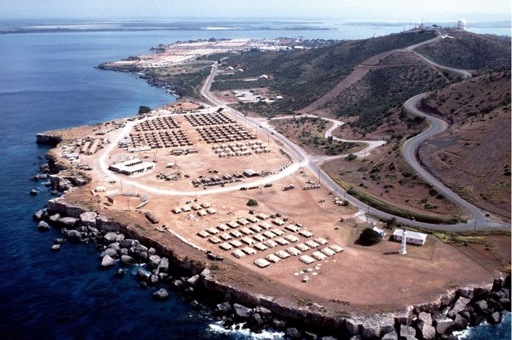
The U.S. Naval Station at Guantanamo Bay in Cuba is perhaps the most enduring and contested symbol of American military presence overseas. Established in the wake of imperial war and sustained through diplomatic rupture and human rights crises, Guantanamo Bay represents the contradictions of U.S. power: permanence cloaked in legal ambiguity, military control justified as security yet producing persistent injustice, and territorial occupation defended as a strategic necessity while provoking international condemnation.
Today, Guantanamo Bay is widely viewed not simply as a naval base but as a site of human rights abuse, legal exceptionalism, and quasi-colonial occupation. Drawing on congressional analyses, human rights reporting, and independent legal scholarship, what follows reconstructs the historical roots of the base, situates its expansion in the post-9/11 era of detention and interrogation, and delineates the social, legal, and moral consequences that make it a compelling case against overseas U.S. military bases.
Guantanamo’s origins lie not in Cuban consent but in asymmetrical power. At the close of the Spanish-American War in 1898, the United States acquired Spain’s former colonies and negotiated treaties that granted it naval stations in newly independent territories. Cuba, relinquishing control in 1903, signed the lease that authorized the U.S. to occupy and exercise “complete jurisdiction and control” over the territory as long as it remained occupied by American forces.
From the outset, the arrangement reflected starkly unequal bargaining power: while Cuba retained formal sovereignty, control was ceded in perpetuity subject to U.S. occupancy. A 1934 treaty reiterated these conditions, and today the lease persists without expiration, fungible only through bilateral agreement, which Cuba, since 1959, has consistently rejected as illegitimate.
The legal status of Guantanamo Bay has thus long been contested. Scholars describe it as “quasi-colonial,” a territorial anomaly wherein Cuban sovereignty exists only on paper while the United States exercises effective dominion over the land. In practical terms, the base functions under U.S. Navy administration, reporting to the Commander of Navy Region Southeast in Jacksonville, Florida, yet sits within the sovereign territory of the Republic of Cuba.
Such an arrangement encapsulates a central critique of overseas bases writ large: they are sites where American military authority operates beyond the full reach of domestic law or democratic accountability, sustained by international frameworks that privilege prerogative over host-nation self-determination.
From Coaling Station to Refugee Camps
For much of the twentieth century, Guantanamo Bay served conventional naval uses, as a coaling station, logistical hub, and outpost for projection into the Caribbean. It was used for the U.S. military interests in both World Wars and through the early Cold War. In the 1990s, its role expanded in ways that foreshadowed later controversy.
Between 1994 and 1996, Guantanamo Bay housed tens of thousands of Cuban and Haitian refugees intercepted at sea during the mass exodus of migrants known as Operation Sea Signal. Camps hastily constructed on base land accommodated people fleeing political upheaval and dire economic conditions. These refugee camps suffered from extreme heat, inadequate water supply, and sanitation challenges; the base’s infrastructure proved ill-prepared to serve humanitarian ends.
A Legal and Human Rights Disaster at Guantanamo Bay Detention Camp
The defining chapter in Guantanamo’s modern notoriety began in January 2002, when the U.S. military reopened Camp X-Ray and began housing detainees seized during the U.S. invasions of Afghanistan and Iraq. Unlike ordinary naval activities, this use transformed Guantanamo Bay into the world’s most controversial detention facility, a space outside the full reach of U.S. constitutional protections and subject to military commission trials rather than civilian courts.
Here, the core opposition to the base crystallizes: Guantanamo became a legal black hole where detainees could be held indefinitely, without charge, without fair trial guarantees, and often without meaningful ability to challenge their detention. Analyses by human rights organizations and UN experts have repeatedly concluded that detainees were subjected to torture, cruel and degrading treatment, and systematic violations of international human rights law.
Signs of psychological deterioration among detainees were observed early; in 2003, the International Committee of the Red Cross warned of significant mental health issues among those held in outdoor cages at Camp X-Ray. Later reporting documented widespread abuses, including forced feedings during hunger strikes, a practice condemned by the World Medical Association as tantamount to torture.
Beyond physical abuse, the legal architecture governing Guantanamo reinforced impunity. In Boumediene v. Bush (2008), the U.S. Supreme Court affirmed detainees’ right to habeas corpus, but this came only after years of litigation and international pressure. A large majority of detainees, some held for nearly two decades, were never charged with actionable crimes under internationally recognized standards.
Amnesty International’s detailed documentation shows that torture and enforced disappearance in the CIA’s rendition program were integral to the detention regime that fed into Guantanamo, yet no U.S. official has been prosecuted for these crimes. The failure to hold perpetrators accountable corrodes the moral standing Washington claims in advocacy for global human rights.
International bodies have echoed these concerns. A joint statement by UN Special Rapporteurs described Guantanamo Bay as defined by “systematic use of torture, and other cruel, inhuman or degrading treatment” and condemned the absence of accountability as a profound failure of justice.
International Law, Sovereignty, and Ongoing Controversy
The legal status of Guantanamo Bay continues to be a source of diplomatic friction. Cuba has repeatedly called the U.S. presence illegal under international law, arguing that the lease was imposed under duress and that no valid consent exists for what has effectively become a penal colony. American assertions of jurisdiction over the territory are grounded in a treaty regime that has outlived its legitimacy in Cuban eyes, especially given the base’s expanded use far beyond its original stipulations as a coaling station.
This situation highlights a broader criticism of overseas bases: they can facilitate activities that evade host nation oversight and international accountability, while sustaining geopolitical control over territory that would otherwise be under sovereign jurisdiction.
Attempts by U.S. presidents to close the detention facility have repeatedly failed, facing legislative obstacles and shifting political winds. Barack Obama’s early effort to shutter the camp was blocked by Congress, and subsequent administrations have alternately expanded, maintained, or minimally reduced operations without addressing the base itself.
Beyond Terrorism: New Uses and Continued Abuse
While Guantanamo’s reputation was forged in the post-9/11 war on terror, recent developments show how its existence continues to enable punitive and law-enforcement practices that would be unlawful on U.S. soil.
In 2025, the American Civil Liberties Union (ACLU) sued to block the transfer of migrants, including individuals from Venezuela, Bangladesh, and Pakistan, to Guantanamo Bay, alleging “inhumane treatment” and violations of U.S. immigration law. According to the lawsuit, migrants were held in isolation, subjected to invasive procedures, and cut off from family and counsel, which contributed to suicide attempts.
Another federal lawsuit described conditions of extreme fear and intimidation that undermined access to legal representation and meaningful communication, conditions more restrictive than those in mainland detention facilities. These cases suggest that Guantanamo’s legacy extends beyond counterterrorism to become part of a punitive detention apparatus for migrants, further blurring ethical and legal boundaries.
Unseen Harms: Socio-Environmental and Local Impacts
Much of the critique of U.S. military bases focuses on a fake strategic or geopolitical logic. But Guantanamo also imposes social and environmental harms that are less visible yet no less significant. The base’s extraction of local resources, including water, became a flashpoint when the Cuban government accused the U.S. of “stealing water,” prompting the cutting of pipelines in the 1960s.
Moreover, the displacement of Cuban workers and communities from economic participation on base grounds, and the integration of the facility as a militarized enclave within Cuban territory, disrupts local development and perpetuates inequality. While detailed environmental impact assessments for Guantanamo Bay specifically are limited in the public domain, extensive literature on military installations globally shows persistent issues, including contamination, habitat disruption, and strain on local water and waste systems. Much of this literature suggests that overseas bases frequently externalize environmental costs onto host nations and marginalized populations, with limited compensation or remediation.
Guantanamo Bay as a Case Against Overseas Bases
Naval Station Guantanamo Bay reveals starkly what is at stake in debates over U.S. overseas bases. What began as a claimed strategic outpost born of uneven power dynamics evolved into a detention complex that has become synonymous with indefinite detention, human rights violations, and legal exceptionalism. It stands on Cuban soil yet operates under U.S. military authority beyond full judicial or civilian oversight, challenging the principles of sovereignty and accountability.
Compounded by documented practices of torture, legal denial of habeas corpus for years, and ongoing controversies over treatment of detainees and migrants alike, Guantanamo Bay underscores how overseas bases can become sites where the very norms that democracies claim to uphold, the rule of law, human dignity, and transparency, are systematically undermined.
Calls for closure from human rights organizations, international bodies, and legal scholars argue not simply for the removal of a physical facility but for a broader reassessment of how military power is exercised abroad. The long history of abuse, litigation, and diplomatic contention at Guantanamo Bay should compel scholars, policymakers, and citizens to question the premises that sustain overseas bases and to advocate for policies grounded in respect for human rights, international law, and true sovereign equality.
The post Guantánamo Bay: How an Overseas Base Became a System of Indefinite Detention and Legal Avoidance appeared first on World BEYOND War.
From World BEYOND War via This RSS Feed.