

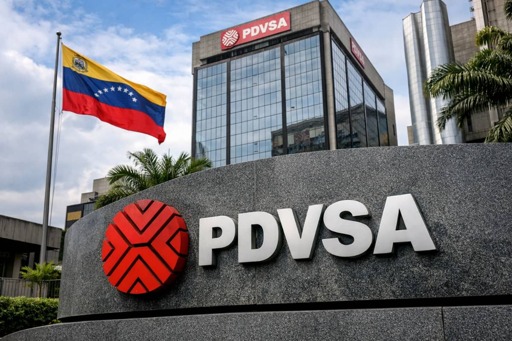
Caracas, March 4, 2026 (venezuelanalysis.com) – Venezuelan state oil company PDVSA emphasized recent agreements to supply crude to the US market and reiterated its commitment to “global energy market stability” amid spiraling volatility caused by the US-Israel war against Iran.
“PDVSA has signed supply contracts with trading companies that deliver oil and derivatives to US markets, thus maintaining a historic trade relationship to guarantee supply,” the company said in a statement on Tuesday.
PDVSA further reaffirmed its stance as a “reliable provider” that will contribute to the “necessary equilibrium” in global energy markets, and called for an end to sanctions against the Venezuelan oil industry.
The communiqué followed a surge in oil prices as a result of the US and Israeli attacks against Iran. On February 28, Washington and Tel Aviv launched a massive bombing campaign against military and civilian targets in the West Asian country.
Tehran has responded by striking Israel and US bases in the region, including in several oil-producing Gulf states. Iranian forces have likewise shut down the Strait of Hormuz, a critical passageway for oil shipments.
Though Venezuelan popular movements have firmly condemned the US-Israeli aggression and voiced support for Iran, the government headed by Acting President Delcy Rodríguez has yet to take a position. Rodríguez expressed “solidarity” with Qatar following the deletion of a controversial Foreign Ministry statement over the weekend.
Since its January 3 bombing of Venezuela and kidnapping of President Nicolás Maduro, the Trump administration has imposed control over the Venezuelan oil industry. Commodity traders Vitol and Trafigura have been lifting Venezuelan crude before re-selling to final customers, with proceeds deposited in accounts managed by the US Treasury Department.
After an initial arrangement that saw revenues routed through Qatar, US Energy Secretary Chris Wright announced last week that payment for Venezuelan oil is now going directly to US Treasury accounts. Wright visited Venezuela in February. He was hosted by Rodríguez in the presidential palace and toured oil facilities where US energy giant Chevron owns stakes.
Out of an initial deal estimated at around US $2 billion, US authorities confirmed that $500 million have been sent back to Caracas, to be offered by Venezuelan banks to private sector importers in foreign exchange auctions. US officials have also confirmed imports of medical equipment and supplies from US manufacturers. Secretary of State Marco Rubio had vowed that Venezuelan oil revenues would be used for purchases from US companies.
In recent weeks, the Trump administration has issued licenses allowing the export of inputs and software to the Venezuelan oil industry, as well as waivers allowing select corporations to expand crude extraction activities in the South American country.
However, the licenses mandate that all royalty, tax, and dividend payments to the Venezuelan state be deposited in US-managed accounts. Similarly, Washington mandated that contracts be subject to US jurisdiction. Transactions with companies from China, Russia, Iran, Cuba and North Korea remain banned, while PDVSA continues under financial sanctions.
The selective loosening of restrictions followed a pro-business overhaul of Venezuela’s Hydrocarbon Law. The reform, approved in late January, grants private corporations expanded control over operations and sales, a reduced tax burden, and the possibility for disputes to be taken to external arbitration.
Both Venezuelan and US officials, including Trump himself, have urged Western corporations to invest in the Caribbean nation’s energy sector, but executives have expressed reservations given market conditions. ExxonMobil will reportedly send a team to evaluate prospects for a return to Venezuela in the coming weeks.
The company had its assets nationalized by the Hugo Chávez government in the 2000s after refusing to accept reforms that reinforced Venezuelan state sovereignty over the industry. ExxonMobil pursued international arbitration but ultimately received an award significantly below its compensation demands.
Despite the oil sector opening to US and European interests, Venezuelan crude exports receded in February, according to Reuters, following the wind-down of shipments to China. In 2025, around three-quarters of Venezuelan crude was destined for Chinese refineries. Washington imposed a naval blockade in December and seized several tankers as part of its efforts to exert control over Venezuelan oil exports. Two Chinese-flagged ships turned around while headed to Venezuela in January.
Crude exports are expected to pick up in March, with shipments scheduled for Indian buyers.
Edited by Lucas Koerner in Fusagasugá, Colombia.
The post Venezuela: PDVSA Pledges ‘Reliable’ Oil Supplies to US Amid Iran War appeared first on Venezuelanalysis.
From Venezuelanalysis via This RSS Feed.