

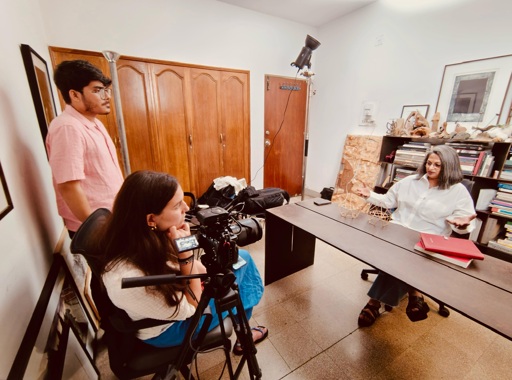
Environmental journalism has long struggled with a practical problem: how to make distant ecological change feel relevant to people whose daily lives are shaped by more immediate concerns. Scientific reports document trends in temperature, biodiversity and land use with increasing precision, yet such findings often fail to travel far beyond specialist audiences. Video, once expensive and difficult to distribute, is now ubiquitous. Today the constraint is attention. Content that reaches large audiences usually foregrounds human experience rather than abstract risk. One response has been to anchor environmental reporting in lived realities. Instead of beginning with emissions curves or species counts, journalists start with households, workers or communities navigating change. This approach repositions the science so climate change becomes visible as relocation, lost income, altered routines and disrupted schooling. The method carries risks, including the temptation to substitute anecdote for evidence. Used carefully, however, it can broaden understanding without sacrificing accuracy. Lucía Torres, who leads video production at Mongabay, has built much of her work around this premise. In reporting on a Mexican coastal town forced to move inland after years of storms and encroaching seas, she focused on residents’ relationships with place and each other. The aim was to document gradual disruption rather than stage dramatic suffering. Time spent off camera proved as important as filming itself. Conversations, shared meals and repeated visits helped establish trust, yielding testimony that felt less performative and more reflective of ordinary life under strain. Her broader advice to younger journalists is pragmatic. Technical skill…This article was originally published on Mongabay
From Conservation news via This RSS Feed.