

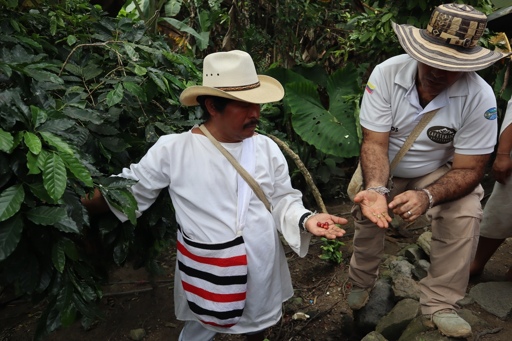
CIÉNAGA, Colombia — A handful of men swarm around a coffee collection center in the city of Ciénaga, shouldering burlap sacks of coffee as they move in and out of the mill. Ciénaga is a port town in the foothills of Colombia’s Sierra Nevada de Santa Marta, the world’s highest coastal mountain range, and is known locally as the coffee capital of the Sierra Nevada region. “We hope EUDR will be to our benefit,” says Silver Polo Palomino, a coffee grower and representative of the Asociación de Agricultores Orgánicos de La Secreta (AGROSEC), a local organic coffee growers’ association in Ciénaga, speaking over the roar of the mill. Polo is one of many producers in Colombia who say they’re uncertain — and increasingly nervous — about what the implementation of the European Union Deforestation Regulation (EUDR) will mean for their livelihoods. The regulation, set to go into force at the end of this year, will ban the import into the EU market of seven key commodities linked to deforestation. Coffee is among them. But Colombia, the world’s No. 3 coffee producer, is well prepared for the EUDR and better positioned than coffee exporters in many parts of Africa and Asia, several experts told Mongabay. Despite a fragmented sector dominated by small-scale farmers, Colombia’s coffee industry is highly organized, largely through the National Federation of Coffee Growers of Colombia (FNC), which represents more than 500,000 coffee-growing families. The FNC has developed a centralized georeferenced database, the Coffee Information System (SICA), designed to…This article was originally published on Mongabay
From Conservation news via This RSS Feed.