

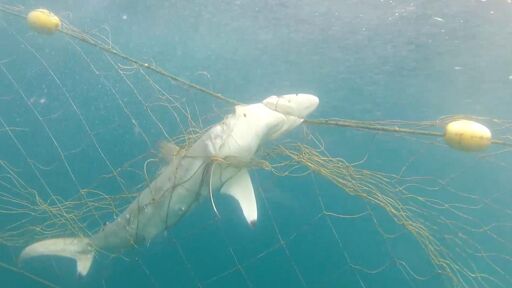
On Feb. 13, a juvenile humpback dolphin was caught and killed in one of the many nets strung up off the coast of South Africa’s KwaZulu-Natal province to protect beachgoers from sharks. The incident, near the city of Richards Bay on the country’s eastern coast, was a blow for South Africa’s population of Indian ocean humpback dolphins, which has dropped to fewer than 500 in recent decades. Shark nets, installed together with baited hooks called drum lines, aim to reduce the number of sharks that could come into contact with, and possibly harm, humans. Once entangled in these nets, which can run hundreds of meters wide, sharks have little chance of survival — nor do other species like humpback dolphins (Sousa plumbea). In the wake of the February incident, scientists working to conserve humpback dolphins issued a letter of opposition to a proposal to install another such net at a popular beach farther down the coast. Tinley Manor is a one-and-a-half-hour drive from Richards Bay, and has emerged as a flashpoint in the debate about shark nets. Municipal authorities there are proposing installing a shark net at the public beach, in view of the new Club Med luxury resort being built right next to it. The KwaZulu-Natal Sharks Board (KZNSB), as the authority responsible for bather safety in the province, says it’s acting to safeguard beachgoers, whose numbers are expected to rise significantly with the opening of the resort later this year. Indian Ocean humpback dolphins. Image courtesy of Bridget…This article was originally published on Mongabay
From Conservation news via This RSS Feed.