

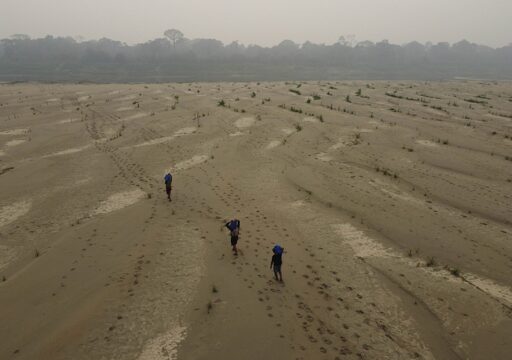
Brazil’s largest Amazon hydropower plants are becoming increasingly vulnerable to climate change, and Belo Monte may be the clearest warning sign yet. Built on the Xingu River after years of debate over its environmental impacts and the reliability of its energy output, the mega-dam is facing a problem its planners could not solve with engineering: less water. This reality is reflected in two major studies published in late 2025 — one led by Brazil’s water and sanitation agency, ANA, and the other by the federal energy research office, EPE. From different angles, both reports conclude that climate change is fundamentally reshaping the country’s water and energy systems, requiring urgent adaptation — 43.7% of Brazil’s energy comes from hydropower plants. ANA’s report warns that hydropower plants across the Amazon region could lose up to 40% of their generation capacity over the next 20-30 years if planning continues to rely on historical water flow data rather than climate-adjusted projections. The Xingu River Basin in particular will face significantly longer and more intense dry seasons over the coming decades. Maximum river flows could decline by up to 50%, according to the study published in November 2025, while consecutive dry periods — historically around 20 days — may extend to as many as 40 days by the end of the century, with some dry spells lasting up to 150 days. Those numbers look into the future, but the severity of droughts and their impact on Amazon dams are today’s reality. In 2024, during the…This article was originally published on Mongabay
From Conservation news via This RSS Feed.