

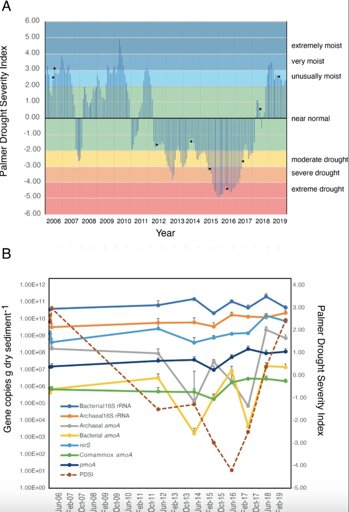
A prolonged drought in southeastern Connecticut reduced the stability of microorganisms responsible for a critical step in the nitrogen cycle in a coastal salt marsh, according to research led by a Connecticut College scientist and published in Estuaries and Coasts. The study was led by Anne Bernhard, professor of biology at Connecticut College. Bernhard and her co-author analyzed microbial communities in a salt marsh at the Barn Island Wildlife Management Area in Stonington, Connecticut, from 2006 to 2019. The period included a severe regional drought from 2013 to 2018.
From Biology News - Evolution, Cell theory, Gene theory, Microbiology, Biotechnology via This RSS Feed.
You must log in or # to comment.