

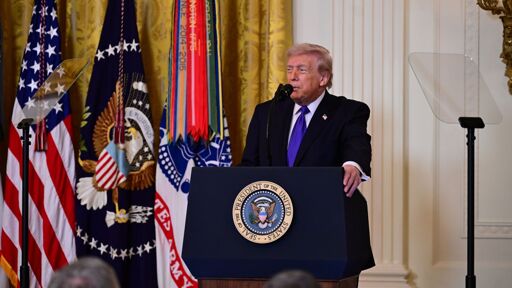
The decision to launch “Operation Epic Fury” in coordination with Israel’s offensive in the region — presented as a preemptive response to Iran — cannot be understood solely as a military calculation. It is, above all, an impulsive and “astrategic” shift: the moment Donald Trump allowed himself to buy into the neoconservative logic he has claimed to fight against for years. Despite public objections from the head of the U.S. military, Trump may have been encouraged by the ease of the operation in Venezuela earlier this year. The result is a war without a clear horizon, with a resounding beginning and an uncertain end, which strains the credibility of American deterrence and reconfigures the political terrain in the region.
Credibility of Deterrence
Since the Cold War, American deterrence has rested on a basic premise: any threat must be proportionate, credible, and subordinate to a clear political objective. The current campaign breaks that balance.
The United States has shifted from attempting to impose negotiated conditions — the surrender of enriched uranium and the dismantling of ballistic missile capabilities — to pursuing maximum pressure, the outcome of which depends on factors beyond its control: the implosion of the regime or an internal fracture in Tehran.
The problem is twofold. First, if Iran manages to sustain a high rate of retaliation — through its underground “missile cities” and its operational decentralization — the military superiority of the United States and Israel ceases to be politically decisive. Wars of attrition are not won by the tonnage of bombs but by strategic resilience. Second, if the coalition fails to substantially degrade Iranian capabilities before critical stockpiles (interceptors, munitions, etc.) are depleted, deterrence could be reversed: the major power would appear incapable of translating its strength into results. This would represent a significant erosion of the credibility of the United States.
Bibi’s Extremist Logic
For Benjamin Netanyahu, war is not just a tool: it is a method of political survival. Since October 7, Israel has been in a state of permanent mobilization where each escalation postpones an internal reckoning, preventing the fractures shaking Israeli society from erupting.
Far from moderating this trend, Trump seems to have finally embraced it. The close coordination between Washington and Jerusalem repositions Israel as a preferred strategic partner, one with which the United States is willing to share operational risks. But it also means the United States can be dragged into Israel’s own existential logic.
In this logic, the elimination of the Iranian leadership is seen as a decisive blow. But historical precedent — from Iraq to Libya — suggests that decapitating a regime does not guarantee that it will be replaced with a functional one, much less one aligned with the West.
Three Scenarios in Iran
Today, three main scenarios are emerging. The first is an internal coup: a faction of the Islamic Revolutionary Guard Corps or the state apparatus displaces the hardliners and negotiates from a “renewed” position. This is the scenario desired by neoconservatives: change without a ground invasion. But it presupposes fractures whose actual existence is uncertain. If this scenario fails, a tempting alternative could be a “mission accomplished” withdrawal similar to that of the 2003 Iraq War. If the regime resists and the cost of the war escalates, Washington and Jerusalem could declare victory — the removal of Khamenei as proof of deterrent restoration — and seek a negotiated solution.
Thirdly — the nightmare scenario — there remains the possibility of a protracted regional war. If the regime change hypothesis does not materialize and withdrawal proves politically unfeasible after such a show of force, the conflict risks becoming a prolonged war of attrition. Iran’s policy of escalating attacks against bases and assets in the Gulf seeks to raise the overall cost of the conflict. The Gulf monarchies — transformed into financial and technological hubs in recent decades — are vulnerable. A prolonged confrontation could threaten the stability of the Gulf and increase the risks to Israeli and U.S. forces and assets. It could also exert sustained political pressure on the White House, especially if U.S. involvement intensifies without a clearly defined strategic objective.
On the other hand, it is important to consider that the tactical victory of eliminating Khamenei could backfire. The Iranian leader was not only a head of state but also a Shiite religious authority with transnational influence. His elimination could be reinterpreted as martyrdom: a conflict that until now could be understood in terms of security and deterrence could take on a religious and identity-based dimension. For millions of Shiites in Iraq, Lebanon, the Gulf, and South Asia, this could become a historical grievance. Today’s fierce clashes in Pakistan may be a harbinger.
A Litmus Test for Trumpism
Donald Trump’s “neoconservative takeover” lies not in his use of force, but in elevating it to a substitute for strategy: confusing the spectacular nature of the initial blow with ensuring a lasting political outcome.
The campaign began with a bang and the promise of a decisive show of force. But wars are not judged by their initial impact. Far from an exit strategy, Trump is betting that pressure alone will produce the desired outcome. The search for an “Iranian Delcy Rodríguez” could ultimately prove to be a strategic illusion.
If that outcome doesn’t materialize, the alternatives narrow: accept a costly withdrawal that damages his image, or deepen an escalation that, once unleashed, could spiral out of control, setting the entire region and beyond ablaze.
This article was originally published in Spanish on March 1, 2026 in La Izquierda Diario.
The post Trump’s Neoconservative Takeover in Iran appeared first on Left Voice.
From Left Voice via This RSS Feed.