

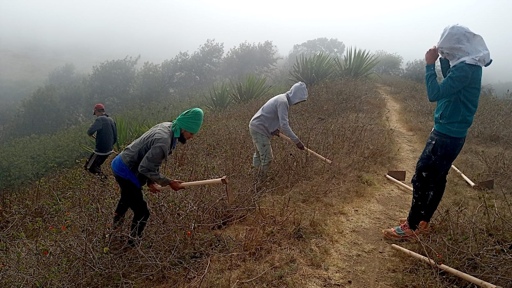
African conservation stakeholders will soon gather for the 5th Business of Conservation Congress in Nairobi, led by African Leadership University. As they build the case for investing in nature-based business, the focus is on markets, enterprise models and blended finance. However, a crucial question remains: what actually makes conservation investable, resilient and scalable? Conservation has attracted significant funding, and yet biodiversity loss and climate change continue to accelerate. As new financial tools are discussed and refined, it is also worth reflecting — as a network of conservation funders and doers — on whether the money poured in through the last 30 years has worked; whether we have solved the problems; and whether the current operating model will carry us through the next 30. The problem is not a lack of commitment or capital; it is a misreading of how conservation works in practice. In our experience, community-led conservation is more efficient and resilient than traditional top-down models because it places authority closer to those who depend directly on the land. By embedding rules within locally legitimate institutions, it reduces enforcement and transaction costs and strengthens compliance through social trust. A recent analysis of wildlife management areas (WMAs) is a good example. Pastoral communities in Tanzania’s Tarangire ecosystem use WMAs to defend their land and livelihoods, even without full devolution of management rights, showing how conservation can serve local interests while protecting wildlife habitat. If community-led models are genuinely more efficient, that advantage should be visible in how conservation is delivered…This article was originally published on Mongabay
From Conservation news via This RSS Feed.