

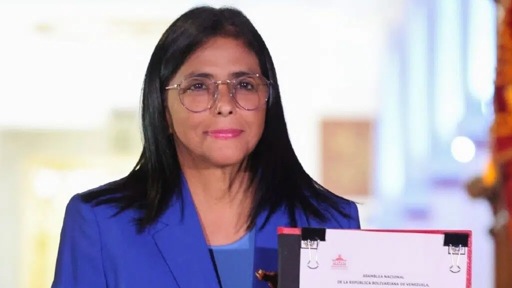
On February 19, the Venezuelan National Assembly approved the Amnesty Law. Support for the measure was unanimous: the entire legislative body voted in favor of the bill, which seeks to grant amnesty to detainees and convicts who committed certain illegal activities against the established order.
“We must know how to ask for forgiveness, and we must also know how to receive forgiveness. And that is the process that this amnesty law opens up,” said Acting President Delcy Rodríguez, after signing the bill into law. For his part, the president of the assembly, Jorge Rodríguez, the president’s brother, said he regretted that “such unfortunate and catastrophic events had to occur [for] all of us to seek and promote brotherhood, unity, and peace in the Republic.”
According to a special commission of the National Assembly, hundreds of people have been released since its approval. Congressman Jorge Arreaza said that the commission has received about 4,293 requests for amnesty. Nearly 3,000 people who were on parole now have full freedom.
One of the articles considered during the second discussion of the Amnesty Law was whether people outside the country can be represented before the relevant court by a legal representative.
Once a person submits their request for amnesty, the state undertakes not to deprive them of their liberty; however, for it to be fully effective, the defendant or convicted person must appear in person in Venezuela to be granted amnesty. In addition, the law stipulates that it will only apply to those persons who have ceased or will cease to commit the crimes or offenses covered by the regulations.
Some of the crimes that will be pardoned are related to activities carried out against the legal order during the attempted coup d’état in April 2002, as well as attacks or destruction of public and private facilities carried out in the context of that political event. The amnesty also includes those who committed crimes in the context of protests, and public officials who lost their jobs as a result of such legal proceedings will be able to return to their jobs and reintegrate into society with full rights.
However, the law does not cover those who have committed serious human rights violations, crimes against humanity, and war crimes. Nor does it include those who have committed murder, drug trafficking, or corruption. The law makes special mention of not pardoning those who “have promoted, instigated, requested, invoked, favored, facilitated, financed, or participated in armed actions or acts of force against the people, sovereignty, and territorial integrity of Venezuela.” This includes those who have invoked invasions or promoted illegal sanctions.”
Read more: Amnesty in Venezuela is neither weakness nor oblivion
Many of those affected by the serious crimes committed by some opponents have expressed their hope that the sentences will be carried out. This was stated by Inés Esparragoza, mother of Orlando Figuera (who was stabbed several times and burned alive by a group of anti-Chávez protesters) before acting President Delcy Rodríguez. Figuera, according to his mother, was brutally murdered because of the color of his skin and because he was considered a Chavista. In this regard, the law does not provide for pardoning this type of crime.
The Amnesty Law is the latest legislative initiative being promoted by the Rodríguez government since the armed incursion by the US army that caused the deaths of almost 100 people and ended with the capture of then-President Nicolás Maduro, who, along with his wife, is currently detained in the United States. The Rodríguez interim government has repeatedly demanded the release of both.
The Trump administration has openly stated that it has reached agreements with the Rodríguez government, although it has threatened to carry out a second attack if the Venezuelan authorities do not negotiate specific issues such as energy reform, under which Venezuela will sell oil to the United States and its allies, and is prohibited from selling oil to Cuba and other countries.
For now, it remains to be seen whether the amnesty law and other economic and political reforms will lead to a relaxation of US sanctions against the South American country, which have been in place for several years and have caused millions in losses.
The post Amnesty law comes into force in Venezuela appeared first on Peoples Dispatch.
From Peoples Dispatch via This RSS Feed.