

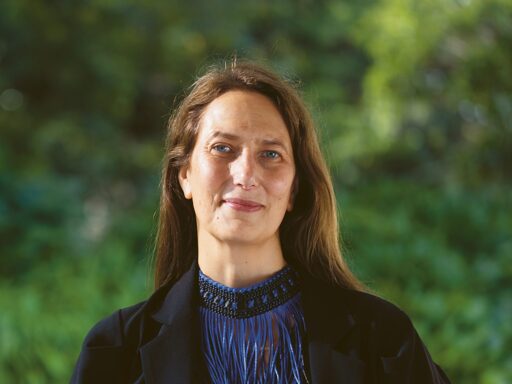

“We should reconsider the Crown’s assumption that it must own and govern public lands and waters,” writes Professor Jacinta Ruru. (Image supplied)
This summer, we’ve seen the climate crisis on our doorstep — devastating weather has again taken lives and livelihoods, and altered landscapes around the country.
Looking long-term, law professor Jacinta Ruru says one of our greatest hopes for tackling the crisis is to embrace Indigenous leadership in caring for land and water.
Here she is writing about why.
I grew up in the lands of Ngāi Tahu — away from my own tūrangawaewae, in the far south at the head of Lake Wakatipu, in remote Glenorchy, at the foot of the majestic Mount Earnslaw, and next to the braided waters of the Dart River. We were surrounded by lands protected within the renowned Fiordland and Mount Aspiring national parks, managed by the Department of Conservation.
Something seemed terribly amiss and remiss.
Was I not also living in the stolen lands of Ngāi Tahu, at the head of a sleeping giant, on the boat that Māui used to catch the big fish that the Europeans named the North Island? Was I not living near the trails of the most precious traded resource in the Māori economy (pounamu or greenstone), a place deep with centuries of Māori history and knowledge?
But none of this was visually evident in the mostly overlaid English placenames of my childhood home.
This childhood unease led me to dream of better, more respectful ways to acknowledge Māori histories, stories and interests, and to remain stewards of the lands and waters essential to cultural identity and survival.
I ended up studying law, but I could not reconcile the law curriculum with the stories my father’s family told about the law. These stories are about dispossession from ancestral land from the 1860s onwards through insidious racist assimilationist legislation and local government rules.
I knew our experiences were not unique; all Māori families have similar accounts. These experiences were mostly invisible throughout my tertiary education (and, in fact, throughout all my formal education). Studying law gave me an insight into how the law was used to achieve colonial goals; it did not convince me that the law operates on an unbiased, neutral terrain. And so I came to regard the subject of law as both shocking and fascinating.
Hundreds of years ago, Europeans dreamed of expanding their empires across salt waters. They developed a new legal doctrine: the Doctrine of Discovery. It holds that European countries can gain sovereignty over another’s land on the basis of first discovery, even if other people live there. This is one of the greatest examples of the “magic” that western law can weave: Europeans made up law to suit their desire to expand their control of the world order. It happened then. It happens now.
The colonists’ rules have been established to empower the colonists. But knowing this, if law is this powerful and can do anything, what do we now want it to do? Knowing that law is biased, we have the agency to make transformational legal and policy change to purposefully create new rules to mitigate climate change, environmental destruction, and biodiversity loss.
It is well known that colonial state laws around the world have done an enormous amount of damage to Indigenous peoples’ intergenerational responsibilities of environmental care and use.
I acknowledge the advances Aotearoa New Zealand has made towards a decolonised society where state property laws have begun to empower, rather than terminate, Indigenous Māori ownership of lands, waters and coastlines.
In this country, some new innovations to decolonise state property and conservation law are evident, especially in lands enclosed in our national parks.
For instance, because of Māori insistence in negotiations with the Crown, legislation now recognises some of the Māori ancestral embodiments in nature.
For example, the law recognises our highest mountain that lies in the Aoraki Mount Cook National Park as the son of Ranginui, the country’s longest river, the Waikato River, as a tupuna ancestor, and Te Urewera (previously a large forested national park) as the heart of the fish that Māui caught.
The law recognises that specific expansive mountainous lands in the Egmont National Park, including Taranaki Maunga, and the country’s third-longest river, the Whanganui River, whose path from the mountains to the sea winds through the Whanganui National Park, are “legal persons”, with all the rights, powers, duties, responsibilities, and liabilities of a legal person.
Likewise, because of persistent Māori action in the state courts, judicial decisions are becoming more respectful of Māori property and environmental laws and values. I applaud and honour the intellectualism, bravery, and resilience of my Māori ancestors and relations — then and now.
For Māori, the first peoples to discover and make these lands their home, these places have always had personality, sitting in the world between earth mother and sky father. It is extraordinary that our state legal system has now recognised this too. Māori families across the country have dreamed of and fought hard for our country to better recognise Māori relationships with lands and waters.
The link between land and water and humans is a common feature in the language, serving as a constant reminder of our relationships with our environmental ancestors. For instance, iwi means both “tribe” and “bone”; hapū means both “sub-tribe” and “to be pregnant”; whenua means “land” and “afterbirth”, and wai means “water” but also “memory” and “who”.
In many ways, the Māori legal system reflects this personified worldview. It is predominantly values-based, not rules-based. Relationships matter, both between people and between people and the surrounding world.
For example, utu plays a regulatory role because everything given or taken requires a return of some kind to maintain harmony and balance, thereby ensuring reciprocal acts of continued generosity. Kaitiakitanga (guardianship) is about more than managing relationships between resources and humans; it also involves managing relationships between people in the past, present and future.
My research argues that colonial countries, such as Aotearoa New Zealand, should more meaningfully connect with Indigenous peoples, and one way to do this is to reconsider the Crown’s assumption that it must own and govern public lands and waters.
Legal personality of the environment is a vibrant and real way to displace Crown assumptions of ownership. It is remarkable that our country has commenced recognising Indigenous ancestors in some significant lands and waters. It’s time to be next-level courageous with general conservation and environmental law.
Our nation was brave back in 1987 when parliament enacted the Conservation Act, with section 4 reading: “This Act shall so be interpreted and administered as to give effect to the principles of the Treaty of Waitangi.”
Nearly 40 years on, you would think that we would have a system of conservation management that is at least bicultural in power-sharing, bicultural in science and mātauranga (Māori knowledge) application, and bilingual in expression.
We do not.
This point has been made forcefully by others for a long time, including the Waitangi Tribunal, more than 15 years ago, when it said:
“[The Department of Conservation] must be looking for partnership opportunities in everything that it does. . . . opportunities to share power with tangata whenua should be a core performance indicator for the department rather than . . . the exceptional outcome driven by the wider pressures of Treaty settlements.”
But our current conservation law was born at a time when policymakers and government members were heavily influenced by the western conservation ideals of the 19th and early 20th centuries. This law has, at its heart, an English colonial idea of conservation. Of the 25 statutes administered by the Department of Conservation, only four were enacted since the first modern Treaty of Waitangi settlement statute in 1995.
All the other statutes, such as the National Parks Act 1980, Reserves Act 1977, and the Wildlife Act 1953, were framed in a much earlier, colonial era. Most of these statutes are silent on things Māori, and I would go further and say that they are hostile to Māori leadership and mātauranga Māori, or Māori knowledge.
Of course, in practice, there are many excellent initiatives going on within the Department of Conservation. But a coherent and coordinated overhaul of the whole discordant framework of conservation legislation is required to catch up to the innovation of Māori ideas for caring for lands and waters, especially now, when we need all the knowledge and solutions at our fingertips to combat the crises of climate change.
Would it really hurt to include a Māori understanding of why we have an intergenerational responsibility to care for lands and waters encased within national parks?
According to the National Parks Act 1980, Aotearoa New Zealand’s national parks exist for the “purpose of preserving in perpetuity” their enclosed mountains, forests, sounds, seacoasts, lakes, rivers, and other natural features. It refers to their intrinsic worth, but makes no mention of the importance of such places to iwi.
We only need to look at what happens when Māori do have the pen. Te Kawa o Te Urewera reads like no other national park management plan I have ever read. It deliberately sets out to disrupt the norm. It strives to manage people for the benefit of the land, rather than manage land for the benefit of people.
It is a remarkable document that states: “Our disconnection from Te Urewera has changed our humanness. We wish for its return. . . . In all decisiveness, we are returning to our place in nature, as her child.”
This plan knows that the answers to biodiversity wellbeing lie intimately within the lands themselves, if we listen carefully: Nature speaks all the time and is understood only by the sincere observer and heedful mind and heart.
We need a new relational core to our conservation and environmental legislation, where Māori are valued and enabled in all conservation and environmental legislation to work with the Crown, to “hold the pen”, to make core decisions for why and how we care for public lands and waters.
 The Waitangi Tribunal’s 2011 report Ko Aotearoa Tēnei recommends solutions based on a fundamental shift in the government’s philosophy and approach. The tribunal stated:
“Unless it is accepted that New Zealand has two founding cultures, not one; unless Māori culture and identity are valued in everything government says and does; and unless they are welcomed into the very centre of the way we do things in this country, nothing will change. Māori will continue to be perceived, and know they are perceived, as an alien and resented minority, a problem to be managed with a seemingly endless stream of taxpayer funded programmes, but never solved.”
I don’t think it’s enough just to permit consultation with iwi or invite one or two Māori on to governance boards.
If we really want to be brave as a nation, we need to shift back some power and resources to Indigenous peoples, and here in Aotearoa, this means Māori. Māori have for centuries developed the wisdom on how best to protect and nourish our lands and waters.
We must open our hearts, minds and hands to empowering ngā iwi Māori to help lead us forward as a nation.
This is an edited version of an extract from Kiwis in Climate: Voices for climate solutions in Aotearoa New Zealandedited by Tessa Vincent, published by Bateman Books, released March 2, 2026, RRP $45
Distinguished Professor Jacinta Ruru (Ngāti Raukawa, Ngāti Ranginui) is Deputy Vice-Chancellor Māori and a professor in law at Otago University. She is a fellow of New Zealand’s Royal Society Te Apārangi, winner of the Prime Minister’s Supreme Award for Excellence in Tertiary Teaching, and a past Co-Director of Ngā Pae o te Māramatanga New Zealand’s Māori Centre of Research Excellence.
The post Iwi can lead us through the climate crisis appeared first on E-Tangata.
From E-Tangata via This RSS Feed.