

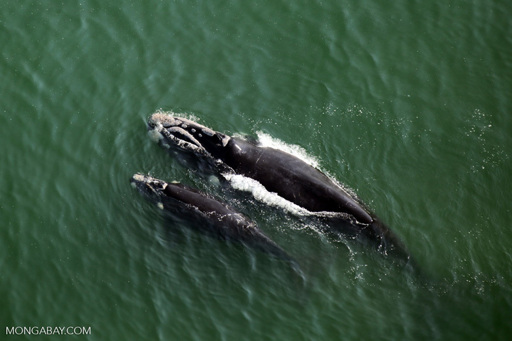
Southern right whales (Eubalaena australis) off Australia’s southern coast are having calves less often than they used to. A new study links this slowdown to warming water and shrinking sea ice in the Southern Ocean. The study, conducted by researchers at Australian, South African and U.S. institutions and published this month in Scientific Reports, tracked more than 1,100 calving events from 696 individual female whales at a major breeding ground in an area called the Great Australian Bight within the Yalata Indigenous Protected Area. Since around 2015, the average time between births rose from 3.4 years to 4.1 years. For a species that reproduces slowly, that shift adds up. “These extended calving intervals mean fewer calves are being born overall, and this reduces population growth over time,” lead author and marine biologist Claire Charlton from Flinders University writes in The Conversation. “Southern right whales have been celebrated as one of conservation’s success stories … But our new research shows this success story is changing.” Between 1991 and 2024, scientists used photo-identification data to tell the whales apart. Each whale has a unique pattern of callosities, or patches of thickened skin, on its head that distinguishes one from another. Southern right whale individuals are identified by their callosity patterns, patches of roughened skin covered with white cyamids or “whale lice”, that give every right whale’s head a unique and stable pattern. Photo by Macarena Agrelo. Using this long-term whale dataset, along with environmental records, researchers found that half of the variation…This article was originally published on Mongabay
From Conservation news via This RSS Feed.