

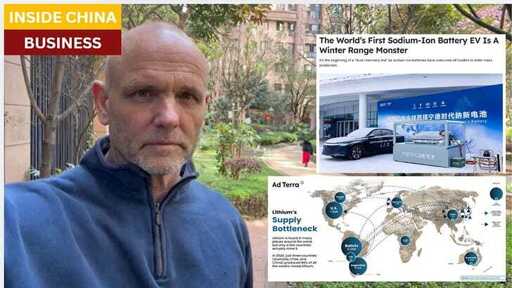
Bullets:
China is in mass production of a sodium-ion battery, which opens vast new markets for electric vehicles.
Lithium-ion batteries drive most electric vehicles, and lithium has a long and complex supply chain. The refining of lithium is expensive, and poses severe environmental challenges.
Sodium is abundant, everywhere, and sodium batteries perform far better in cold climates.
Inside China / Business is a reader-supported publication. To receive new posts and support my work, consider becoming a free or paid subscriber.
Report:
Good morning.
A subscriber sent us a message with a video link, and suggested we move this report to the top of the pile. And we recommend you take a few moments to watch it, because it’s quite good:
CATL and Changan Motors built a revolutionary battery for electric cars, and is a sodium-ion battery, instead of lithium. The science and chemistry of the battery are exciting, and its mass production will open huge new markets.
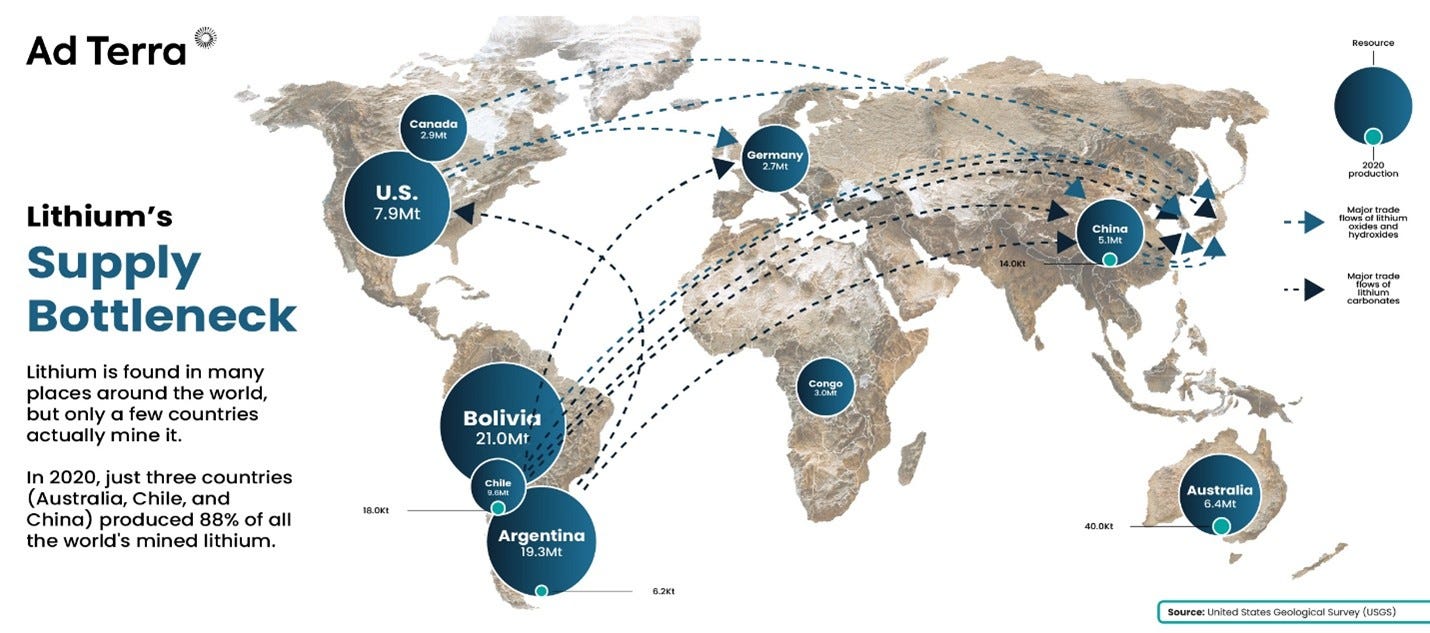
And a sodium battery is consequential is another respect, namely that the supply chains for lithium are complex, lithium mining is expensive, and the creators of that video did a good job of fleshing out those issues and challenges with lithium batteries; challenges which go away if sodium—which is everywhere—can also be used as a power source.
CATL and Changan are in Inner Mongolia now, testing their new battery. Winters in Nei Mogu are very cold, and later on they’ll take it to Antarctica for more testing.
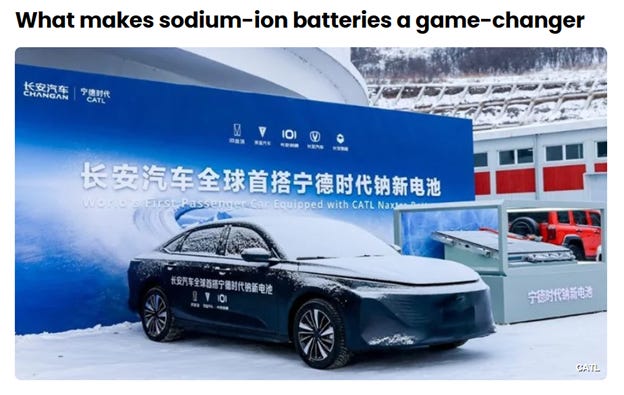
Changan is introducing sodium-ion batteries in all its models. Changan is a major car manufacturer here in China, and their new battery will roll out to the public this summer.
The sodium ion batteries are at a far lower risk of fire, and perform much better in cold climates. CATL expects that the range for them will improve as the supply chains for sodium ion batteries deepen, and buyers will have more battery options. Lithium batteries won’t go away; instead, multiple battery chemistries and markets will emerge.
What has the industry most excited is that superior performance in cold weather. Sodium ion battery packs retain 90% capacity at -40 Fahrenheit, which is also -40 Celsius. At 40F (4C), EV range begins to drop, and at 16 Fahrenheit users lose 25%. So for car buyers in northern climates, the sodium-ion batteries change the calculus for electric vehicles completely, and sodium batteries open up vast new markets to CATL and Changan.
The batteries also charge very fast, back to 80% in 15 minutes. Still another advantage is that sodium batteries can charge from 0%, unlike most lithium batteries used in cars. These models then can be shipped uncharged, to be charged upon arrival. That is safer, both for the vehicles and for the car carrier ships they’re riding on, and saves time and expense at the point of origin.
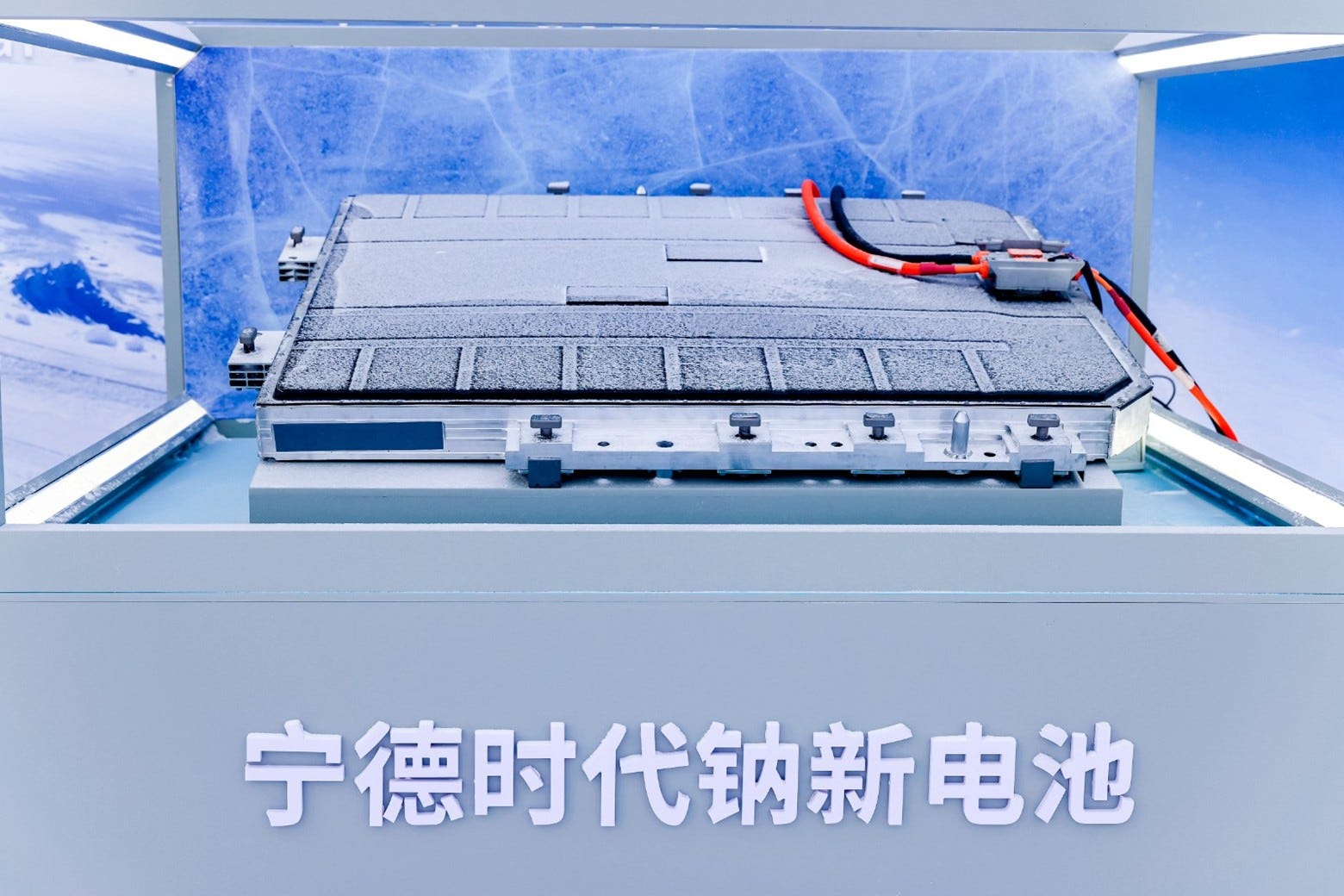
We hit points like these hard here, on this channel: It takes a lot of time and money and people—smart people—to develop new technologies like these. We shouldn’t have time anymore for the argument that Chinese companies are just copying what technicians do in other countries, and reverse-engineering them. We’ve been lying to ourselves about that for 20 years. CATL began research on sodium batteries 10 years ago, invested $1.4 billion US, and put a staff of 300 R&D engineers and 20 PhD’s to work on the problem.
Be good.
Resources and links:
THIS CAR RUNS ON SALT?! China Just Killed Lithium [2026]
The World’s First Sodium-Ion Battery EV Is A Winter Range Monster
https://insideevs.com/news/786509/catl-changan-worlds-first-sodium-ion-battery-ev/
China’s CATL tests EVs – and lithium’s dominance – with pioneering sodium-ion battery
https://www.scmp.com/business/china-evs/article/3342481/chinas-catl-tests-evs-and-lithiums-dominance-pioneering-sodium-ion-battery
This Cool New Car Could Change The Future Of EV Batteries Forever
https://www.bgr.com/2100215/changan-ev-sodium-ion-battery-change-everything/
CATL and CHANGAN Launch World’s First Mass-Production Sodium-Ion Passenger Vehicle
https://www.catl.com/en/news/6720.html
Inside China / Business is a reader-supported publication. To receive new posts and support my work, consider becoming a free or paid subscriber.
From Inside China / Business via This RSS Feed.