

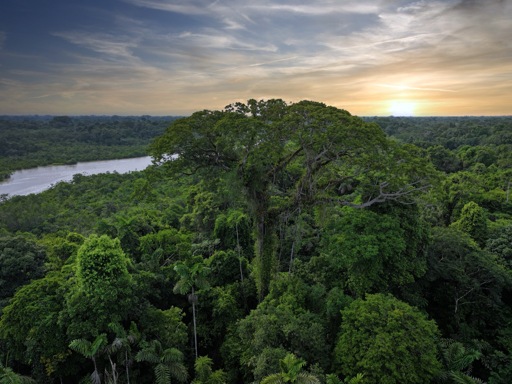
The tropical forests of the Amazon and Andes are some of the most biodiverse places on the planet, but across both regions, changes in climate and landscape conditions are driving a shift in the number of tree species, recent research has found. Although the overall number of tree species across the Andes and Amazon hasn’t changed in recent decades, some subregions are gaining species while others are losing them, according to the study published in Nature Ecology & Evolution. Trees provide vital ecosystem services, and changes in their diversity — what experts call tree richness — could have an impact, including on the forests’ role in temperature regulation or carbon storage. Using more than 40 years of tree diversity data, the study found that species richness declined in the central Andes, the Guyana Shield, and the central-eastern Amazon subregions. Meanwhile, it increased in the northern Andes and western Amazon, and didn’t change significantly in the southern Amazon. Researchers used data from 406 different forest plots across 10 countries, paired with records of climate indicators. “Forests are changing and now we have evidence that it’s linked to climate change,” said Belén Fadrique, a research fellow at the University of Liverpool in the U.K. and lead author of the study, which involved more than 160 co-authors. “We do find that a majority of sites are decreasing in richness,” Fadrique told Mongabay in a video interview. In total, 203 plots declined in tree richness and 146 increased, the research found. Overall, the richness…This article was originally published on Mongabay
From Conservation news via This RSS Feed.