

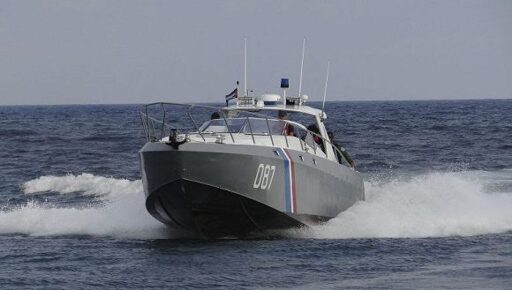
On the morning of February 25, 2026, Cuban authorities thwarted yet another terrorist attack one mile off the country’s northern coast. When it was over, four men lay dead, six more were wounded and in Cuban custody, and a high-speed boat registered in Florida (FL7726SH) sat disabled, its deck littered with assault rifles, handguns, Molotov cocktails, and bulletproof vests.
The attack has brought to the fore a discussion of the long and often forgotten history of terrorist attacks that Cuba has faced in the 66 years since its revolution and what actors, state and otherwise, have been behind them.
The attack
Early on February 25, an unidentified and unannounced speed boat entered Cuban waters. When the Cuban Coast Guard approached it to identify the vessel, the boat’s crew opened fire without warning. The assailants, armed with assault rifles and Molotov cocktails, wounded the Cuban patrol commander before the guards returned fire in self-defense.
Reports from Miami-based journalists have confirmed that this was not a journey to rescue Cuban migrants as some are attempting to say but, in fact, an organized, armed expedition to engage in violent actions on Cuban soil.
On shore, Cuban authorities arrested Duniel Hernández Santos, an operative who had recently arrived from the United States to welcome the infiltration team.
The US government has not yet made an official comment condemning the attack on Cuba’s sovereignty and Secretary of State Marco Rubio has stated that the US will conduct its own independent investigation.
The events of February 25, 2026, however, represent far more than an isolated incident of maritime violence. Terrorist attacks against Cuba, in many historic cases directly sponsored by the United States, have been a central component of the sustained campaign waged by Washington against the Cuban people for more than six decades. Such attacks and others like it are the logical outcome and intended consequences of the Trump administration’s escalation of a state of war and a fuel blockade deliberately crafted to make the Cuban people suffer, destabilize a sovereign nation, and undermine its government.
The geography of this ongoing conflict is particularly telling, as the state of Florida has for decades functioned as a launching pad for paramilitary groups that have operated with varying degrees of official tolerance from US authorities. According to the preliminary investigation by Cuba’s Ministry of the Interior, many of the individuals involved in the attack, such as Amijail Sánchez González and Leordan Enrique Cruz Gómez, were already known to authorities for their involvement in illegal and terrorist activities. This suggests another troubling reality: the United States continues to allow its territory to be used as a staging ground for planning and executing armed attacks against a neighboring country.
This violence at sea represents the paramilitary manifestation of a broader campaign of economic warfare and terror waged through more sophisticated means by the US naval armada in the Caribbean, yet both approaches share the identical objective of bringing about the collapse of the Cuban state through sustained pressure and destabilization.
The war on Cuba
Since the triumph of the Cuban Revolution in 1959, Cuban authorities have documented approximately 5,780 separate terrorist acts directed against their country. These statistics represent far more than mere numbers on a page. These attacks cut short the lives of 3,478 and left thousands more with permanent disabilities. The methods employed throughout this long history have certainly varied according to the circumstances and capabilities available at different periods, but the underlying cruelty has remained remarkably consistent across the decades.
Among the most devastating tactics employed was biological warfare, exemplified by the 1981 dengue fever epidemic that claimed the lives of 101 children, primarily infants and young children. The sabotage campaigns orchestrated against the island were equally destructive, with declassified documents revealing that during a single six-month period in the 1960s, the CIA successfully smuggled approximately 75 tons of explosives onto the island with the specific purpose of destroying factories, plantations, transportation infrastructure, and other facilities essential to the nation’s economic survival and development.
Perhaps most horrific of all was the 1976 bombing of Cubana Flight 455, which resulted in the deaths of all 73 people aboard, including the teenage members of Cuba’s fencing team, and stands as one of the earliest acts of aviation terrorism ever perpetrated in the Western Hemisphere. The masterminds behind this atrocity, Luis Posada Carriles and Orlando Bosch, subsequently lived out their remaining years freely in Miami, with their unbothered existence sending a clear and unmistakable message from the US government that individuals who direct terrorist violence against Cuba will find safe haven and protection within Florida’s borders.
The armed incursions conducted by groups such as Alpha 66 and others based in the United States constitute the overt and violent edge of a US government policy whose foundations were explicitly laid out in the infamous 1960 Mallory memorandum. That document candidly called for bringing about hunger, desperation, violence, and ultimately the overthrow of the Cuban government through systematically denying the nation access to money and essential supplies. The US economic blockade, maintained for decades with increasing severity and through financial strangulation, has resulted in scarcity of food, essential medicines, and fuel necessary for basic functioning. The designation of Cuba as a state sponsor of terrorism, most recently reaffirmed in 2025 by Trump, has prevented the country from engaging in normal financial transactions and international trade that are essential for any nation’s survival and development. The support, whether direct or through implicit tolerance, of paramilitary groups contributes to physical destabilization that results in continued loss of life and destruction of infrastructure vital to the Cuban people’s ability to survive.
There exists a profound and bitter irony in the US government’s 2025 decision to once again designate Cuba as a state sponsor of terrorism. Throughout the entire sixty-six-year period during which Washington has applied this and other labels to Cuba, it has actually been Cuba that has consistently been the victim of a sustained terror campaign organized, funded, and systematically ignored by successive American administrations.
The violent confrontation off the coast of Cuba on February 25, 2026 was not an accident or a coincidence, but the direct and foreseeable consequence of the refusal of US officials to accept the reality of Cuban sovereignty and the right of the Cuban people to determine their own destiny without external interference or manipulation. In responding to this terrorist attack, Cuba acts in full accordance with international law, specifically Article 51 of the United Nations Charter, which guarantees “the inherent right of individual or collective self-defense if an armed attack occurs against a member state.”
Ultimately, Marco Rubio and the US government must answer why a group of terrorists residing in the United States conspired to orchestrate acts of terror against the Cuban people, utilizing weapons purchased in the United States and operating a boat departing from a Florida port. As long as Washington continues to treat Florida as a permissible base for operations aimed at regime change in Havana, and as long as it continues to weaponize its financial system to economically strangle the island, this cycle of violence will inevitably continue, claiming lives and perpetuating the suffering of the Cuban people.
As the Trump administration presses forward with the sixty-six-year war against Cuba, inducing famine through a cruel fuel blockade and permitting terrorist attacks from its soil, the Cuban people refuse to break. They continue to weather the storm, standing tall against an empire that has failed, for over six decades, to bend them to its will.
The post Another terror attack on Cuba: The 66-year war that Washington refuses to end appeared first on Peoples Dispatch.
From Peoples Dispatch via This RSS Feed.