

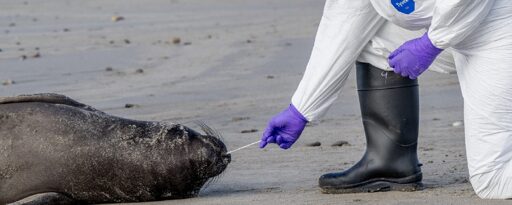
Ever since a deadly strain of avian influenza, H5N1, killed some 17,000 southern elephant seal pups on South American coastlines in 2023 and 2024, researchers and public officials have kept an extra-close eye on California’s northern elephant seals. Fears of infection have now become reality: Lab tests just proved the virus has breached this colony. In mid-February, six young, newly weaned seals on Año Nuevo State Park beaches fell ill. They had obvious respiratory problems and also suffered from neurological symptoms, including weakness, tremors and seizures — all of which pointed to H5N1. The research team collected samples from sick and dead elephant seals, which were analyzed at the California Animal Health and Food Safety Laboratory System. Initial screening revealed that the samples were positive for avian influenza; it was then confirmed to be the highly pathogenic H5N1 strain. A mother northern elephant seal and her pup rest on an Año Nuevo State Park beach in California, where seven young seals have been infected with a deadly strain of avian influenza. Image by Christine Heinrichs. As of Feb. 24, seven pups had tested positive for the virus, according to the USDA’s National Veterinary Services Laboratory. At time of publication, 30 seals had died, 29 of them weaned pups, but the cause has not yet been confirmed for all the victims. The outbreak marks the first cases of H5N1 in marine mammals in California and the first time it’s been found in northern elephant seals (Mirounga angustirostris). This highly contagious virus…This article was originally published on Mongabay
From Conservation news via This RSS Feed.