

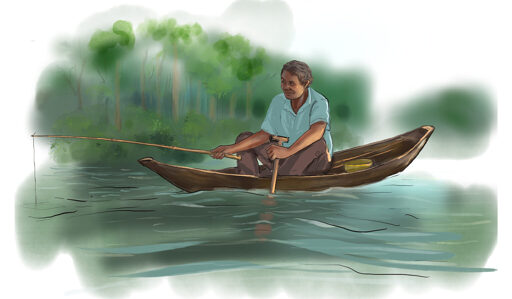
VAUPÉS, Colombia — The Vaupés River and its extensive network of waterways and lagoons in the southeastern Colombian department of the same name are integral to the Indigenous Macaquiño community, who lives along its banks. It provides them with water for drinking, bathing and washing, and also serves as a migration route and breeding ground for an abundance of fish, which they depend on for food. But for the Macaquiño community, these waters are more than just a food pantry, they told Mongabay. It forms part of the deep cultural and spiritual connection they have with their waters and the species that inhabit them. Their traditional calendar responds to its natural cycles, marked by the rainy and dry seasons, each with their own traditional rules and rituals dictating when the community can harvest food, fish and hunt. Omar Salvador Fernández Chequemarca and Harold Ferreira Romero, two fishers from the Indigenous Macaquiño community in Vaupés, fish in the Vaupés River. Image by Aimee Gabay/Mongabay. A fish caught from the waters of a flooded forest near the Indigenous Macaquiño community in Vaupés. Image by Aimee Gabay/Mongabay. Manuel Claudio Fernández, the captain of Macaquiño, said the community doesn’t just care for the land; they coexist with it. “How do we coexist? By respecting the forest, the articulation of spirits, the water, the forest and us humans. We, the people, depend on water and the forest. And the forest and water also depend on us.” While Macaquiño fishers still use some of the traditional…This article was originally published on Mongabay
From Conservation news via This RSS Feed.