

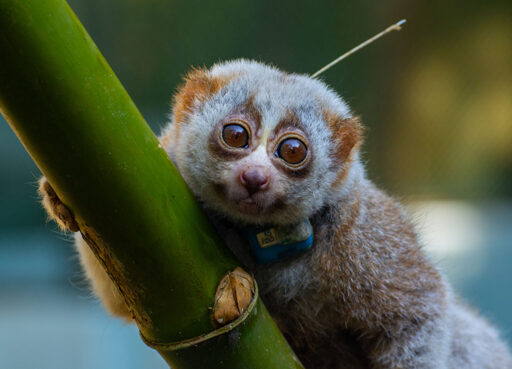
Wildlife releases are usually joyous events. Uplifting scenes of animals cautiously nosing the air as they take their first tentative steps into freedom warm our hearts. However, new research suggests the wild can be a “death trap,” especially if the released individuals lack the essential skills to find food and integrate with wild populations, or are set free into unsuitable habitat. The new study, published in Global Ecology and Conservation, follows the fate of nine Bengal slow lorises (Nycticebus bengalensis) released into a forest reserve in Bangladesh. The researchers found only two of the nine survived beyond six months. Several died within days or weeks. Slow lorises, with their wide eyes and plump bodies, are one of the world’s most trafficked primates. Despite their venomous bite that can prove fatal to people and their nocturnal habits, they’re highly sought after in the pet trade and for use as tourist photo props — a demand fueled by ill-informed social media videos displaying them in domestic settings or captivity. All nine slow loris species, which range across South and Southeast Asia, are also threatened by deforestation and poachers who kill them for use in traditional medicines. A 2010 study found lorises were the most in-demand animal in traditional medicine stores in Cambodia. Tragically, these pressures act in synergy. Habitat loss pushes lorises closer to forest edges and humans, who at best mistakenly think them lost and take them into captivity with a view to relocating them to a habitat that’s more “wild.”…This article was originally published on Mongabay
From Conservation news via This RSS Feed.