


Bullets:
The average cargo vessel spends $4 million per year on bunker fuel. Larger ships, or those cruising at higher speeds, spend far over $100,000 per day on fuel alone.
CATL already builds electric ships for inland cargo, tugboat operations, and ferries.
But CATL sees massive new markets for transoceanic cargo ships, if the company can drive down the cost of battery packs, and install networks of recharging stations for the batteries.
Inside China / Business is a reader-supported publication. To receive new posts and support my work, consider becoming a free or paid subscriber.
Report:
Good morning.
CATL is a Chinese battery manufacturer, and they’re already in tens of millions of electric cars and trucks. Now the company is taking over maritime shipping–building electric ships–and they’re moving fast.
Last summer the first electric passenger ship in China launched. The Yujian-77 operates in Xiamen, and has a cruising range of 100 kilometers on its battery packs. This model will save 250 tons of fuel per year.
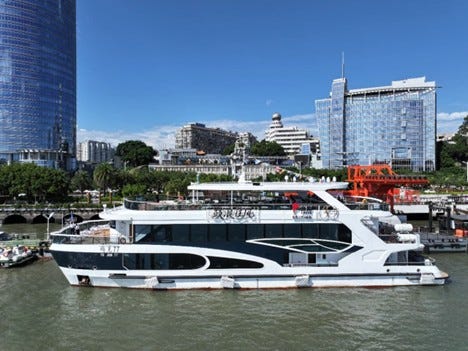
The economic appeal to ship operators and fleets is the cost savings of bunker fuel. CATL executives believe that this is inevitably a trillion-dollar industry, and if they can be first to get the technology right, and deployed at scale, CATL will have it all. There are two markets here: the cargo ships that sail long routes, across oceans, are very different from the ships used in Fujian to ferry passengers and inland cargo. Electric ship technology for inland and coastal shipping is already here: batteries are swapped out when the ship makes stops, or even while on board, and so the batteries are always kept fresh.
It’s the transoceanic cargo ships that are the bigger problem, but a far bigger need. These researchers strung together dozens of variables, and ran optimization and breakeven analyses on ships sailing from ports in East China to Northern Europe. They concede at the outset of the report that battery costs today are too high to make the economics work. But there are two caveats there. First is that with new technologies, such as offshore charging stations, and different combinations of charging on-ship and off-, the math for electric ships changes completely.
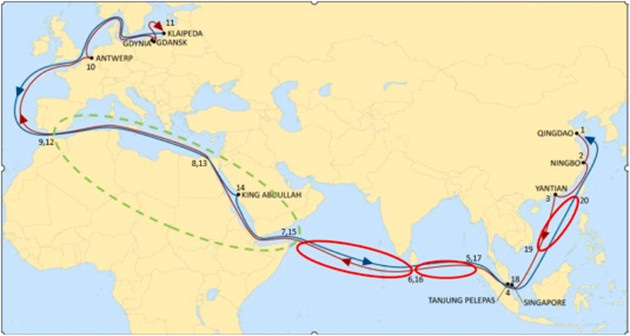
At present, it’s hard for them to conclude that CATL is close to making the long-haul from Qingdao to Antwerp cost-effective for ship owners. But this is the second point: if ship operators break up the trip into segments, which they tend to do anyway, the economics dramatically improve. And there are two other points which may make these electric ships even more compelling. The costs of the battery packs will likely fall over time, as they have with electric cars and trucks And if the cost of the ships themselves will probably fall. That is, electric ships may eventually cost less than those powered by diesel, as we have also seen with electric cars and trucks. That means lower upfront costs, and lower operating costs.
We see from CATL’s own press releases that their efforts in maritime are informed by their successes in electric cars. Consider this model they are building for global shipping, the ship-shore-cloud. There are lots of problems with using batteries to power ships, and result in ship operators unable to afford the ship, unable to charge it, and unable to make money. They’re on the ocean, and thereby exposed to harsh elements. They are traveling a long way, while hauling massive loads. The ship-shore-cloud system integrates power and navigation systems on board the electric ship. On land, the company builds out charging and battery-swapping stations. Remember what the researchers said, the economics do work if the ship’s voyage is broken up into segments, and ships pull over and swap out batteries for freshly charged ones, just like electric vehicle drivers do now on land.
Adoption is happening quickly. CATL has built 900 electric ships and are already far ahead of anyone else. Passenger ships and ferries, the first all-electric tugboat. The Jining is a pure electric cargo vessel with a capacity of 2,000 tons, with a range of 230 kilometers. Battery swapping takes 15 minutes, with fuel savings of over 50 tons.
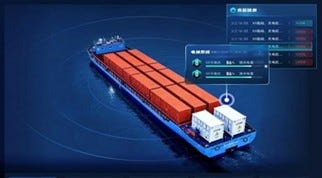
At just 2,000 tons, the Jining is small by shipping industry standards. And CATL knows that it’s their electric motors and batteries for larger ships that will displace massive bunker fuel demand, when they get the batteries and swapping systems right for those.
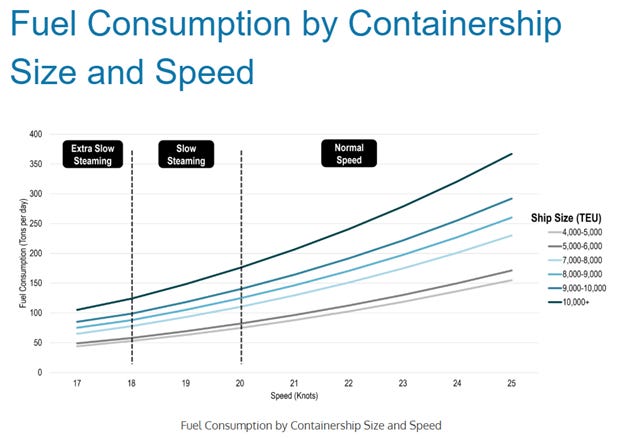
The lines on this chart are ships by TEU’s; their capacity by how many twenty-foot containers they can carry, and fuel consumption at different cruising speeds. At normal cruising speed, large cargo ships burn between 80 and 300 tons of fuel per day.
A medium-sized container ship on average sees operating costs of over $8 million, and the cost of fuel is a huge driver of those costs, accounting for half of the ship’s expenses. $550 dollars per ton, times 200 tons per day, and container ships are spending over $100,000 a day to run the motors:
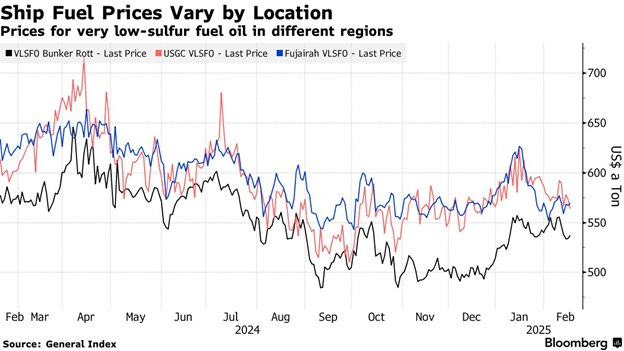
That’s what CATL is looking at too—if they can build big electric ships and swap out the batteries in a few hours, at the same time the ship is unloading and loading cargo like it normally does anyway during a port visit, CATL will see a trillion dollars a year in new revenues.
Be Good.
Resources and links:
Affecting Shipping Industry Costs in 2026
https://www.shipfinex.com/post/economic-factors-shipping-industry-costs
Jining “6006” Pure Electric Cargo Ship Selected as a National Benchmark
https://www.catl.com/en/news/6592.html
CATL Expects Oceangoing Battery-Electric Vessels Within Three Years
https://maritime-executive.com/article/catl-expects-oceangoing-battery-electric-vessels-within-three-years
China’s First All-Electric Passenger Ship Sets Sail, Powered by CATL
https://www.catl.com/en/news/6500.html
CATL presents complete solution for battery-electric ships
https://www.electrive.com/2025/12/11/catl-presents-complete-solution-for-battery-electric-ships/
CATL Unveils the World’s Only “Ship-Shore-Cloud” Zero-Carbon Shipping and Smart Port and Shipping Integrated Solution
https://www.catl.com/en/news/6622.html
How can long-distance battery-powered container ships stack up? A speculative Asia-Europe illustration
https://www.sciencedirect.com/science/article/pii/S0739885925001192?via=ihub
CATL predicts oceangoing electric cargo ships will enter service within three years
https://interestingengineering.com/energy/electric-transoceanic-vessels-within-three-years
Fuel Consumption by Containership Size and Speed
https://transportgeography.org/contents/chapter4/transportation-and-energy/fuel-consumption-containerships/
Inside China / Business is a reader-supported publication. To receive new posts and support my work, consider becoming a free or paid subscriber.
From Inside China / Business via This RSS Feed.