

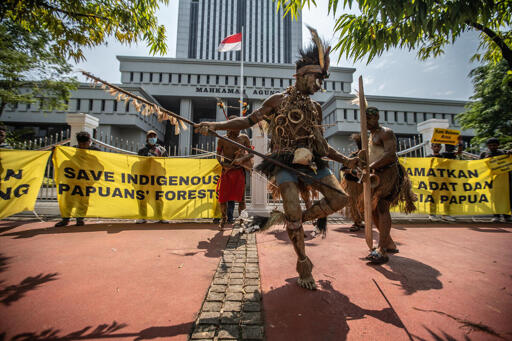
JAKARTA — Indigenous communities in Indonesia’s easternmost region of Papua accuse the government of underhanded zoning changes to expand the so-called food estate program there to include large-scale oil palm plantations. Indigenous representatives have filed a formal objection to two decrees issued by the Ministry of Forestry that reclassify 486,939 hectares (1.2 million acres) of forest in Merauke, Boven Digoel and Mappi districts, in South Papua province, as nonforest land. This new designation means these forests are now eligible to be cleared for oil palm plantations. The communities say these decrees were issued without consulting them and overlap with areas they’ve long proposed as customary forests, or hutan adat. They allege that the process is being bulldozed through without their knowledge or consent, and that it threatens their customary territories. “This [rezoning] harms communities because they are the owners of those forests, yet they are not recognized as customary owners,” Tigor Hutapea, a lawyer from the NGO Pusaka Bentala Rakyat working with the communities, told Mongabay. He said at least four Indigenous clans in Boven Digoel district are affected by the rezoning as the areas covered by the decrees overlap onto their customary lands. Papuan Indigenous people and activists hold a protest against Merauke Food Estate in front of the Defense Ministry office in Jakarta in 2024. Image © Afriadi Hikmal / Greenpeace. Next-day approval The rezoning follows a proposal to expand the food estate program into a broader agricultural and energy project in South Papua. On Sept. 17, 2025,…This article was originally published on Mongabay
From Conservation news via This RSS Feed.