

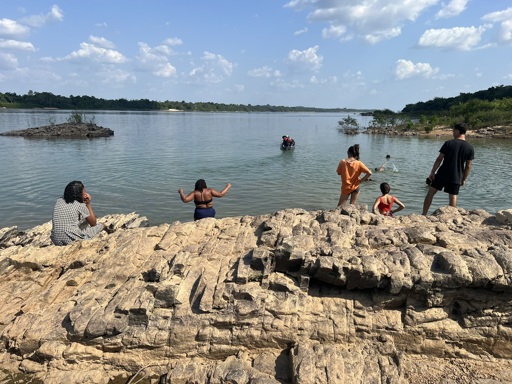
ITUPIRANGA, Brazil — Ronaldo Macena and Erlan Moraes, traditional riverfolk leaders whose families have lived for generations on the Lourenção Rocks fishery on the Amazon’s Tocantins River, were hopeful in September when a federal judge visited their villages. For several generations, Macena told the judge, the peoples of the Pedral do Lourenção riverfolk territory, as they call it, have thrived in its rocky reaches, gaining not just income and dignified livelihoods but also cultural identification from fishing its stony subaquatic canyons that reach to more than 76 meters (250 feet) deep. But as the federal government seeks to open the river as a new shipping route, their rights have been systematically violated, Macena said, by a federal government that hasn’t treated them as traditional peoples with a distinct “culture, language and traditions” — but instead lumped riverfolk in with urban peoples, leaving their traditional knowledge, fishing and even existence barely acknowledged in government records. Brazil’s federal transport agencies plan to explode the deep, rocky river territory of the Pedral do Lourenção, as riverfolk call it (formally known as Pedral do Lourenço), a first step toward a riverway on the Tocantins River meant to expand exports of grains, minerals and cattle. The project is being executed by Brazil’s infrastructure transport department (DNIT), with studies by the Brazilian engineering consulting firm DTA Engenharia. To turn the river into a shipping route, authorities decided to blow up the rocks of a 35-kilometer (21.7-mile) section of the Lourenção, which is 43-kilometers (26.7-miles) long and…This article was originally published on Mongabay
From Conservation news via This RSS Feed.