

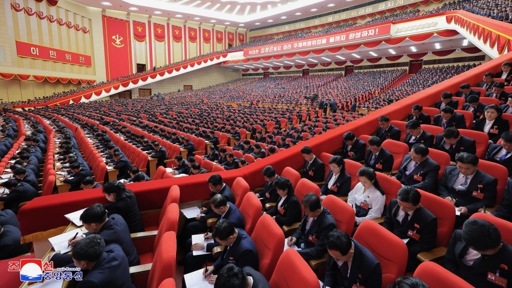
The 9th Party Congress of the Workers’ Party of Korea is now underway. Held every five years, the Congress can be regarded as the Democratic People’s Republic of Korea’s (DPRK) most significant political event. A total of 5,000 delegates and 2,000 observers elected by party organizations from across the country are now gathered in Pyongyang for the event.
As preparations for the Congress took place across the country in recent weeks, they were accompanied by celebrations of the successes of the last Five Year Plan, adopted at the 8th Party Congress in 2021. In the past month, completion ceremonies have been held for 21 local projects across the DPRK’s rural communities, ranging from the massive Sinuiju Greenhouse Farm to new factories and hospitals.
Major milestones in housing construction have also been met, and in some cases surpassed. 113,000 housing units were built in 1,860 rural villages and more than 500 farms since 2022. More than 50,000 apartment units have also been built in Pyongyang’s new Hwasong District, exceeding the goals for five-year construction set at the 8th Party Congress. In accordance with DPRK law, these homes were built to fulfill the state’s obligations to provide housing to the people without cost.
These achievements would be impressive in any country, but the DPRK’s special status as one of the world’s most sanctioned countries, and a perennial target of US military threats, makes its recent successes in socialist construction particularly noteworthy. While international media has long maligned the country as backwards, stagnant, and mired in poverty, these recent developments offer a fresh perspective of the DPRK as a dynamic and evolving socialist project that is steadily overcoming the challenges posed to its system and people from without.
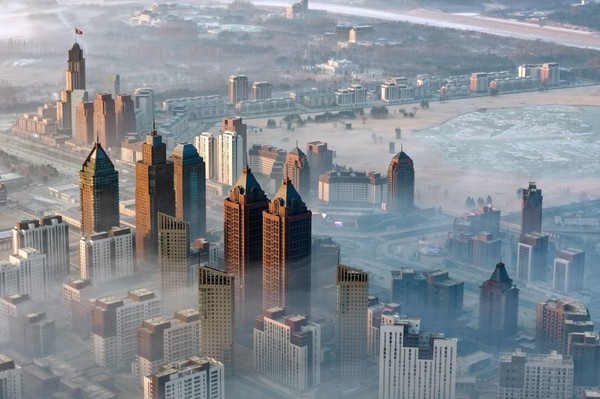
Construction efforts in Pyongyang’s new Hwasong District have entered the fifth phase. Photo: Korea Risk
Comprehensive socialist development
The Five Year Plan set forth by the 8th Party Congress was developed with the intent to overcome the significant challenges of tightening US and UN sanctions, along with the global economic downturn of the COVID-19 pandemic.
The DPRK has been a target of economic warfare since the founding of its state in 1948. For decades, the US pursued this end through legislation such as the Trading with the Enemy Act. Following Pyongyang’s first successful nuclear weapons test in 2006, the US introduced UN Security Council sanctions to its arsenal, alongside an expanding list of unilateral US coercive measures. Over time, these sanctions became increasingly draconian, and their intention to impose collective punishment increasingly undeniable. In 2017, a new suite of comprehensive sanctions were imposed on the DPRK.
The economic effects were devastating: fuel imports were drastically reduced, all major export industries were banned from international trade, and the DPRK’s already-limited access to international capital and dollar-based trade was throttled. Available figures on export revenues, while incomplete, demonstrate the extreme effects of these sanctions, as revenues crashed from USD 2.72 billion in 2016 to just USD 316 million in 2018. At the 8th Party Congress in 2021, the WPK noted that economic performance had “fallen short in almost every category.”
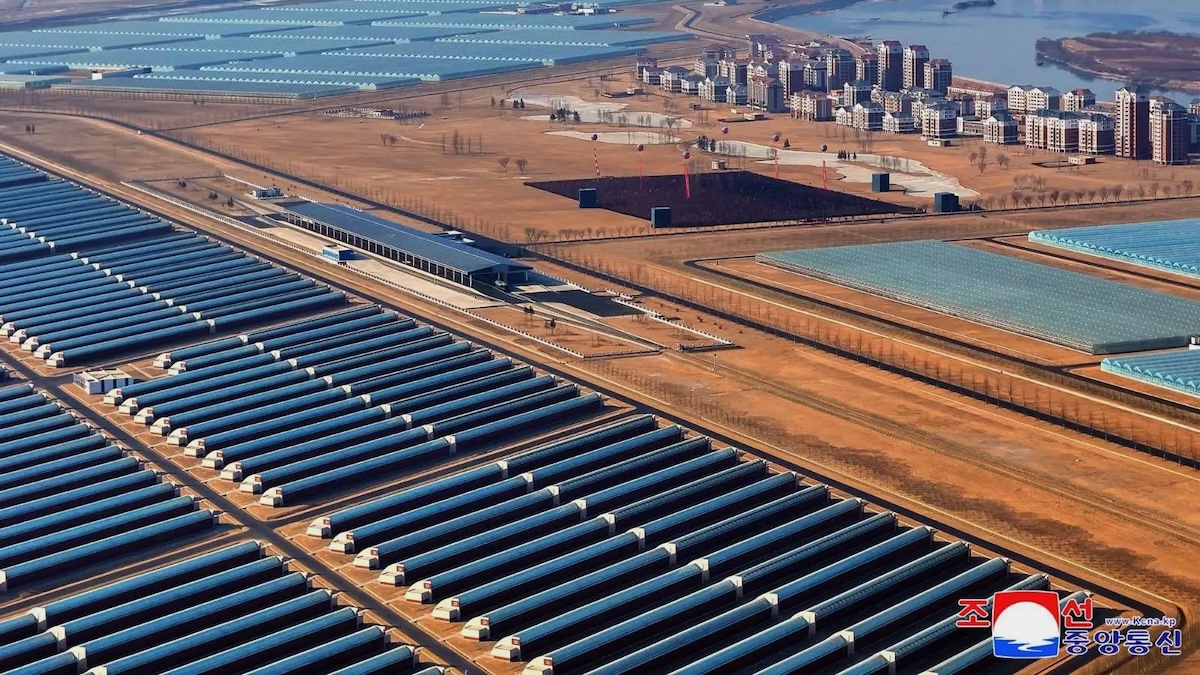
Sinujiu Greenhouse Farm. Photo: Korea Risk
Beyond the immediate economic damage to major industries, agriculture, healthcare, and construction all suffered from a lack of available inputs. One study from 2019 estimated that shortages and delays to UN health programs caused by these sanctions in 2018 alone may have killed as many as 3,968 people, of which more than 80% were estimated to be children under the age of five.
These measures, while devastating for any nation, were particularly difficult for the DPRK given its recent history. In 1995, devastating floods swept through the country. The available figures from the aftermath of this disaster paint a picture of biblical catastrophe: 5.4 million displaced, 330,000 hectares of agricultural land destroyed, 1.9 million tons of grain lost, and USD 15 billion in damages. The destruction wrought by flooding was compounded by international and local factors: the recent fall of the Soviet Union had left the DPRK economically and diplomatically isolated, ongoing US sanctions restricted its access to global markets to seek relief, and its own aggressive program of agricultural industrialization had, ironically, left this sector vulnerable to disruptions in electrical infrastructure and the loss of fuel inputs. Images of famine flooded the world, and became the indelible impression of the country in the minds of many.
In response to comprehensive sanctions and collective punishment, the 8th Party Congress answered with a plan for “comprehensive socialist development.” The plan sought to drastically raise quality of life in the country and achieve a new level of strategic economic resilience through all-encompassing development of agriculture, consumer goods, military technology, and industry.
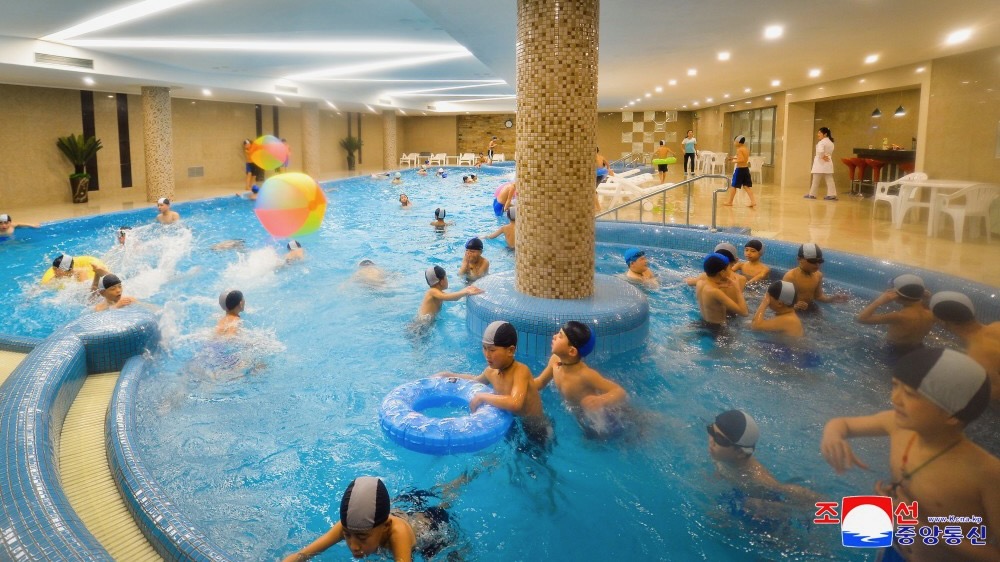
Swimming pool at a newly built leisure complex in the DPRK. Photo: Korea Risk
To achieve the goals of the 8th Party Congress, the DPRK relied on its existing strengths and on recent innovations to its socialist system. The country’s historic emphasis on an independent industrial base and military self-sufficiency made many of its recent achievements possible. Besides mobilizing the civilian workforce and volunteer teams, worker-soldiers of the Korean People’s Army were also deployed to supplement construction efforts around the country.
Besides its existing developmental strengths, the DPRK also leveraged newer economic reforms that were refined throughout the 2010s. A new system known as the Socialist Enterprise Responsibility Management System or SERMS, has reformed management to give state enterprises and cooperatives greater control over production, prices, and profits, while remaining beholden to centrally planned goals. Similar reforms have reshaped the agrarian sector, with new individual incentive systems and cooperative models of farming implemented.
The 20×10 Rural Development Plan
Many of the hallmark construction achievements now being unveiled in the lead-up to the 9th Party Congress are also part of a new initiative being undertaken across the country: the 20×10 Rural Development Plan.
Inaugurated in 2024, the 20×10 Rural Development Plan seeks to raise the level of rural development through a decade-long initiative to build new economic enterprises, healthcare facilities, and cultural and scientific facilities in 20 rural counties each year. The plan has successfully met its goals in its first two years, and is expected to continue to be a pillar of the country’s development strategy.
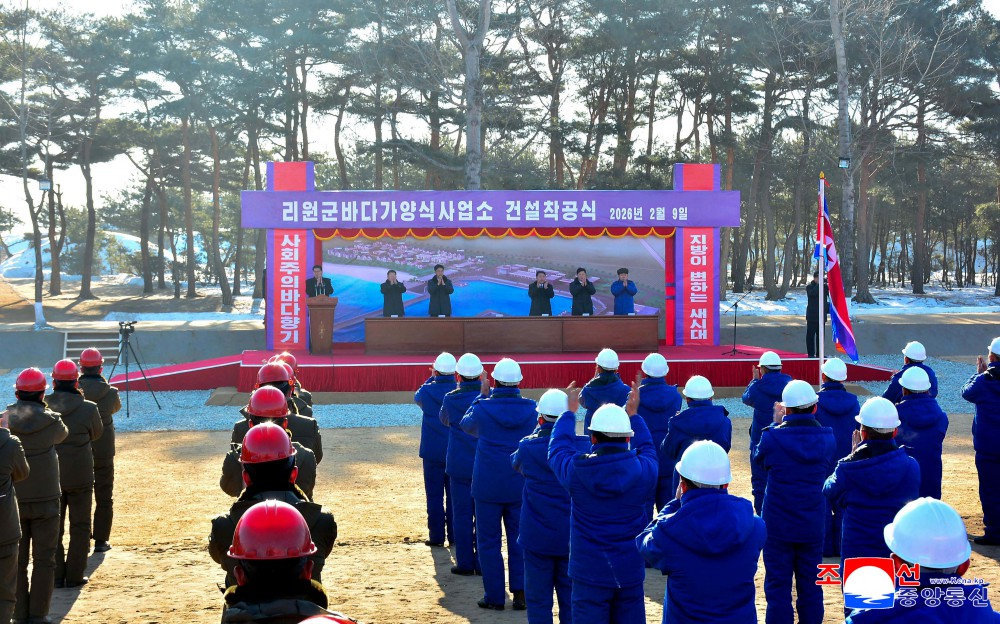
Construction ceremony in Riwon County, South Hamgyong province in the DPRK’s northeast. Photo: Korea Risk
Some recent examples of major results from the 20×10 Rural Development Plan include the Sinuiju Greenhouse Farm, a sprawling agricultural complex built on Wihwa Island which was unveiled in January. The Samgwang Livestock Farm, which opened this February, is also now the country’s largest dairy production facility, and will be used to provide dairy products to children across the country. In 2024, the country’s first offshore fish farm opened in Sinpo, marking a new milestone in DPRK aquaculture.
Beyond new agricultural enterprises, light industry and intermediate production facilities are also being built in the countryside, with the goal of increasing the economic output and resilience of rural areas. A major focus of the first year of the 20×10 Rural Development Plan was the construction of facilities to produce backpacks for schoolchildren. This initiative integrated economic development needs with a human-centered approach, targeting the education needs of children to advance rural development.
Aside from economic concerns, the 20×10 Rural Development Plan, in keeping with the themes of comprehensive socialist development, is also striving to raise the overall quality of life in rural areas as well. Towards this end, Kim Jong Un identified “three essential projects” for the 20×10 Plan to integrate in December 2024: rural hospitals, grain management facilities, and “sci-tech dissemination centers.” Three new county hospitals were built in 2025.
While uneven development between the capital and the countryside most certainly persists, the 20×10 Plan has made significant progress towards addressing this in a very short period of time. As the 9th Party Congress approaches, it is likely that the next Five Year Plan will seek to build upon recent successes and accelerate the DPRK’s drive towards comprehensive socialist development.
The post Defying sanctions, advancing socialism: The DPRK’s 9th Party Congress begins appeared first on Peoples Dispatch.
From Peoples Dispatch via This RSS Feed.