

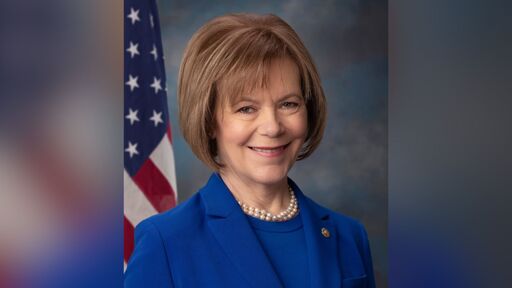

Minnesota Sen. Tina Smith
Democrat
Amid the chaos and tragedy caused by a masked federal police force occupying Minnesota, including the harassment and arrests of Native people, another tragedy is taking shape. As soon as this week, the United States Senate will vote on a bill to allow copper sulfide mining in the watershed of the Boundary Waters Canoe Area Wilderness and within the ceded territory of the Bois Forte, Grand Portage, and Fond du Lac Bands of Ojibwe. This mine could devastate the tribes’ treaty-protected rights to hunt, fish, and gather in their ceded territory. We need Indian Country’s help to stop it.
The BWCA spans over one million acres of land, lakes, rivers, and streams. It’s the most pristine wilderness and cleanest water in the Lower 48 states, where walleye, manoomin (wild rice), and other traditional foods are plentiful. For millions of people, including my family and me, the BWCA is full of treasured memories and life experiences, but for many tribal members, this area is an essential source of subsistence.
In 2023, Secretary of the Interior Deb Haaland issued a Public Land Order protecting the Boundary Waters’ watershed from mining for 20 years. After extensive environmental research and tribal consultation, she determined that the proposed copper-sulfide mine was too risky and that potential pollution would violate tribal members’ treaty rights to hunt, fish, and gather.
Now, the Trump administration is trying to pass H.J.Res.140, which would undo this protection and bar future protections for this area, all to allow copper-nickel sulfide mining by a Chilean company that apparently plans to ship the ore to China for processing and sale. Nearly all similar mines worldwide have had significant failures and caused nearly irreparable pollution, which is known to harm fish and destroy manoomin.
Despite Secretary Haaland’s determination that this mine could violate treaty rights, there has been no tribal consultation on H.J.Res.140. This is an unacceptable violation of all federal officials’ responsibilities to honor treaties with tribal nations and uphold government-to-government relationships. When mining could impact treaty rights, tribes must be consulted and their rights protected.
Many tribal leaders I have spoken to feel the same way most Minnesotans do — we’re not anti-mining, but this mine, in this place, crosses the line. You don’t have to look far to find other sulfide mines just like this one that have caused extensive pollution. It’s not a question of if this mine will pollute the waters, it’s a question of when. Why would we take the risk?
H.J.Res.140 would also set a new precedent that Congress can remove protections on federal lands, no matter how long they’ve been protected. This would create unprecedented chaos for public lands and threaten the environmental health of other treaty protected areas.
In United States history, the federal government has too often gone back on its treaty obligations to tribal nations and dishonored our nation-to-nation relationships. We have the chance to stop that from happening again here. If you agree, now is the time to urge your Senators to vote against H.J.Res.140 and protect the treaty rights of tribal nations and the waters of the BWCA.
Tina Smith is a United States Senator representing Minnesota and 11 sovereign tribal nations. She sits on the Indian Affairs Committee, where she has been a steadfast partner with Indian Country. Her work has led to the return of 11,000 acres of wrongfully seized land to the Leech Lake Band of Ojibwe and numerous initiatives to expand tribal sovereignty.
This opinion-editorial essay does not reflect the views of ICT; voices in our opinion section represent a variety of reader points of view. If you would like to contribute an essay to ICT, email opinion@ictnews.organd jourdan@ictnews.org.
The post A copper-sulfide mine jeopardizes tribal treaty rights in Minnesota. The Senate should block it. appeared first on ICT.
From ICT via This RSS Feed.