

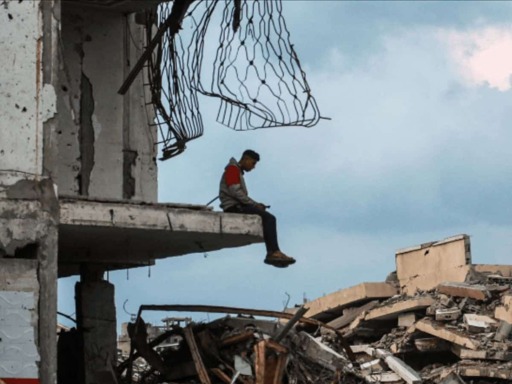

The Gaza Centre for Human Rights has accused the Israeli occupation authorities of pursuing a systematic policy aimed at turning the Gaza Strip into an ‘uninhabitable’ area. It says this is being done through the deliberate targeting of the humanitarian system, the destruction of civilian infrastructure, and suffocating restrictions on the flow of basic aid.
The centre said the attacks, ongoing for more than two years, have not been limited to military operations. They have also targeted relief agency headquarters, aid warehouses, ambulance teams, and medical and humanitarian workers. The organisation described this as a flagrant violation of the principles of distinction and proportionality enshrined in the Geneva Conventions, and an erosion of civilian protections during armed conflict.
Targeting UNRWA and undermining the lifeline of services
The statement highlighted what it described as a ‘legislative and field attack’ against the United Nations Relief and Works Agency for Palestine Refugees (UNRWA). It argued that undermining the agency’s work aims to paralyse the backbone of relief, education, and health services provided to nearly two million Palestinians in Gaza.
The centre said attempts to ban the agency’s activities amount to ‘collective punishment’ against refugees. It described this as a strategic move to reshape the legal and demographic reality by creating an environment lacking minimum services, forcing residents to seek solutions outside the Strip.
Gaza — aid below the minimum
According to the statement, the average number of aid trucks entering Gaza since 10 October 2025 has not exceeded 259 per day. That represents only 43% of agreed quantities.
The centre argued that disrupting deliveries of food, medicine, and fuel, while imposing arbitrary entry restrictions, constitutes collective punishment prohibited under Article 33 of the Fourth Geneva Convention.
It added that the targeting of basic necessities — from water and electricity to health and education facilities — is accompanied by rhetoric and practical measures that subject the population to lethal living conditions. The centre said such acts fall within provisions criminalised under the Convention on the Prevention of Genocide, particularly the deliberate imposition of conditions intended to destroy a group in whole or in part.
In what it called an ‘urgent cry for help’, the centre warned of unprecedented restrictions on medical institutions. It described a catastrophic shortage of supplies threatening to bring hospitals to a standstill.It said preventing the entry of generators and spare parts puts hundreds of patients in intensive care units and incubators at immediate risk of death.
The centre argued that cutting off energy to hospitals is not an incidental consequence of military operations, but a deliberate measure. It said this makes “staying in Gaza” a daily risk and may constitute grave crimes under international law.
Crossings as a weapon of pressure
The statement emphasised that the continued closure of crossings, strict control over aid quantities, and the prevention of the wounded and sick from leaving Gaza amount to the use of ‘starvation and medical blackmail’ as tools of political and demographic pressure. It said this violates Article 55 of the Fourth Geneva Convention.
The centre held the occupying authorities fully responsible for these violations. It called on States parties to the Geneva Conventions to fulfil their obligations to ensure respect for international law and to take immediate action to stop crimes against civilians.
It also urged the International Criminal Court to accelerate its investigations and prosecute those responsible for crimes committed in the occupied Palestinian territories. The centre warned that impunity threatens the credibility of the international justice system.
The statement concluded with a pledge to continue documentation and monitoring efforts, provide legal support to victims, and work with international partners to hold perpetrators accountable and preserve what remains of human life and dignity in the Gaza Strip.
Featured image via OHCHR
By Alaa Shamali
From Canary via This RSS Feed.