

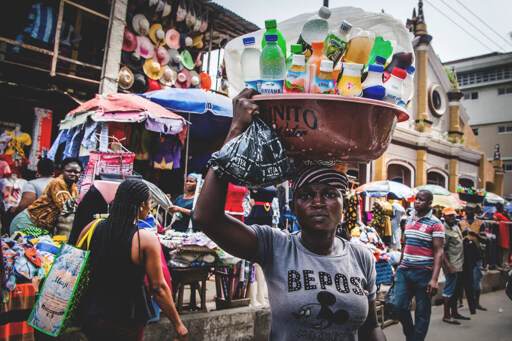
OJUELEGBA, Nigeria — On the bustling streets of this central Lagos neighborhood, it’s easy to buy a drink. Hawkers weave between buses and motorcycles with wheelbarrows of bottled water and canned beverages. Finding a bin for the empty container is much harder. Many end up on the ground. Glass, cardboard, aluminum and — most commonly — plastic collect in piles at busy junctions and in open gutters, mixed with food waste and refuse from nearby shops and homes. Drains clog, and stagnant water lingers. Bayo Adeolu, proud holder of a degree in plant biology from the University of Lagos, spent months tramping these same streets in search of work. He endured rejection after rejection, then tried selling used phones with a friend, but competition in this saturated market beat them back. One afternoon, scrolling through social media, a post caught his eye. “Earn-As-You-Waste,” it read, advertising an information session for Pakam, a company promoting recycling as a source of income. At the session, Pakam’s staff explained how participants could earn money by collecting recyclable waste from the company’s clients. Registered collectors, they said, would be trained to sort and weigh the waste, record this shabby bounty digitally, and transport the recovered materials to aggregation points. The state of Lagos state generates nearly 5.5 million metric tons of solid waste every year, according to the state waste management authority — or roughly 15,000 metric tons a day. A 2024 World Bank study estimated that nearly 40% of this rubbish is recyclable…This article was originally published on Mongabay
From Conservation news via This RSS Feed.