

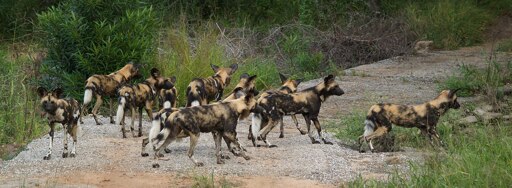
Social interactions are crucial for the survival of most animal species. Living in groups helps animals spot predators, find food and raise more successful young than they could alone. Conventional wisdom has long held that highly social animals, like lions or capuchin monkeys, are highly vulnerable when their populations decline. But new research suggests that more loosely social animals, like agoutis or tapirs, may actually face greater risk when their numbers fall. Researchers reviewed existing models, data and case studies looking at the relationship between social interactions and survival. Michael Gil, a co-author of the study, with the University of Colorado Boulder, told Mongabay in an interview that highly social animals tend to have a stable number of social interactions, “and they’re going to maintain that; even if the population declines, they’re going to figure out a way to maintain that,” he said. If part of an African wild dog (Lycaon pictus) pack is killed off, for example, the remaining animals will do everything they can to join a new group, their immediate survival depending on it. Loosely social species respond differently. “As the populations decline, their social interactions also decline because they do not make up for it,” Gil said. That means there are fewer squirrels, for instance, to keep an eye out and warn of predators. Or smaller schools of fish that can hunt together. If those populations decrease, then their social interactions also decline, which can lead to more population declines. It becomes “a dangerous feedback loop,”…This article was originally published on Mongabay
From Conservation news via This RSS Feed.