

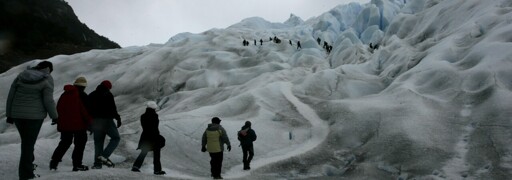
Officials in Argentina are considering a reform to the country’s glacier protection law, a change critics say would weaken environmental regulations and clear the way for expanded mining in some of the country’s most fragile ecosystems. The bill to reform the glacier law is scheduled for a vote in the Senate later this month; if passed, it would then move on to the Chamber of Deputies, the lower house of the National Congress. Lawmakers will have to decide whether they want to scale back protections that currently restrict mining and other development near glaciers in the Andes and beyond. “This reform, if approved, would set a negative precedent for other environmental protection regulations and puts at risk strategic resources for the provision of freshwater and the regulation of watersheds that supply different localities and jurisdictions in our country,” the Environment and Natural Resources Foundation (FARN), an NGO, said in a statement. Argentina has 8,484 square kilometers (3,276 square miles) of ice cover spanning 12 provinces and 39 river basins, according to the National Glacier Inventory, a scientific registry and map database overseen by the Argentine Institute of Snow Research, Glaciology and Environmental Sciences (IANIGLA). Glaciers are important freshwater reserves, supplying water for drinking, agriculture and other needs throughout the country. They feed into around 40% of the country’s watersheds and provide access to water to 7 million residents, or around 18% of Argentina’s population, according to FARN. A tourist takes pictures of the Perito Moreno Glacier in Los Glaciares National…This article was originally published on Mongabay
From Conservation news via This RSS Feed.