

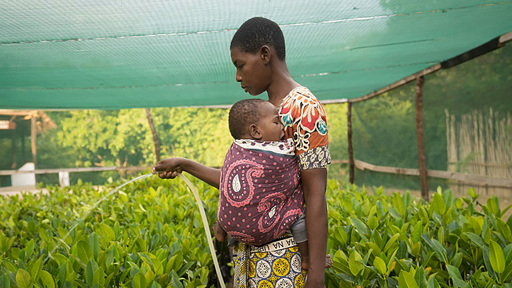
Mangroves have become a favored solution in climate and conservation circles. They absorb carbon, blunt storm surge and support fisheries. Funding has followed. Yet outcomes often lag ambition. In parts of Southeast Asia and Latin America, research suggests that roughly 70% of restoration projects struggle to establish healthy forests. Seedlings die. Sites flood incorrectly. Community interest fades. The problem is not enthusiasm. It is execution. Much restoration is driven by small, community-based groups with deep local knowledge but limited access to capital, technical advice or long-term support. Catherine Lovelock, a mangrove ecologist at the University of Queensland, points out that success depends as much on social and economic conditions as on planting techniques. Mangroves, she notes, thrive only when tides inundate them for a few hours at a time. Too much water or too little can doom a site. Just as important are land tenure, livelihoods and incentives to protect restored areas once planting ends. A growing set of nonprofits is positioning itself as an intermediary between funders and communities. One example is Seatrees, which does not run projects directly but backs local partners with funding, scientific guidance, monitoring support and communications. Over the past five years, it has supported mangrove work in places as varied as Kenya, Mexico, Indonesia and Florida, Mongabay’s Marina Martinez reports. The approach is selective. Seatrees looks for groups that already have experience and local legitimacy but face capacity gaps. Projects must have permission to operate and clear buy-in from communities and Indigenous stakeholders. In…This article was originally published on Mongabay
From Conservation news via This RSS Feed.