

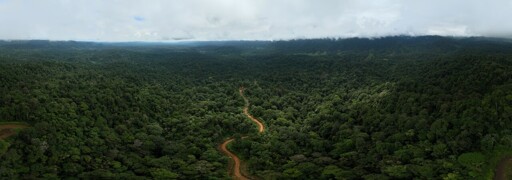
HOJA BLANCO, Ecuador — Some parts of the rainforest in northwestern Ecuador used to be so dense and impenetrable that only a few hundred people were believed to live there. Even when loggers moved into the area in the 1980s and 1990s, setting up the first roads, it would take hours to travel only a few miles. It’s one of the rainiest regions on the planet, and the terrain rises sharply into the western Andes before dropping off into rivers and valleys. Because it was so inaccessible, the area remained one of the most biodiverse on the planet, with thousands of endemic plant species and hundreds of birds and amphibians. But in recent decades, much of that biodiversity has been lost. The region, known as the Chocó, has experienced historic deforestation, with only around 3% of its lower-elevation forest — below 900 meters (3,000 feet) — still remaining. In one area of the Chocó, in Esmeraldas province, the rise in deforestation coincided with the arrival of timber companies like Endesa-Botrosa, which built some of the first roads while logging the forest. Even when the companies reduced their work in the area a few years ago, deforestation continued to pose a major threat — largely because the companies left behind roads that people want to extend, conservation groups in the area say. Today, many of the roads that used to take hours to navigate are relatively clean and patched up, allowing people from other parts of the country to move in.…This article was originally published on Mongabay
From Conservation news via This RSS Feed.