

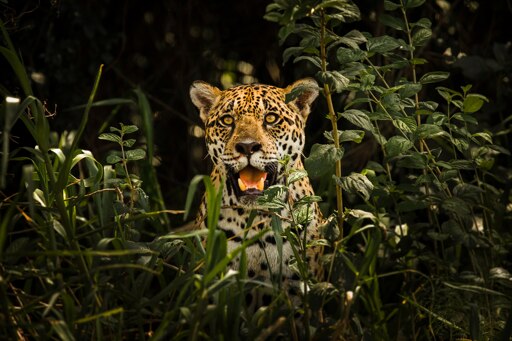
PAU BRASIL, Brazil — Indigenous leader Fábio Titiah recalls the night he walked the trail to the village of Água Vermelha, in the Caramuru-Paraguassu Indigenous Territory. At around 10 p.m., a shadow burst from the undergrowth and sprang across the road. He says he saw, startled, its glistening, pitch-black pelt and recognized it as one of the rarest animals of Brazil’s Atlantic Forest: a black jaguar (Panthera onca). For Titiah, one of the 21 caciques (chiefs) of the Caramuru-Paraguassu territory in Brazil’s northeastern state of Bahia, the fleeting sighting of the big cat was a spiritual encounter and a sign of changes afoot in Indigenous lands. “There was a time when we started the reclamation process, when we [re]occupied our territories, and found a large part of our land transformed into cattle pasture,” Titiah tells Mongabay at his house in the municipality of Pau Brasil, adjacent to the Caramuru-Paraguassu territory, where he’s a city councilor. “Then our people left a good part of these areas to regenerate. Some animals that hadn’t been seen here before started appearing. The jaguar started to return.” The transformation of the Caramuru-Paraguassu territory has been enabled in part by Ywy Ipuranguete (“beautiful lands” in the Tupi-Guarani language), a nationwide project to strengthen and support Indigenous stewardship across 15 Indigenous territories. Building on the recognition of Indigenous lands as vital for wildlife and ecosystems, Brazil’s Ministry of Indigenous Peoples launched the initiative to safeguard about 6 million hectares (15 million acres) of some of Brazil’s most…This article was originally published on Mongabay
From Conservation news via This RSS Feed.