

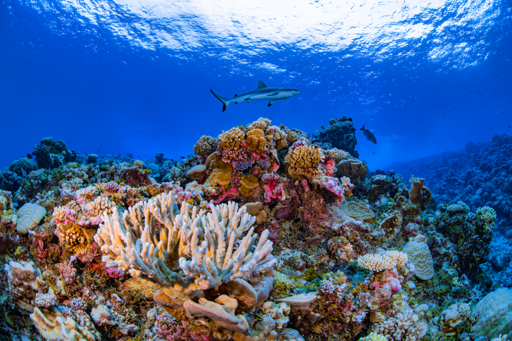
In ordinary circumstances coral reefs are among the most productive ecosystems on Earth, built slowly by animals that appear to be plants. Each coral polyp houses microscopic algae that convert sunlight into sugars, supplying most of the coral’s energy. When conditions deteriorate, especially when water becomes too warm, this partnership breaks down. The coral expels its symbionts, loses its color, and turns white. This is coral bleaching. The coral is still alive, but weakened. If stressful conditions persist, many die. Bleaching is not new, but its scale is. Before the late 20th century, mass events were rare. Over the past four decades they have become increasingly frequent and severe, driven primarily by ocean warming. A rise of only 1–2 °C above typical summer temperatures can trigger widespread bleaching across entire regions. A newly published global analysis in Nature Communications provides a stark benchmark. During the Third Global Coral Bleaching Event from 2014 to 2017, marine heatwaves affected reefs worldwide for an unusually prolonged period. Based on more than 15,000 reef surveys, researchers estimate that over half of the world’s reefs experienced moderate or worse bleaching, and roughly 15% suffered moderate or greater mortality. The scale of damage exceeded that of any previously recorded global bleaching event, underscoring the accelerating impact of ocean warming on reef systems. Global distribution of heat stress from the first three Global Coral Bleaching Events That episode is now often treated as a reference point because it was both global and sustained. Unlike earlier events, it…This article was originally published on Mongabay
From Conservation news via This RSS Feed.