

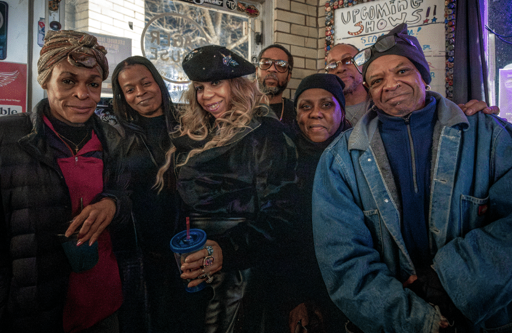
The forced evacuation of Detroit’s historic Leland Hotel on December 10, 2025, was not an innocent accident, a natural disaster, or an unfortunate bureaucratic mistake. It was the predictable result of decades of austerity, privatization, and speculative development. Policies have reshaped post-bankruptcy Detroit in the interests of corporate investors while systematically displacing residents and the goals of the public good.
The evacuation followed court-approved financing paid to DTE Energy in the amount of $57,000 for past-due charges. The amount was paid, but electricity mysteriously went out 48 hours later, forcing residents out of the 99-year-old building that had never lost power in living memory.
Many fled with what they had on their backs. Documents, medication, tools, photographs, and cash remain trapped in the building still. Pets were left in the cold and dark for days; some died. These losses represent second and third-order assaults, compounding the original dispossession.
February 11 marked two months since residents have been denied access. The City of Detroit displaced them to a low-budget hotel twenty miles away, in what the city considers an act of benevolence. Rather, it is a social assault. Some residents lack cars. The nearest gas station convenience store requires crossing a dangerous divided highway on foot. Michigan has endured brutal subzero temperatures for weeks. This kind of dislocation severs people from workplaces, school, medical care, and social support. A fifth-grade boy has been absent from school for more than two months. Moving people beyond their lives and livelihoods depletes energy, let alone time and money to mount a legal fight. It is a strategy to atomize and atrophy collective action. Distance is weaponized.
The owner, the city, and DTE have all resisted efforts to allow residents to return. DTE claims an additional $70,000 is required for partial restoration of power. Why wasn’t the $57,000 already paid sufficient?
On February 4, Detroit Fire Marshal, Donald Thomas, declared before Federal Bankruptcy Judge Maria Oxholm that the building is unsafe for re-entry. In the same breath, he sanctioned access to a private for-profit moving company, whose fee curiously doubled from $100,000 to $200,000 in two weeks. This contradiction raises serious questions. How was the building safe enough to host a mayoral candidate fundraiser for Mary Sheffield six weeks before evacuation? Why were longstanding safety complaints dating back to 2022 ignored? How is the building too dangerous for residents to reenter but safe enough for politicians and private contractors to extract profit? City officials cite liability insurance as a kind of protective force field. Safety is always invoked in service of capital.
Meanwhile, owners push for a speedy auction of the building. The roughly $3.8 million stalking-horse bid deeply undervalues prime downtown land. Years of mismanagement led to the building’s collapse and subsequent speculation. The script is all too familiar: disinvestment leads to crisis; crisis creates exigency; that exigency in turn justifies a transfer of wealth.
On February 4, Judge Oxholm halted the rushed auction. She formally recognized tenants as “interested parties,” found improper conduct on the part of ownership, ruled that residents did not receive adequate notice, and affirmed possessory rights. Some residents claim that management pressured them to sign a release that forfeits those rights.
How Residents and Their Supporters Are Fighting Back
Advocates urge the City of Detroit to seize the Leland under eminent domain. This would protect the Leland as permanent affordable housing, ensure rehabilitation with transparency and public oversight, and guarantee current residents the first right of return. In a city where billions have subsidized sparkling new sports stadiums and corporate headquarters, there is no justification for allowing the loss of what is arguably the last affordable place to live downtown.
The fight for eminent domain is not only a legal one, it is a moral one. It is a fight for collective voice. Through a city-owned, resident-controlled partnership, a community can establish true oversight and self-governance. People on the ground make decisions, set priorities, and ensure that the needs of residents take priority over rent-seeking corporations. Who better than actual stakeholders to decide what repairs to make, what community events to hold, what standards of tenancy to enforce?
The fight to place the Leland under public ownership is how this community can best assert self-determination over its own space. Through solidarity, a community is unified in preventing outside interests from distilling out the individual and dictating their fate. We can no longer socialize risk and privatize profit. When it comes to ensuring adequate housing, working people will no longer bear uncertainty and intimate loss that enables corporations to harvest financial gain.
Last week, under leadership of the Detroit Tenants Union and with other supporters, a policy report outlining Leland residents’ demands was delivered to Detroit City Council, Mayor Sheffield’s office, the Detroit Law Department, and the Housing and Revitalization Department. Steven Rimmer, director of DTU, along with Donovan McCarty from the Housing Justice Clinic at Michigan State University College of Law provided further public comment on the report. Corporation Counsel Conrad Mallet Jr. responded in the February 11 Bridge Detroit article.
Approximately 20 residents and supporters attended the February 17 Detroit City Council meeting. The hour-long discussion included impassioned comments from the public and residents alike. In deliberation with Mallet Jr. and other city representatives, the council called for a lien on the building, a plan within 48 hours for residents to retrieve their belongings, immediate power restoration, and exploration of abatement. Further, the council suggested the residents may be entitled to treble damages. The next federal bankruptcy hearing takes place on February 24.
The Leland Hotel’s story is a classic tale told in contemporary form: the usurping of rights and property for private gain. This narrative is not confined to history books. In 2026, it unfolds in sterile courtrooms and corporate offices. The Leland is just the most recent chapter in a much larger volume. The ink on the page is far from dry.
The post Socialized Risk, Privatized Profit: Detroit’s Leland Hotel as a Blueprint for Displacement appeared first on Left Voice.
From Left Voice via This RSS Feed.