

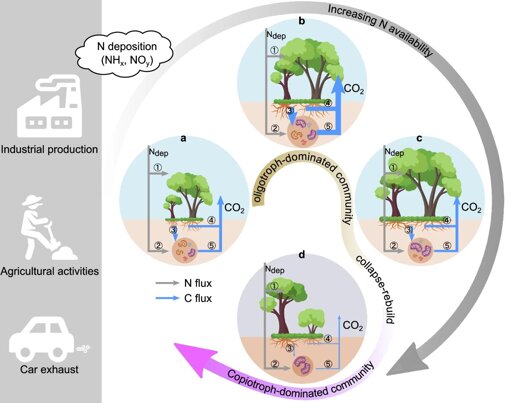
On a cool spring morning in a northern forest, the ground feels soft underfoot. Mist hangs between the trunks, and the air smells of wet leaves and old humus; the slow alchemy that keeps a forest alive. Beneath the surface, billions of microbes break down organic matter and hair-thin roots exhale, releasing steady pulses of carbon dioxide. This process, known as soil respiration, is one of the largest carbon fluxes on the planet, usually so stable it feels almost like a steady heartbeat.
From Earth News - Earth Science News, Earth Science, Climate Change via This RSS Feed.
You must log in or # to comment.