

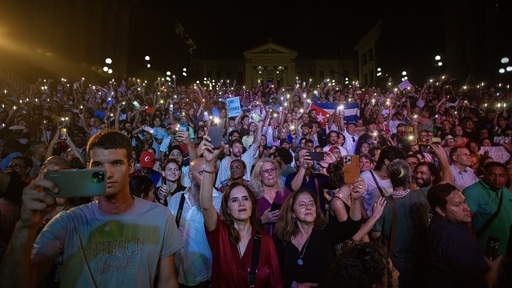
On January 29, President Trump signed an executive order labeling Cuba an “unusual and extraordinary threat” to the United States. The order imposes economic penalties on any country that attempts to deliver oil to the island, which has already been under a US economic and commercial blockade for more than 60 years.
These measures followed a broader US military campaign against Venezuela that further isolated Cuba. The seizure of Venezuelan tankers bound for Cuba as part of a US naval blockade on Venezuelan oil, and the detention of Venezuela’s president and first lady, cut off one of Cuba’s primary fuel providers. According to Cuban President Miguel Díaz-Canel, no fuel has entered the country since December.
The loss of fuel supply has severely disrupted the electricity grid on which schools, transportation, and vital health infrastructure depend.
As the situation on the island worsens, people’s movements and organizations across the world have mobilized in solidarity with the people of the island and called on the US government to lift the blockade once and for all. On February 16, over 100 Cuban artists, intellectuals, dancers, musicians, and writers released a public letter calling on their colleagues from across the world to denounce the US attacks and stand with Cuba.
“Cuba resists and will resist this inhumane aggression, but it counts on the active solidarity of all honest, humanist, and good-willed men and women of the world. It is about preventing a genocidal act and saving a heroic people whose only “crime and threat” has been to defend their sovereignty,” reads the letter.
“As Martí defined it in 1895, writing about our duty in the Americas: “’Whoever rises up today for Cuba, rises up for all time.’”
Read the full letter and the list of signatories below:
Cuba is not a threat: Open Letter from over 100 Cuban Artists & Intellectuals to Artists & Intellectuals around the World
Cuba has struggled for centuries, first to win its independence and then to defend it unconditionally. Such resistance against the most powerful and predatory empire in human history has been achieved through the immense sacrifice of its people. The conscious resistance of those of us who live on the archipelago stems from convictions and reasons learned long ago.
José Martí, the great poet and patriot, defined our noble destiny in 1894: “The Antilles lie at the balance point of the Americas, and if enslaved, they would merely serve as a bridgehead for the war of an imperial republic.”
Cuba’s greatest wealth lies in its people. We possess no oil reserves or other highly coveted natural resources, but we have developed human capital capable of shaping resilience through creativity and knowledge.
Cuba does not foster terrorism, although we have been victims of it. We love peace, indissolubly tied to our independence. We have always wished to build a just and supportive society. We eliminated illiteracy and reduced infant and maternal mortality rates to levels similar to those in the developed world. We send doctors and teachers to other nations when others only drop bombs. We create vaccines that are distributed freely. We promote sports as a right of the people and are the Spanish-speaking country that has won the most medals in Olympic history.
We have a free system of art schools, which have trained dancers, actors, painters, filmmakers, musicians… many from humble origins, who have generated a powerful artistic movement, recognized internationally.
Since the revolutionary triumph of 1959, we have aspired to achieve the highest cultural level for our people. Fidel showed us that illiteracy could be eliminated and that we must fight to eradicate racism and discrimination in all their manifestations, with a framework of laws and active vigilance. We are advancing the integration and defense of our women’s rights, with women now serving as parliamentarians, leaders, and professionals on equal terms with men. We approved an advanced Family Code that protects love in its diverse forms of existence.
Despite the economic, commercial, and financial blockade imposed by the United States since 1962, successively tightened to the point of asphyxiation, implemented by the current US government, we do not renounce our dreams of prosperity, justice, and peace.
Resistance costs us and imposes great sacrifices on our people every day, and means facing the cruelty of the US government’s extraterritorial measures with stoicism.
The empire says that Cuba represents a threat to its national security, which is ridiculous and implausible. It has imposed an oil blockade, resulting in the paralysis of hospitals, schools, industries, and transportation. They try to prevent our doctors from saving lives; they try to paralyze our free and universal education system, to plunge us into famine, into a lack of energy to guarantee access to drinking water and cooking food; in short, they aim to slowly and bloodily extinguish a country.
Cuba resists and will resist this inhumane aggression, but it counts on the active solidarity of all honest, humanist, and good-willed men and women of the world. It is about preventing a genocidal act and saving a heroic people whose only “crime and threat” has been to defend their sovereignty.
Cuba has never attacked any nation. Cuba exercises international solidarity even under conditions of extreme blockade. To be with Cuba today is to defend peace and the right of all peoples, no matter how small, to the full exercise of their sovereignty.
The Union of Writers and Artists of Cuba (UNEAC) calls on all intellectuals and creators worldwide to mobilize in defense of the Cuban cause. As Martí defined it in 1895, writing about our duty in the Americas: “Whoever rises up today for Cuba, rises up for all time.”
Full list of signatories:
Miguel Barnet Lanza, writer, poet, and ethnologist. Honorary President of the Union of Writers and Artists of Cuba (UNEAC). National Prize for Literature and Heritage.
Nancy Morejón, writer and poet. National Prize for Literature.
Lesvia Vent Dumois, vice president of UNEAC. National Prize for Visual Arts.
Alpidio Alonso Grau, poet. Minister of Culture of Cuba.
Abel Prieto Jiménez, writer. President of Casa de las Américas.
Pedro Pablo Rodríguez, researcher and historian. National Prize for Social Sciences.
Virgilio López Lemus, writer and poet. National Prize for Literature.
Waldo Leyva, National Prize for Literature.
Francisca López Civeira, researcher. National Prize for Social Sciences.
Rafael Acosta de Arriba, writer. National Prize for Cultural Research.
René Fernández, National Prize for Theater.
Miriam Muñoz, National Prize for Theater.
Zenén Calero, National Prize for Theater.
Viengsay Valdés, director of the National Ballet of Cuba. National Prize for Dance.
José Oriol, National Prize for Community Culture.
José Menéndez Sigarroa (Pepe Menéndez), designer. National Prize for Design.
José Villa Soberón, sculptor, National Prize for Visual Arts.
Eduardo Roca Choco, National Prize for Visual Arts.
Margarita Ruiz, researcher. National Prize for Cultural Heritage.
Flora Fong, National Prize for Visual Arts.
Arístides Hernández Ares, graphic humorist and caricaturist. National Prize for Humor.
Fátima Patterson, director of the Macubá theatrical studio. National Prize for Theater.
Juan Piñera Infante, composer. National Prize for Radio and Artistic Education.
Digna Guerra, choir director. National Prize for Music.
Josefa Bracero Torres, radio broadcaster. National Prize for Radio.
Ramón Espigul, radio broadcaster, National Prize for Radio.
Guille Vilar Álvarez, radio broadcaster. National Prize for Radio.
Eslinda Núñez, actress. National Prize for Film.
Roberto Ferguson, audiovisual director. National Prize for Television.
José Ramón Artigas, audiovisual director. National Prize for Television.
José Loyola, musician. National Prize for Artistic Education.
Roberto Valera, musician. National Prize for Music.
Guido López-Gavilán, composer, pedagogue, and orchestra conductor. National Prize for Music.
Raúl Rodríguez, radio broadcaster. National Prize for Radio.
Alex Pausides, National Prize for Editing.
Miguel Iglesias, director of the Contemporary Dance of Cuba. National Prize for Dance.
Santiago Alfonso, choreographer. National Prize for Dance.
Rubén Darío Salazar, actor, director of Teatro Las Estaciones. National Prize for
Theater.
Marta Bonet de la Cruz, musicologist and president of UNEAC.
Elier Ramírez Cañedo, writer, historian, and researcher.
Magda Resik Aguirre, journalist and first vice president of UNEAC.
Yuris Nórido Ruiz Cabrera, journalist and vice president of UNEAC.
Yasel Toledo Garnache, journalist and president of the Hermanos Saiz Association.
Alberto Marrero, writer and poet.
Ernesto Limia Díaz, historian and researcher.
Abel Enrique González, historian and researcher.
Vivian Martínez Tabares, director of the Theater Department of Casa de las Américas.
Isabel Cristina López Hamze, professor at the University of the Arts ISA.
Olga Teresa Pérez Berra, theater scholar.
Fernando Rojas, essayist and writer.
Juan Alberto Ante, director of Alas Teatro and first vice president of UNEAC in Granma.
Adis Nubia, actress at Teatro Andante.
Julio César Ramírez, director of Teatro D Dos.
Lourdes Cajigal, director of Compañía Así Somos.
Vladimir Peraza, critic and researcher.
Octavio Fraga, journalist and essayist.
Graciela Chailloux, writer and professor at the University of Havana.
Kenia Rodríguez, representative of Assitej Cuba.
Dennis Ramos, actor and professor at the Corina Mestre National Theater School.
Ernesto Planas, actor, mime, and professor at the University of the Arts ISA.
Leivan García, dancer and choreographer, director of the National Folklore Ensemble.
Nereida López, director of the National Theater.
Marvis Yaquis, designer and director of the National Council of Performing Arts.
Miguel Cañellas, director of the Tomás Terry Theater.
Jorge Mederos, director of the Havana Theater Center.
Mercedes Borges, professor at the University of the Arts ISA and director of the Cuba Escena portal.
José Omar Arteaga, professor at the University of the Arts ISA and editor of the Cuba Escena portal.
Eduardo Valdés Rivero, artistic director.
Valia Valdés, actress and journalist.
Elvia Pérez, oral storyteller and director of Puente de Palabras.
Maribel López Carcasés, actress at the Guantánamo Puppet Theater.
Jorge Brooks, manager and researcher.
Uri Rodríguez, actor and director of Teatro La Barça. President of UNEAC in Guantánamo.
Migdalia Tamayo, art critic and researcher, First Vice President of UNEAC in Guantánamo.
Jesús Lozada, doctor and writer.
Juan González Fiffe, director of Teatro Andante. Premio Maestro de Juventudes.
Raquel González, actress and television director.
María del Carmen Mena, professor at the University of the Arts ISA.
Yuliet Montes, actress at Teatro de la Utopía and professor at the University of the Arts ISA.
Jaime Gómez Triana, researcher, writer, vice president of Casa de las Américas and professor at the University of the Arts ISA.
Reinaldo León, director of Teatro de la Utopía and professor at the University of the Arts ISA.
Luis Enrique Amador Quiñones, actor and rector of the University of the Arts ISA.
Marilyn Garbey, researcher, writer, and president of the Association of Performing Artists of UNEAC.
Roxana Pineda, actress and director of Teatro La Rosa.
Norma Gálvez, director of the Envivo publishing house and professor at the University of the Arts ISA.
José Omar Torres Lopez, painter and engraver.
Diana Balboa, painter and engraver.
Humberto Mayol Viton, photographer.
Evert Fonseca, painter.
Liliam Chacón, dean of the Faculty of Dance Art at ISA.
Raúl Torres, troubadour.
Mabel Castillo, musicologist, president of the Association of Musicians of UNEAC.
Lourdes de los Santos, documentary filmmaker and president of the Association of Film, Radio, and Television of UNEAC.
Manuel Herrera, filmmaker.
Orieta Cordeiro, radio broadcaster.
Sahily Tabares, writer.
Jorge Alonso Padilla, television producer.
Irene Borges, director of Espacio Teatral Aldaba.
Víctor Fowler, writer.
Rosa Miriam Elizalde, journalist and writer.
Omar González, journalist and writer.
Regina Balaguer, director of the Camagüey Ballet and first vice president of UNEAC in Camagüey.
Armando Pérez Padrón, audiovisual producer, writer, and president of UNEAC in Camagüey.
José Manuel Espino, writer, poet, and president of UNEAC in Matanzas.
Janette Brossard, visual artist and president of the Association of Visual Artists of UNEAC.
Ricardo Riverón Rojas, writer and president of UNEAC in Villa Clara.
Carlos Figueroa, radio broadcaster and president of UNEAC in Sancti Spiritus.
Gerardo Houdayer, radio broadcaster and president of UNEAC in Santiago de Cuba.
Faculty of the Fernando Alonso National Ballet School
Dani Miguel Hernández Acosta, principal dancer and director of the National Ballet of Cuba.
María Mercedes García Vega, deputy director of the National Ballet of Cuba.
Enrique Ubieta, researcher and writer.
Ana Irma Pérez Pereyó, musician and vice president of the Hermanos Saiz Association.
Santa Massiel Rueda, troubadour and vice president of the Hermanos Saiz Association.
Nelson Valdés Viera, troubadour.
Marcos David Fernández (El Kikiri de Cisneros), improvisational poet.
Dazra Novak, writer and president of the Association of Writers of UNEAC.
Karel Leyva, poet.
Marta Campos, troubadour and vice president of the Association of Musicians of UNEAC.
Orlando Valle Maraca, flutist and first vice president of the Association of Musicians of UNEAC.
Sándor González Vilar, visual artist.
Lázaro Dagoberto González, violinist, pedagogue, composer, and orchestra conductor.
Beatriz Corona Rodríguez, composer and choir director.
The post Over 100 Cuban artists call for international solidarity appeared first on Peoples Dispatch.
From Peoples Dispatch via This RSS Feed.