

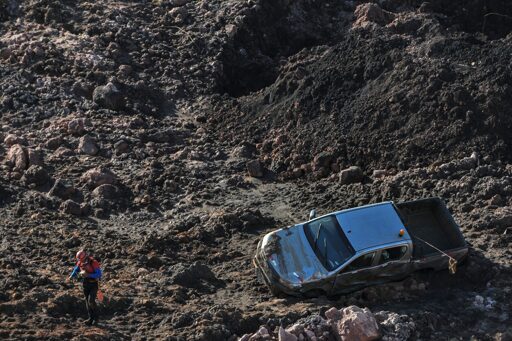
BRUMADINHO, Brazil — In the rural community of Jangada, in the municipality of Brumadinho in Brazil’s Minas Gerais state, the water that supplies local families comes from springs that emerge onsite. In a Youtube video uploaded last December, local resident Lorraine Nascimento talks proudly about how “the water belongs to us.” More than 30 years ago, without any support from the state waterd board, Copasa, the residents built a system by themselves to collect and distribute water from the springs. Today, the system is managed autonomously by a community association created for this purpose, and supplies water to hundreds of families in Casa Branca, the rural district where the Jangada community is located. Cátia Patrocinia Cruz Maia is a schoolteacher who, like everyone in her family, was born and raised in the community. She’s a member of the association that manages the water collection and distribution system. She recalls that, before the system was created, residents used to get their water from a creek that ran through the area. As the community grew, the demand for piped water increased as well. That was when her father, João de Sousa Cruz, joined friends and neighbors to solve the problem. “They got together and started building a system to pipe water for all the families,” Maia says. “Those who could afford it pitched in to help buy the pipes. Not a single cent came from the local government; it was all a community effort.” Today, however, Jangada’s water is threatened by the…This article was originally published on Mongabay
From Conservation news via This RSS Feed.