

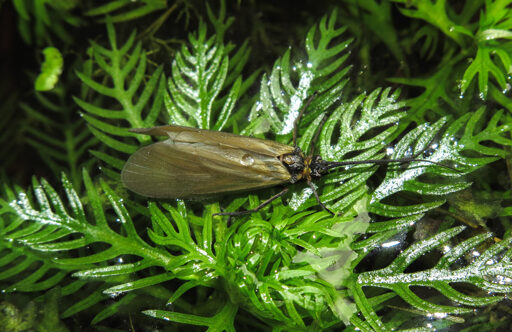
Pharmaceuticals that people globally rely on for daily health — including antibiotics, antidepressants and painkillers — are entering ecosystems via wastewater, posing poorly understood risks. Once there, aquatic insects can accumulate these chemical contaminants, with their predators transporting them back onto land, raising concern among scientists. A recent paper found that a host of pharmaceuticals can accumulate in winged species such as caddisflies and mayflies at different life stages, with the quantity varying among species. The paper’s first author, Marek Let, from the University of South Bohemia, says pharmaceutical pollution might not be as concerning as pesticide contaminants because medical drugs are generally found in low concentrations. But he adds that some pharmaceutical compounds can be incredibly toxic. These include sertraline (the active ingredient of the commonly prescribed antidepressant Zoloft), which his study found can bioamplify in caddisflies, increasing in concentration as the insect passes through its life cycle. Other antidepressants, including norsertraline and venlafaxine (the active ingredient in the popular prescription drug Effexor), as well as theophylline (prescribed to treat asthma symptoms) also bioamplify in caddisflies. A wastewater discharge pipe. Even when wastewater is treated it can still contain pollutants, including pharmaceuticals. So building more wastewater treatment plants is not the optimal solution, Previšić says. “Our input needs to be reduced.” Image by U.S. Department of Agriculture via Wikimedia Commons (Public domain). “This study also proves that the pharmaceuticals do not stay in the water, and they can be emitted into the terrestrial environment and contaminate some terrestrial predators,…This article was originally published on Mongabay
From Conservation news via This RSS Feed.