

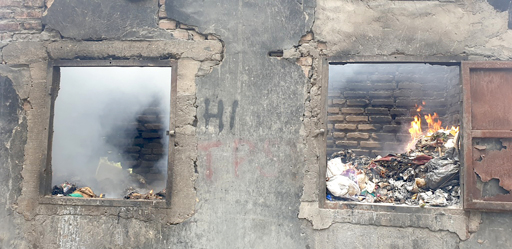
JAKARTA — When old mattresses and broken chairs are dumped by the roadside in his neighborhood, Erwinsyah faces a choice: leave them there and risk accidents, or set them on fire. The head of a neighborhood unit, or RT, in the city of Bogor, south of Jakarta, Erwinsyah says residents often discard bulky waste such as used spring beds and furniture along the street. Left unattended, they become an eyesore — and a hazard. “The mattresses are already dirty, smelly, full of rat droppings. So they just get placed by the roadside. But that’s an area where people pass by, children go to school,” Erwinsyah told Mongabay. “If a child walks past and it falls on them, then I’m the one who’ll get blamed as the head of the neighborhood unit.” To prevent that from happening, he sometimes burns the items in an empty field away from houses, staying to monitor the flames. What Erwinsyah describes isn’t unusual. Across Indonesia, open waste burning remains widespread despite being prohibited under the country’s 2008 Waste Management Law. A 2023 national survey by the Ministry of Health found that 57% of Indonesian households still burn their waste , making it the most common method of waste handling. By comparison, 27.6% hand waste over to collectors or informal waste pickers, 8.7% dump it directly at disposal sites, and just 0.1% reported recycling. Open waste burning in Indonesia in 2023. Image courtesy of Ecoton. Health impacts Open waste burning releases a mix of pollutants, including…This article was originally published on Mongabay
From Conservation news via This RSS Feed.