

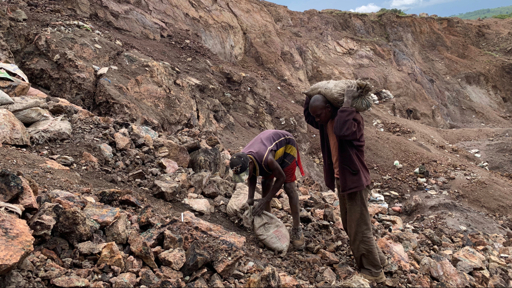
On Feb 4, the U.S. hosted the Critical Minerals Ministerial, a summit bringing together delegations from more than 50 countries, including seven African countries, with the aim of securing access to the critical minerals used in everything from electric vehicles to semiconductors. Among the countries attending the summit was Guinea, a West African nation rich in bauxite and iron deposits. Its delegation, represented by the minister of mines, Bouna Sylla, signed a memorandum of understanding with the U.S. on Feb. 5. Morocco also signed an MoU with the U.S. at the summit, joining a handful of other African countries that have done so in recent months. The Democratic Republic of Congo (DRC) and Rwanda signed partnership agreements with the U.S. in December. The deals marked an acceleration in U.S. efforts to gain access to and exploit critical minerals, an industry dominated by China. According to the International Energy Agency, in 2024, most of the global processing of copper, lithium, cobalt, graphite and rare earth minerals was done by China. Without naming China, U.S. Secretary of State Marco Rubio said during a press meeting on Feb 4, that the critical minerals supply is “heavily concentrated in the hands of one country. And that lends itself to, at worst-case scenario, being used as a tool of leverage in geopolitics.” He added: “I think there’s a growing global recognition that we need to have supply chains for critical minerals that are reliable and diverse across the world.” Photographers capture the group of ministers…This article was originally published on Mongabay
From Conservation news via This RSS Feed.