

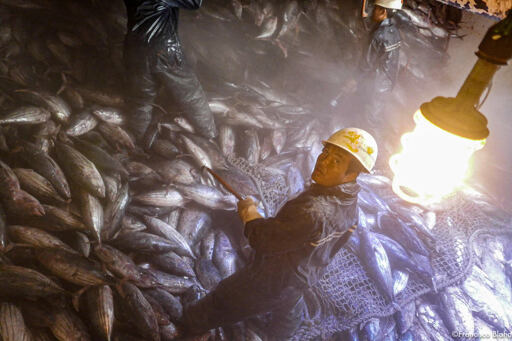
For decades, the global fisheries conservation community has rightly focused on the health of fish stocks, the integrity of management systems, and the long-term sustainability of ocean resources. But there is a fundamental truth we can no longer afford to sidestep: fisheries management that fails to protect the people working at sea is neither credible nor sustainable. Crew welfare starts with international law. In theory, the framework already exists. International maritime law, anchored in instruments such as the U.N. Convention on the Law of the Sea (UNCLOS), establishes the responsibilities of states over vessels flying their flag. Complementing this are labor-specific agreements like the International Labour Organization’s (ILO) Work in Fishing Convention (C188), the Maritime Labour Convention, and safety instruments such as the Cape Town Agreement on fishing vessel safety. In practice, however, these protections remain uneven, weakly enforced, or entirely absent for too many fishing crews, particularly migrant workers deployed on distant-water fleets. Ratification gaps persist. Oversight mechanisms are diffuse and fragmented, and accountability too often disappears once a vessel leaves port. Under international law, flag states, those countries where a ship is registered and to whose jurisdiction it is subject, remain the primary authority responsible for ensuring the safety, welfare and labor conditions of crews on their vessels. This is not optional. It is a legal obligation that is explicit under UNCLOS Article 94, on duties of the flag state. Yet many flag states lack either the capacity or the political will to exercise effective control over labor…This article was originally published on Mongabay
From Conservation news via This RSS Feed.