

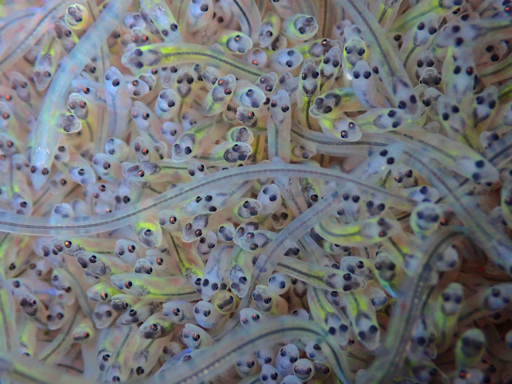
Slimy, snake-shaped and yellow-brown, freshwater eels swim the rivers, estuaries and the coastal waters of Asia, Oceania, Europe, Africa and North America. Despite what their name says, these fish have strong ties to the oceans: They spawn at sea and the babies drift to their freshwater habitats, piggybacking on ocean currents. Though there are 19 known species, more than 99% of eels eaten worldwide belong to three species: the European eel (Anguilla anguilla), American eel (Anguilla rostrata) and Japanese eel (Anguilla japonica). They are coveted as delicacies in East Asia, primarily in Japanese, Korean and Chinese cuisines, where they are consumed once they grow to at least 30 centimeters (1 foot) long. In Japan, where it’s known as unagi, the fish is eaten grilled or smoked, as sushi or with rice. Most of the global harvest, however, is for finger-sized, transparent baby eels, also called glass eels or elvers. They’re caught the world over and shipped to aquaculture facilities, primarily in China, where they are reared for a year or two before being sold as food. With unrelenting demand, all three eel species have perilous conservation status, teetering on the brink of extinction. The European eel is critically endangered; the other two are endangered. In the last three months, two back-to-back efforts to protect these disappearing species failed. At the November CITES meeting of 184 countries and the European Union, delegates rejected a proposal to regulate international commercial trade in all freshwater eels. Another proposal by the Dominican Republic to monitor…This article was originally published on Mongabay
From Conservation news via This RSS Feed.