

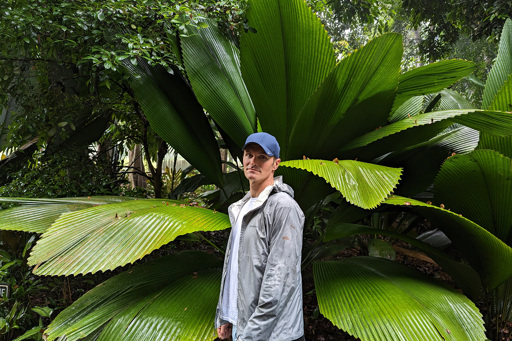
When I launched Mongabay in 1999, I’d just finished college, armed mainly with a love of rainforests, a pile of musty field notes from Borneo to Madagascar and the uneasy realization that the forests I’d explored were vanishing faster than most people knew. I coded the first version of the site by hand in my apartment. There was no strategy — just a desire to share what I’d seen and to make credible information freely accessible. Recently, I spoke with Alejandro Prescott-Cornejo, Mongabay’s senior marketing associate, about that journey and where we’re headed. Looking back, the most meaningful recognition hasn’t come from awards, but from the moments when journalism made a tangible difference: an illegal concession halted in Gabon, an investigation in Peru that helped expose planned rainforest destruction, or the thanks we’ve received from Indigenous leaders who trust us to tell their stories accurately. The real reward has always been impact. Journalism doesn’t plant trees or prosecute illegal loggers, but it creates the conditions that make those things possible. Those moments shaped the decision in 2012 to transition Mongabay from an advertising-driven website into a nonprofit. Advertising rewarded clicks; the nonprofit model let us reward impact. It allowed us to launch Mongabay Indonesia, then expand to Latin America, India and beyond. Today, we work with more than a thousand journalists in roughly 85 countries, many rooted in the communities they cover. Their local knowledge gives Mongabay a depth that’s unusual in the media space. The biggest impacts, though, are…This article was originally published on Mongabay
From Conservation news via This RSS Feed.