

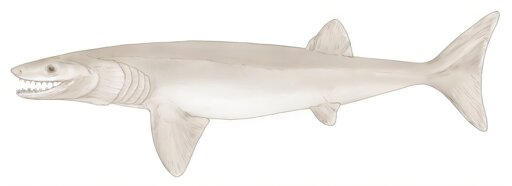
Most shark fossils are just teeth—their cartilage skeletons usually decay long before they can fossilize. But in northwestern Arkansas, a series of geological sites known as the Fayetteville Shale has preserved dozens of rare, three-dimensional shark skeletons dating back more than 300 million years. In a new study published in Geobios, researchers reveal why: These fossils formed on a low-oxygen, highly acidic seafloor that preserved cartilage instead of destroying it.
From Biology News - Evolution, Cell theory, Gene theory, Microbiology, Biotechnology via This RSS Feed.
You must log in or # to comment.