

Article summary
• Three Haitian workers are suing the meatpacking giant JBS for discrimination, on behalf of hundreds of Haitians who worked alongside them, adding to a number of food worker cases now in the courts.
• In January, a federal court in Michigan ruled to move forward a human trafficking lawsuit brought by Mexican farmworkers who came to the U.S. through the H-2A program. That case followed another in Michigan in 2025, where a jury awarded six Guatemalan farmworkers more than half a million dollars for abuses they suffered within the H-2A program.
• Worker rights advocates say some immigrants are now looking toward the courts, rather than federal channels, like the Occupational Safety and Health Administration or agency offices dedicated to civil rights and liberties.
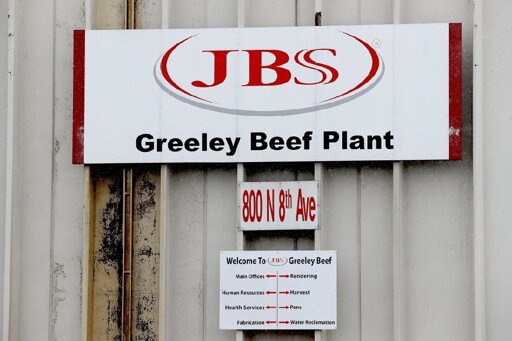
In 2023 Carlos Saint Aubin, an immigrant from Haiti who was living in Maryland, came across a TikTok video urging him to travel to Greeley, Colorado, to work in a meatpacking plant.
The man in the video spoke Saint Aubin’s native language, Haitian Creole, and said you didn’t need to speak English to work in JBS’s Swift Beef Co. packing plant, where wages were high. He suggested that upon arrival, your housing and other needs would be taken care of. Convinced, Saint Aubin traveled across the country and landed at the foothills of the Rocky Mountains, to start a new job.
However, according to a lawsuit filed in December, for Saint Aubin and two other Haitian men, the job was not as advertised.
Saint Aubin, Nesly Pierre, and Louise Jean-Louis say they were crammed into freezing motel rooms that offered one bed and one bathroom for up to 11 strangers. They allege they were charged for lodging and for transportation to their jobs at the beef plant. And, they claim, they were poorly trained, in two languages they did not understand, which they say left them inadequately prepared for what they describe as grueling, dangerous tasks that eventually led to injuries.
“This lawsuit is about a vulnerable group of Haitian immigrants who were recruited in order for JBS to have a class of people who would be working without fully knowing their rights.”
Because their treatment was distinct from what workers at the plant from other racial and ethnic groups experienced, they allege, they’re suing JBS for discrimination, on behalf of hundreds of Haitians who worked alongside them.
“This lawsuit is about a vulnerable group of Haitian immigrants who were recruited in order for JBS to have a class of people who would be working without fully knowing their rights,” said Amal Bouhabib, a senior staff attorney at FarmSTAND, a legal advocacy organization taking on industrial animal agriculture, where she is representing the three workers. “JBS was doing that to increase its bottom line, to churn out more meat at more dangerous speeds at the expense of these workers’ health and safety.”
In response to a request for an interview, JBS spokesperson Hailey Fishel sent Civil Eats an emailed statement that said the company strongly disagrees with the claims in the suit.
“At JBS, treating our employees with dignity and respect is a core value of our company, regardless of nationality or background,” she said. “We follow all employment and labor laws and take our responsibilities to our workforce seriously. Our employees choose to work with us, understand the terms of their employment, and are free to leave at any time.”
The December suit, filed by immigrant food workers against the world’s biggest meatpacker, comes as the Trump administration’s aggressive campaign to rid the country of both undocumented and legally authorized immigrants has pushed many workers further into the shadows.
And despite the fear pervading communities, this is not the only case.
“It’s incredible that we have people who wanted to come forward, because there are no guarantees right now.”
In early January, a federal court in Michigan ruled a human trafficking lawsuit brought by Mexican farmworkers who came to the U.S. through the H-2A program could move forward. That case followed another in the same state last year, in which a jury awarded six Guatemalan farmworkers more than half a million dollars as compensation for abuses they suffered within the H-2A program.
Bouhabib said that while her immigrant clients have long feared speaking up, the stakes at this moment have never been higher, as even workers with legal authorization to work in the U.S. are unsure whether their status will be recognized or honored.
“It’s incredible that we have people who wanted to come forward, because there are no guarantees right now,” she said. “I think the named plaintiffs are being incredibly brave to have their names out there, but that’s how strongly they feel about their experiences.
Allegations of Abuse
According to the lawsuit, JBS began recruiting Haitians in late 2023, and some 1,200 eventually made their way to Greeley to claim the jobs. At the peak of the recruitment, more than 100 Haitian workers were staying at the 17-room motel. After it became too crowded, Saint Aubin and about 40 other workers were moved into a 5-bedroom house, which lacked furniture. They bought blankets to sleep on the floor.
The workers say they paid their own way to Colorado and were charged recruitment fees. Then, they allege, they were charged for housing at the hotel and at the house and for rides to work. When he first arrived, Saint Aubin didn’t eat for two days because he had no money for food.
The workers brought their concerns about the housing situation to the union that represents workers at the Swift Beef plant, UFCW Local 7. Subsequently, the suit says, JBS launched an investigation that led to two supervisors getting fired. But the situation didn’t change.
According to the suit, Saint Aubin, Pierre, and Jean-Louis were asked at the plant to sign employment paperwork written in English, which they did not understand. They were trained in English or Spanish, which they also didn’t understand, before being put to work on the beef processing lines.
Most Haitian workers were assigned to one of the plant’s two line shifts, and the lawsuit alleges that soon after they arrived, JBS increased the line speed only on the shift that was majority Haitian. During the shift staffed primarily by non-Haitian workers, the line speed averaged 300 cattle per hour; during the shift staffed by Haitians, it averaged 370 and reached as high as 440.
Most Haitian workers were assigned to one of the plant’s two line shifts, and the lawsuit alleges that soon after they arrived, JBS increased the line speed only on the shift that was majority Haitian.
Faster work speeds on meatpacking lines are associated with higher risk of injury. The suit alleges that the repetitive work at those speeds—pulling intestines from carcasses and trimming fat—sometimes left Pierre and Jean-Louis unable to close their fingers long after a shift.
After Saint Aubin was injured during one of his shifts, according to the suit, he returned from a hospital visit and was told, in Spanish, that he had to take eight weeks of unpaid leave. If the human resources representative did inform him of his ability to access workers’ compensation, he wasn’t aware, because he doesn’t understand the language.
Based on these and other patterns, the workers are suing JBS for discrimination and for wage violations, alleging that the fees they were forced to pay for recruitment, transportation, and housing resulted in pay that was below what is required by law.
At the end of January, JBS filed a motion to dismiss the case and a motion to strike, which asks the court to remove several parts of the complaint from the record, including sections on the overall dangers of meatpacking work and the company’s past recruitment efforts.
In the Michigan farmworker case, two Mexican immigrants are suing First Pick Farms for human trafficking and violations of the Agricultural Worker Protection Act. Despite their differences, the cases each underscore the systemic issues immigrant workers often face on farms and in food processing.
According to their legal complaint, Feliciano Velasco Rojas and Luis Guzman Rojas left Mexico in 2017 to work on a North Carolina farm. Because they were admitted to the U.S. under the H-2A guest worker program, they were promised specific wages and guaranteed housing.
However, after working on the farm for a few weeks, they allege a man named Antonio Sanchez showed up and told them and 28 other workers they would be taken to a different farm in Michigan to work there. They allege that they were forced to board buses, were photographed, and were given false identities, and told that if they complained, immigration authorities would be called.
When they arrived in Michigan, the 30 workers were placed in a three-bedroom, one-bathroom house with no beds, according to the complaint, and they were allegedly forced to work long hours every day, often without breaks.
First Pick Farms’ attorney did not respond to requests for comment on the case. In a January legal filing, the farm denies nearly all the allegations and says it denies it ever employed the workers.
“These kind of brutal conditions were ongoing throughout the entirety of the blueberry season,” said Gonzalo Peralta, an attorney with the Michigan Immigrant Rights Center who is representing the workers. Workers at First Pick Farms initially called the center’s hotline to ask for help, Peralta said, and in addition to the other allegations, they said they hadn’t been informed of their rights under the law.
“This is a more extreme case than some others, but in no way is it an exception,” said Abigail Kerfoot, another attorney on the case and the deputy legal director for Centro de los Derechos del Migrante (CDM). “Fraud in general is incredibly common in the temporary work visa programs, including H-2A. Workers are often promised a particular job and a particular set of working conditions and then when they arrive to work in the U.S. through this program, they find that the job that they were promised doesn’t exist.”
“This is a more extreme case than some others, but in no way is it an exception.”
While there are plenty of farmers who use the H-2A program, follow the rules, and treat workers well, CDM has found that abuses including labor trafficking, discrimination, and wage violations happen at high rates because the program is structured in a way that gives workers little to no agency.
First Pick also denies it had any relationship with a recruiter in the suit, as an “employee or agent.”
But companies often rely on such recruiters, including those like the man who made the TikTok video that led to Pierre, Jean-Louis, and Saint Aubin’s employment at JBS, Peralta said, and then distance themselves from abuses that occur.
“They don’t want to be seen as the employer, so they outsource the employment status to staffing agencies, recruitment firms, that kind of thing, so that they can say, ‘Well, that company or person did all the employment violations,’” Peralta said.
However, the law is clear in that especially when it comes to human trafficking, the companies are responsible, Kerfoot said.
In September 2024, UFCW Local 7, the union that represents workers at JBS’s Swift Beef plant in Greeley, put out a statement detailing “potential illegal tactics and labor human trafficking violations” its union representatives uncovered at the plant, specifically related to the plant’s treatment of the growing population of Haitian workers.
Many of the abuses alleged in the statement mirror the claims now included in the lawsuit, including the fact that the company sped up the line to dangerous speeds after the workers arrived.
“What has happened to these workers, who came to our country legally in search of a better life for themselves and their families, is completely unacceptable,” union president Kim Cordova said in the statement. “We call on all relevant law enforcement and regulatory agencies to conduct a thorough investigation into the treatment of our members, and we will continue to do everything we can to bring full accountability.”
Winning in Court—and Beyond
Advocates say some immigrants will now rely more on courts, as they turn away from reporting workplaces abuses or seeking recourse through federal channels, like the Occupational Safety and Health Administration or agency offices dedicated to civil rights and liberties.
“This government has turned every arm of its federal agencies into an enforcement machine,” said Efrén Olivares, VP of litigation and legal strategy at the National Immigrant Law Center (NILC). “The only thing that’s left is the independent judiciary.”
Those channels didn’t always provide timely relief for workers in the past, either. Jean-Louis filed a discrimination complaint with the Equal Employment Opportunity Commission on behalf of all Haitian workers at the Swift Beef plant in October 2024. Ultimately, Bouhabib said, they decided to head to court.
It just so happened that the case is moving forward at this moment, amid the broader immigration crackdown. While Bouhabib declined to share the specific legal status of the three plaintiffs, many of the workers employed by JBS were working under a humanitarian visa called Temporary Protected Status (TPS).
Last year, the Trump administration moved to end TPS for immigrants from at least six countries. Haitians’ protected status was set to expire on Feb. 3, and some meatpacking companies had already started laying workers off in anticipation. On Feb. 2, a judge prevented that expiration while a lawsuit challenging the administration’s decision proceeds. But if the court battles and efforts in Congress ultimately fail, Haitians who lose their status will have to leave the country or decide to remain here undocumented.
The situation could complicate the case, said Bouhabib. And in her mind, the fact that JBS has not spoken out on behalf of its Haitian workers also speaks to the larger issues at play in the case—the expendability of workers.
“The animal agricultural industry relies on immigrant labor, and yet none of [the companies] are at least outwardly coming to the rescue of these people,” she said.
“The animal agricultural industry relies on immigrant labor, and yet none of [the companies] are at least outwardly coming to the rescue of these people.”
Whatever happens with TPS, though, won’t affect the immigrants’ ability to sue. Regardless of work authorization, all individuals have the right to bring a lawsuit for violation of their rights. It’s a point that Olivares at NILC emphasized.
“All of the employment standards based on laws that Congress has put into place, those are the employers’ responsibility under the law,” he said. “The immigration status of the worker is not relevant.”
Still, farmworkers in particular have long lacked the same legal rights as other workers, and workers in the H-2A program have even fewer. As farms face increasing labor shortages due to Trump’s deportation efforts, the administration and Republicans in Congress have repeatedly presented expanding the H-2A program as a solution.
In June, the administration rolled back new protections intended to curb abuses within the H-2A program. Then, in October, agencies changed the application process to make it easier for farms to bring in those guestworkers, while also lowering wages for workers.
“These moves to expand the number of visas available to employers without strengthening protections for workers and without guaranteeing oversight of the protections that already exist are really irresponsible and unconscionable,” said Kerfoot. “They would endanger workers and any hopes we might have for durable, real change to the United States immigration laws.”
What CDM and other groups propose, instead, is an entirely new model for labor migration. Their approach would cut out the recruiters altogether, giving workers the ability to apply directly for seasonal jobs through a government database. Guestworkers would also be able to change employers and petition for citizenship.
At the moment, however, it’s a model that reads as a pipe dream. Instead, Kerfoot and Peralta are focused on seeking justice for Feliciano and Luiz while fear continues to rise.
The immigration crackdown is “not altering our tactics to try to ensure that our clients are vindicated,” Peralta said, “but we also are very cognizant and recognize that it will become much more difficult for individuals to muster the courage to bring these suits. The small numbers that we were seeing initially may decrease because of the federal government’s efforts with regards to immigration enforcement.”
In Bouhabib’s mind, that growing fear works to the benefit of food and agriculture corporations like JBS, as many workers choose to stay quiet. Still, she said, “some of these workers still believe in the justice system of America.”
The post Despite Federal Immigrant Crackdown, Food Workers Sue Over Workplace Abuses appeared first on Civil Eats.
From Civil Eats via This RSS Feed.