

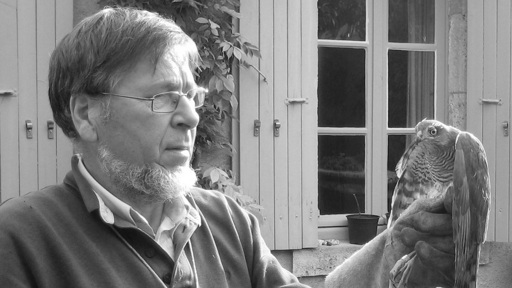
At the edges of continents, where water thins into mud and birds gather before long journeys, conservation has often been a matter of persistence. It has required people willing to think across borders, seasons, and political cycles. Long before such thinking was fashionable, a small group of scientists and civil servants argued that migratory birds could only be protected if countries learned to act together along the paths those birds actually used. This was not an abstract idea. It grew out of mudflats, ringing stations, and years of watching birds arrive and depart on schedules that ignored human boundaries. It also required a rare mix of qualities: technical rigor, persistence inside bureaucracies, and the ability to persuade governments that cooperation was not a concession but a necessity. Gerard C. Boere was central to turning that way of thinking into practice. Trained as a zoogeographer and palaeontologist, he began with careful scientific work on Arctic waders and the Wadden Sea. From there he moved steadily outward, helping shape what became known as the flyway approach: the notion that migratory waterbirds link wetlands from the Arctic to southern Africa into a single, vulnerable system. In the late 1980s and 1990s he recognized that the newly adopted Convention on Migratory Species offered a chance to give that idea legal force. He worked for years to turn it into the Agreement on the Conservation of African-Eurasian Migratory Waterbirds (AEWA), concluded in The Hague in 1995 and entering into force in 1999. He then stayed…This article was originally published on Mongabay
From Conservation news via This RSS Feed.