

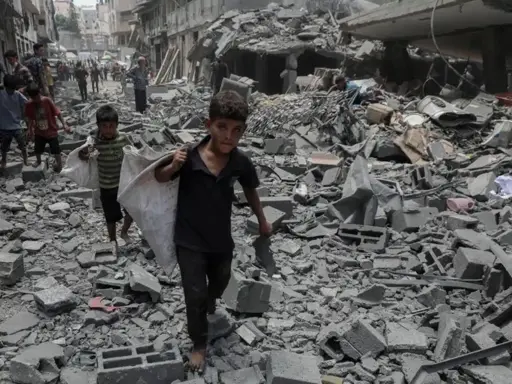

At a moment when the ceasefire was meant to open a path back to normal life in the Gaza Strip, Israeli occupation forces continue to impose military control over more than half of the territory. This policy has emptied the declared truce of substance, kept civilians under constant threat, and prevented hundreds of thousands of people from returning to their homes.
Field data indicate that large areas of Gaza have effectively been turned into no-go zones. These lie between the so-called yellow line and zones of direct fire control.
In these areas, repeated shooting and constant intimidation persist, making them unfit for safe living despite the announcement of a ceasefire.
Areas of life under military control
The areas under Israeli control include some of the most vulnerable parts of Gaza. They contain the Strip’s primary agricultural lands, which many families rely on for food. They also include most of the main water wells and the central water network supplying the territory. Control over these areas has become a tool of collective pressure, affecting access to both food and water.
As a result, agricultural activity has almost completely ground to a halt. Livelihoods have been destroyed at a time when hunger and thirst are rapidly increasing and the humanitarian crisis is deepening.
Gaza — a ceasefire with no humanitarian impact
Despite the announcement of a ceasefire, conditions on the ground show that humanitarian obligations are not being met.
Shooting continues, and access to residential and agricultural areas remains blocked. Around one million Palestinians are unable to return to their homes. Tens of thousands of families remain forcibly displaced within the Strip, stranded without safety or stability.
The truce has become a formality, as a new reality is imposed through military control, forced displacement, and the prevention of return. This approach is reshaping Gaza’s demographic and geographic landscape.
Systematic policy of displacement and starvation
The so-called yellow zone is used as a launch point for continuous fire into residential areas.
This forms part of a broader policy aimed at forcing displacement, preventing reconstruction or resettlement, and using starvation by denying access to food and water as a means of pressure. Humanitarian indicators warn that continuing this policy risks a large-scale disaster. Its effects may extend beyond Gaza, given the near-total collapse of basic living conditions and the worsening situation of displaced civilians.
Gaza — Calls for urgent international action
Against this backdrop, calls are growing for effective international intervention. Advocates are demanding genuine enforcement of the ceasefire, an end to military control by fire, and guarantees for civilian protection.
They are also calling for the right of displaced people to return safely to their homes and for the restoration of the minimum conditions required for life and human dignity.
Featured image via Xinhua News Agency
By Alaa Shamali
From Canary via This RSS Feed.