

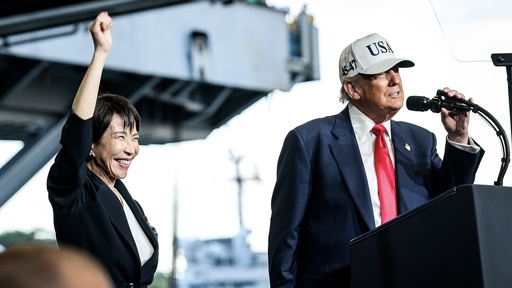
Japan is heading for a snap general election on Sunday, February 8 less than two years since the last elections were held in October 2024 with polls predicting an easy win for the incumbent conservative alliance led by Sanae Takaichi.
Polls predict that the incumbent right-wing coalition of Liberal Democratic Party (LDP) and Japan Innovation Party (Ishin), will win a comfortable majority in the lower house of the parliament, with an expected seat tally of 300 out of a total 465 seats, paving the way for the continuation of Prime Minister Sanae Takaichi in power. A party or a coalition needs 233 seats to have a simple majority in the parliament.
Takaichi (64) became Japan’s first female prime minister after the LDP chose her to head the government in October last year, almost a year after the national elections under Shigeru Ishiba.
Takaichi dissolved the Diet on January 23 and called for snap elections seeking a more stable mandate to carry out her nationalist agenda.
Days ahead of the race on Thursday, US President Donald Trump openly endorsed Takaichi’s candidacy praising her as a “strong, powerful and wise” leader.
“Prime Minister Takaichi is someone who deserves powerful recognition for the job she and her coalition are doing,” Trump said in a post expressing hope of meeting her at the White House on March 19.
Takaichi has promised to implement the deal her predecessor signed with the US promising USD 550 billion investments in return for the reduction of Trump’s reciprocal tariffs from 25% to 15%. Doubts have emerged about the feasibility of mobilizing those funds given the overall economic health of the nation.
Who is Takaichi?
Takaichi is considered a hawk when it comes to a country’s foreign policy. She has intensified her country’s shift towards “nationalist revival” and re-militarization, thus her re-election is expected to lead to an intensification of threats to the post-war arrangements in the region.
Notably, Japanese policies of remilitarization and nationalist revival closely align with Trump’s push for allies to play a greater role in its attempts to maintain its dominance in their respective regions and deter any possible challenges to US hegemony.
Takaichi has promised to increase the country’s defense budget to 2% of its GDP by March this year and increase the domestic production of military equipment. Analysts in the region have also warned that there is growing talk of nuclearization of the country as well, adding to regional tensions.
Read more: Japan’s Taiwan hysteria reveals a dark imperial legacy
Yet, arguably the most significant destabilizing factor that Takaichi unleashed in her four months in office, was her comment on November 7, 2025, before the country’s parliament, that Japan may respond militarily to any “situation threatening Japan’s survival” including an attempt to force the unification of Taiwan with China.
She also claimed that if a US warship was attacked that was sent to break a possible blockade on Taiwan, it would invite a similar Japanese military response.
China swiftly responded and called on Takaichi to retract her statements and apologize, both of which she has refused to do.
Read more: China warns of severe consequences if Japan fails to retract its threats of military intervention over Taiwan
Key issues for voters
The monthly opinion polls carried out by eight Japanese media houses claim popular support for Takaichi who has been in office since October, ranging between 57% to over 70% with an average of above 60% positive view.
Polls have also registered that economic issues are central for voters, with more people expressing worries about the rising prices of essential commodities and the fate of their social welfare.
After her refusal to apologize over her remarks on Taiwan, China strongly discouraged its citizens from visiting Japan and has also suspended certain trade agreements, both of which have impacted Japan’s economy.
To mitigate concerns over the economy, Takaichi has already announced the suspension of 8% sales tax on food and beverages for two years and promised introduction of cash benefits for lower and middle income households to ease the rising cost of living crisis in the country.
Takaichi will face off with the Centrist Reform Alliance, the main opposition coalition, on the issue with the latter promising complete abolition of taxes on food items.
Japan is also expected to see a rise in far-right seats in the lower house with the Sanseito party expected to win 15 seats in the coming elections.
The post Trump endorses right-wing Takaichi as Japan heads to the polls on February 8 appeared first on Peoples Dispatch.
From Peoples Dispatch via This RSS Feed.